
Asbestos Control Plan: Complete Guide for UK Buildings
Managing asbestos-containing materials in buildings requires a systematic, documented approach that protects occupants, workers, and visitors whilst ensuring regulatory compliance. An asbestos control plan serves as the cornerstone of effective asbestos management, providing a structured framework for identifying, assessing, and controlling asbestos risks over time. With thousands of commercial and residential properties across the UK still containing asbestos from construction before 2000, having a robust control plan is not merely a legal requirement but a fundamental duty of care for property owners, facilities managers, and employers.
Understanding the Asbestos Control Plan Framework
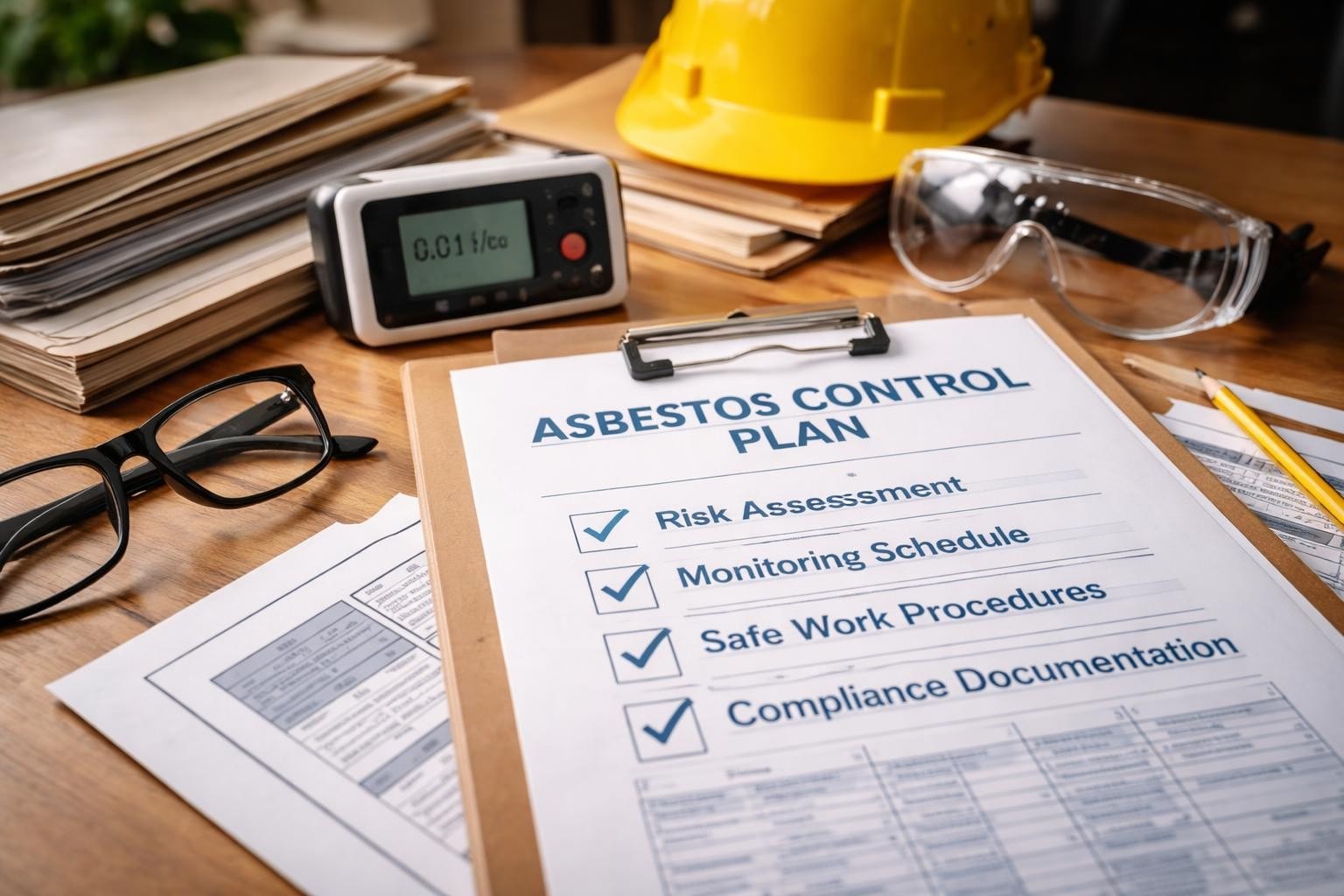
An asbestos control plan is a comprehensive document that outlines how asbestos-containing materials (ACMs) within a building will be managed, monitored, and controlled to prevent exposure. This living document goes beyond simple identification, incorporating risk assessments, management procedures, emergency protocols, and ongoing monitoring schedules.
The HSE guidance on asbestos management plans emphasises that dutyholders must take a proactive approach to managing asbestos in non-domestic premises. The control plan translates this duty into practical, actionable procedures tailored to each specific building and its occupancy patterns.
Core Components of an Effective Control Plan
Every asbestos control plan must contain several essential elements to function effectively:
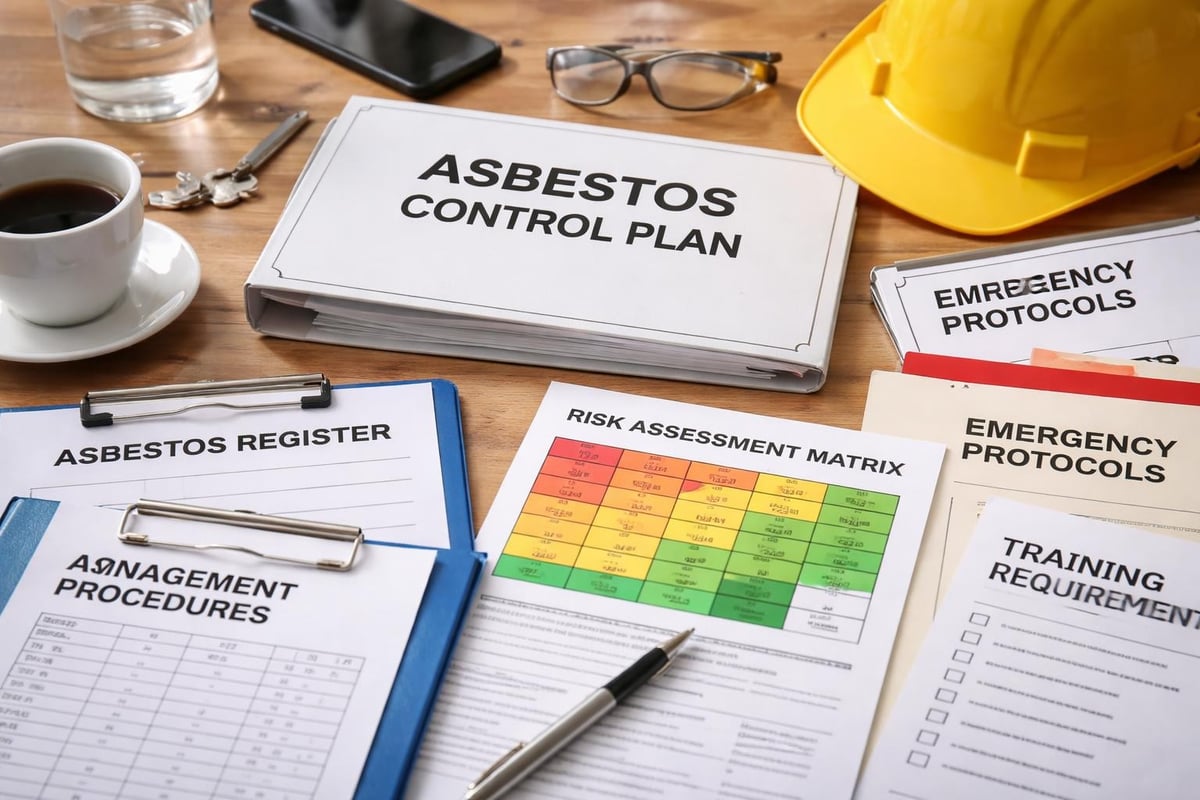
- Complete asbestos register detailing location, type, condition, and risk assessment for all identified ACMs
- Risk prioritisation matrix categorising materials based on condition, accessibility, and likelihood of disturbance
- Management procedures specifying how different risk categories will be handled
- Monitoring schedules establishing inspection frequencies and responsible personnel
- Emergency response protocols for accidental disturbance or damage to ACMs
- Communication strategy ensuring relevant parties are informed of asbestos locations
- Training requirements identifying who needs asbestos awareness training and at what level
- Review and update procedures maintaining plan accuracy as building conditions change
The plan should integrate seamlessly with your organisation's broader health and safety management systems, ensuring asbestos considerations are embedded in routine maintenance, refurbishment planning, and emergency procedures.
Developing Your Asbestos Control Plan
Creating an effective asbestos control plan begins with comprehensive survey data. Professional management surveys provide the foundation upon which your control plan is built, identifying all accessible ACMs and assessing their condition and risk level.
Step-by-Step Development Process
1. Compile Survey Data and Create the Asbestos Register
Gather all survey reports, laboratory analysis results, and historical records relating to asbestos within your property. This information forms your asbestos register, which should include material location descriptions precise enough for non-experts to locate, material type and quantity, condition assessment scores, and photographic evidence.
2. Conduct Material Risk Assessments
Each identified ACM requires a documented risk assessment considering material type (friability and asbestos content), surface treatment and encapsulation status, extent of damage or deterioration, accessibility to occupants and maintenance staff, and likelihood of disturbance through normal building use.
Materials are typically categorised into priority bands (low, medium, high, very high) determining management action timescales.
3. Establish Management Actions
For each priority category, define specific management actions:
| Priority Level | Condition | Management Action | Typical Timeframe |
|---|---|---|---|
| Very High | Damaged, accessible, high-risk type | Immediate remediation or removal | Within 24-48 hours |
| High | Poor condition or high disturbance risk | Scheduled remediation or enhanced protection | Within 1-3 months |
| Medium | Fair condition with moderate risk | Increased monitoring frequency | 3-12 months |
| Low | Good condition, sealed, low disturbance risk | Standard monitoring | Annual inspection |
4. Define Monitoring and Inspection Protocols
Establish who will conduct re-inspections, at what frequency, using which assessment criteria, and how findings will be documented. The HSE guidance on monitoring asbestos management plans recommends regular checks to ensure ACMs remain in satisfactory condition.
5. Document Communication and Training Requirements
Specify how asbestos information will be shared with employees, contractors, maintenance personnel, and building occupants. Include requirements for asbestos awareness training appropriate to different roles and responsibilities.
Implementing Safe Work Practices Within Your Control Plan
The EPA's guidance on safe work practices emphasises that routine maintenance activities pose significant asbestos exposure risks if not properly controlled. Your asbestos control plan must integrate practical safe working procedures that prevent accidental disturbance.
Maintenance and Operations Procedures
Establish clear protocols for any work that might affect ACMs:
- Permit-to-work systems requiring asbestos register consultation before drilling, cutting, or invasive work
- Exclusion zones around known ACM locations with appropriate signage
- Tool and technique restrictions prohibiting high-speed cutting, grinding, or sanding near ACMs
- Contractor induction ensuring all external workers receive site-specific asbestos briefings
- Emergency stop procedures if unexpected materials are encountered during work
Many organisations implement a simple traffic-light system within their asbestos control plan: green zones (no known ACMs, standard work permitted), amber zones (ACMs present but contained, restrictions apply), and red zones (high-risk ACMs, specialist procedures required).
Recordkeeping and Documentation
Comprehensive recordkeeping underpins effective asbestos management. The EPA's recordkeeping guidelines highlight that maintaining detailed records demonstrates compliance and provides essential information for ongoing management.
Your asbestos control plan should specify retention periods and storage methods for:
- All survey reports and laboratory certificates
- Re-inspection reports and photographic records
- Remediation work completion certificates and waste consignment notes
- Training records for all personnel
- Incident reports and near-miss documentation
- Plan review and update logs
Digital management systems increasingly replace paper records, offering advantages in accessibility, version control, and integration with facilities management platforms. Professional digital compliance services can streamline recordkeeping whilst ensuring regulatory requirements are met.

Sector-Specific Control Plan Considerations
Different building types and occupancy patterns require tailored approaches within the asbestos control plan framework.
Educational Establishments
Schools face unique challenges given their duty of care to children and diverse building portfolios. The asbestos in schools checklist provides sector-specific guidance, but control plans should address:
- Enhanced communication with parents, governors, and teaching staff
- Simplified risk information suitable for non-technical audiences
- Coordination with school holiday periods for intrusive work
- Integration with estate development plans and curriculum needs
- Annual review cycles aligned with academic years
Commercial and Residential Landlords
Property owners with duty to manage responsibilities must ensure their asbestos control plan addresses tenant turnover, common areas versus demised spaces, information transfer to new occupiers, and coordination across multi-let buildings.
Industrial and Manufacturing Facilities
Facilities with complex plant, machinery, and process equipment require control plans that account for vibration and thermal cycling effects on ACMs, access restrictions during production, emergency shutdown procedures, and integration with planned maintenance schedules.
Review, Update, and Continuous Improvement
An asbestos control plan is a living document requiring regular review and updating to remain effective. Static plans quickly become obsolete as building conditions change, rendering them non-compliant and ineffective.
Trigger Events for Plan Updates
Certain events should automatically trigger control plan reviews:
Building-Related Triggers:
- Completion of refurbishment or construction work
- Discovery of previously unidentified ACMs
- Damage to known ACMs from incidents or deterioration
- Change of building use or occupancy patterns
- Installation or removal of plant and equipment
Management Triggers:
- Change of dutyholder or responsible person
- Transfer of property ownership or management
- Organisational restructuring affecting responsibilities
- Updates to asbestos regulations or guidance
- Incidents or near-misses involving ACMs
Time-Based Triggers:
- Annual comprehensive review (minimum requirement)
- Post-inspection updates following re-inspection surveys
- Three-yearly major review incorporating fresh survey data
Review Process and Quality Assurance
Effective reviews involve systematic evaluation of plan effectiveness:
- Check all ACM locations and conditions against current asbestos register
- Verify completion of scheduled management actions and inspections
- Review incident logs and near-miss reports for patterns or concerns
- Assess adequacy of training provision and awareness levels
- Evaluate communication effectiveness with stakeholders
- Update risk assessments based on condition changes
- Revise management actions and monitoring frequencies as needed
- Document review findings and circulate updated plan to relevant parties
Professional compliance audits provide independent verification that your asbestos control plan meets regulatory requirements and industry best practices.
Integration with Broader Asbestos Management Systems
The asbestos control plan should not exist in isolation but function as part of a comprehensive asbestos management system encompassing surveys, testing, remediation, and strategic planning.

Strategic Planning and Budget Allocation
Forward-thinking organisations use their asbestos control plan as a strategic planning tool, forecasting future remediation needs, budgeting for lifecycle management, planning removal during scheduled refurbishment, and aligning with property development strategies.
The elements of an asbestos operations and maintenance programme emphasise that effective management requires adequate resources, both financial and personnel, committed over the long term.
Pre-Project Planning and Coordination
Before any refurbishment or demolition work, the asbestos control plan provides critical information for project planning. The pre-refurbishment checklist demonstrates how control plan data informs refurbishment and demolition surveys, ensuring complete ACM identification before work commences.
Project-specific asbestos management plans then build upon the overarching control plan, incorporating job-site controls for work involving ACMs and detailed removal specifications.
Regulatory Compliance and Legal Requirements
UK asbestos regulations impose strict duties on property owners, employers, and contractors regarding asbestos management. Your asbestos control plan provides documented evidence of compliance with these legal obligations.
Key Regulatory Drivers
Control of Asbestos Regulations 2012 establishes the duty to manage asbestos in non-domestic premises, requiring dutyholders to:
- Identify asbestos-containing materials through survey
- Assess the risk from those materials
- Prepare and implement a plan to manage those risks
- Provide information about ACMs to anyone liable to disturb them
Health and Safety at Work Act 1974 imposes general duties to ensure workplace safety, with specific application to asbestos exposure prevention.
Management of Health and Safety at Work Regulations 1999 requires risk assessment and implementation of preventive measures, applying to asbestos as a significant workplace hazard.
Enforcement and Penalties
The Health and Safety Executive enforces asbestos regulations through inspections, improvement notices, prohibition notices for serious breaches, and prosecution for serious or repeated non-compliance. Penalties for asbestos-related offences have increased significantly, with unlimited fines in Crown Court and potential imprisonment for individuals.
Maintaining a comprehensive, current asbestos control plan demonstrates compliance and due diligence, providing crucial protection should enforcement action arise.
Professional Support and Expert Services
Whilst property owners retain legal responsibility for asbestos management, professional consultancy services provide essential expertise for developing, implementing, and maintaining effective control plans.
When to Seek Professional Assistance
Complex buildings benefit from professional input in control plan development, particularly those with extensive ACMs, mixed-use occupancy, historical construction, or challenging access conditions. Professional asbestos management plans provide comprehensive, regulation-compliant documentation tailored to your specific circumstances.
Specialist services support various aspects of control plan implementation:
- Survey and sampling establishing accurate asbestos registers through management surveys and laboratory analysis
- Re-inspection programmes maintaining current condition data through systematic re-inspection surveys
- Air monitoring verifying control measure effectiveness through air monitoring and clearance testing
- Project oversight ensuring compliant execution of remediation through project management services
- Training delivery building organisational capability through training and awareness programmes
Selecting a Competent Consultancy
Choose asbestos consultants with appropriate qualifications (BOHS P405 or equivalent), UKAS-accredited laboratory partnerships, professional indemnity insurance, and proven experience in your building type or sector. Independent consultancies without ties to removal contractors avoid conflicts of interest, ensuring objective advice prioritising safety over commercial gain.
A well-developed asbestos control plan transforms regulatory compliance from a burden into a systematic process that genuinely protects building occupants and workers whilst supporting efficient property management. Regular review, comprehensive documentation, and integration with broader safety systems ensure your plan remains effective as buildings and regulations evolve. For expert assistance developing or reviewing your asbestos control plan, Asbestosurv Ltd provides comprehensive consultancy services including survey, testing, and management planning across the UK, ensuring full regulatory compliance and effective risk management tailored to your specific requirements.
Need Professional Asbestos Advice?
Contact our expert team for guidance on your specific requirements
Contact Us