

Asbestos Duty to Manage: Complete UK Compliance Guide
The asbestos duty to manage represents one of the most significant legal obligations for property owners, landlords, and duty holders across the United Kingdom. Introduced under Regulation 4 of the Control of Asbestos Regulations 2012, this requirement places a clear responsibility on those who manage non-domestic premises to identify, assess, and manage asbestos-containing materials (ACMs) within their buildings. Understanding and implementing this duty is not merely a matter of regulatory compliance but a fundamental aspect of protecting health and preventing exposure to one of the UK's most dangerous substances.
Understanding the Legal Framework
The Control of Asbestos Regulations 2012 forms the cornerstone of asbestos legislation in the UK. This comprehensive framework establishes clear responsibilities for those who own or manage premises to protect workers and building occupants from asbestos exposure. The asbestos duty to manage specifically applies to non-domestic premises, including commercial buildings, industrial facilities, educational establishments, healthcare facilities, and communal areas within residential buildings.
Key legislative requirements include:
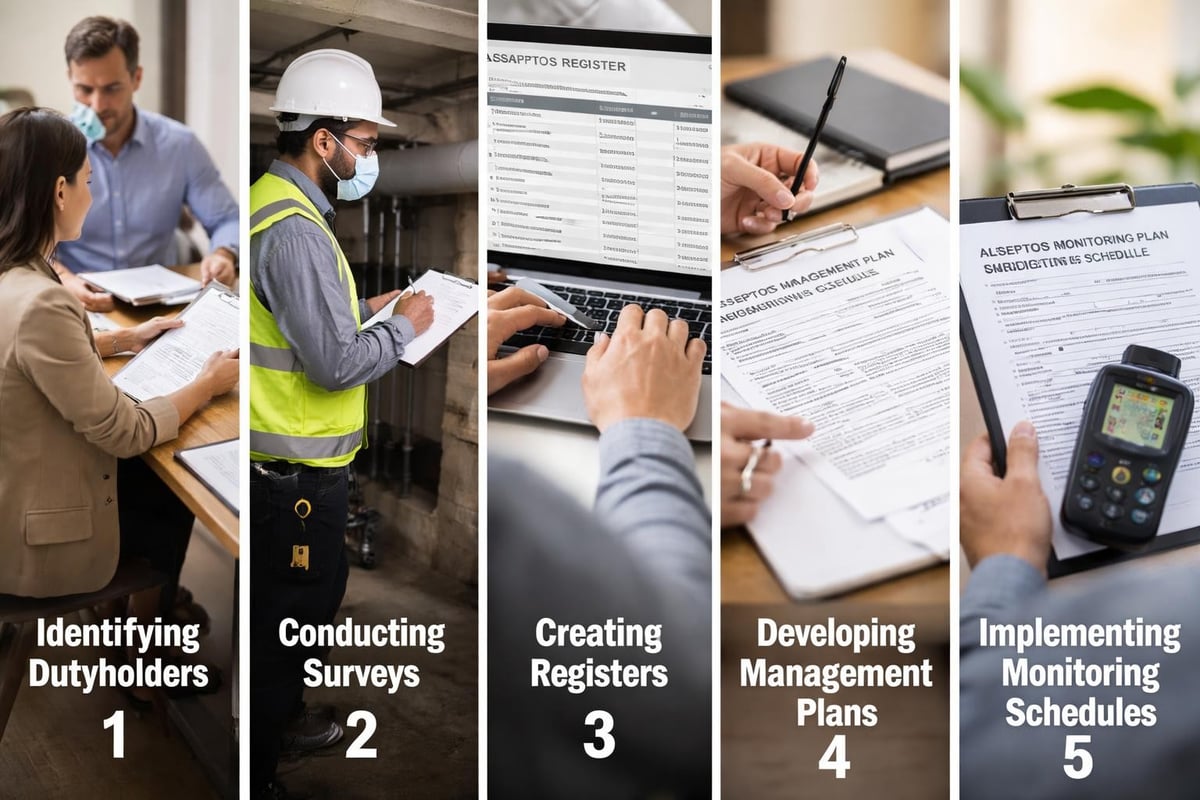
- Identifying the presence and location of asbestos or presuming its presence
- Assessing the condition of ACMs and the risk they pose
- Creating and maintaining an asbestos register
- Developing and implementing a management plan
- Monitoring the condition of ACMs regularly
- Providing information to anyone who might disturb asbestos
The Health and Safety Executive (HSE) enforces these regulations rigorously, with significant penalties for non-compliance. Understanding who holds the duty to manage asbestos is the first critical step in ensuring your organisation meets its legal obligations.
Identifying the Dutyholder
Determining who holds the asbestos duty to manage can be complex in properties with multiple stakeholders. The dutyholder is typically the person or organisation with maintenance and repair responsibilities for the premises. In straightforward cases, this might be the building owner, but in more complex arrangements, responsibilities may be shared or delegated.
Common Dutyholder Scenarios
| Premises Type | Typical Dutyholder | Key Considerations |
|---|---|---|
| Owner-occupied commercial building | Building owner | Full responsibility for all areas |
| Leased commercial property | Landlord or tenant (depends on lease terms) | Review lease agreement carefully |
| Multi-tenanted building | Landlord for common areas; tenants for leased spaces | Clear demarcation required |
| Managed facilities | Facilities management company (if contracted) | Ensure contractual clarity |
| Schools and public buildings | Local authority or academy trust | Responsibilities must be clearly assigned |
The duty to manage landlord guide provides comprehensive information for property owners navigating these complex arrangements. Where responsibilities are unclear, dutyholders should seek professional advice to ensure no gaps exist in coverage.
Conducting Asbestos Surveys
An asbestos survey forms the foundation of any effective management strategy. The asbestos duty to manage requires dutyholders to take reasonable steps to determine whether asbestos is present in their premises. This typically involves commissioning a professional management survey conducted by qualified asbestos surveyors.
Management surveys are designed to locate, as far as reasonably practicable, the presence and extent of ACMs in a building. Surveyors will examine all accessible areas, including ceiling voids, service ducts, and plant rooms. The survey produces detailed findings that inform the asbestos register and management plan.
Survey methodology includes:
- Visual inspection of accessible areas
- Sampling of suspected ACMs
- Laboratory analysis to confirm asbestos presence
- Material assessment scoring based on condition and location
- Risk prioritisation and recommendations
For properties undergoing renovation or demolition, more intrusive refurbishment and demolition surveys are required. These comprehensive investigations involve destructive inspection to locate all ACMs that could be disturbed during planned works.
Creating and Maintaining the Asbestos Register
Following the survey, dutyholders must create and maintain an asbestos register. This document records the location, type, and condition of all identified or presumed ACMs within the premises. The register serves as a critical reference tool for anyone who might work on or disturb the fabric of the building.
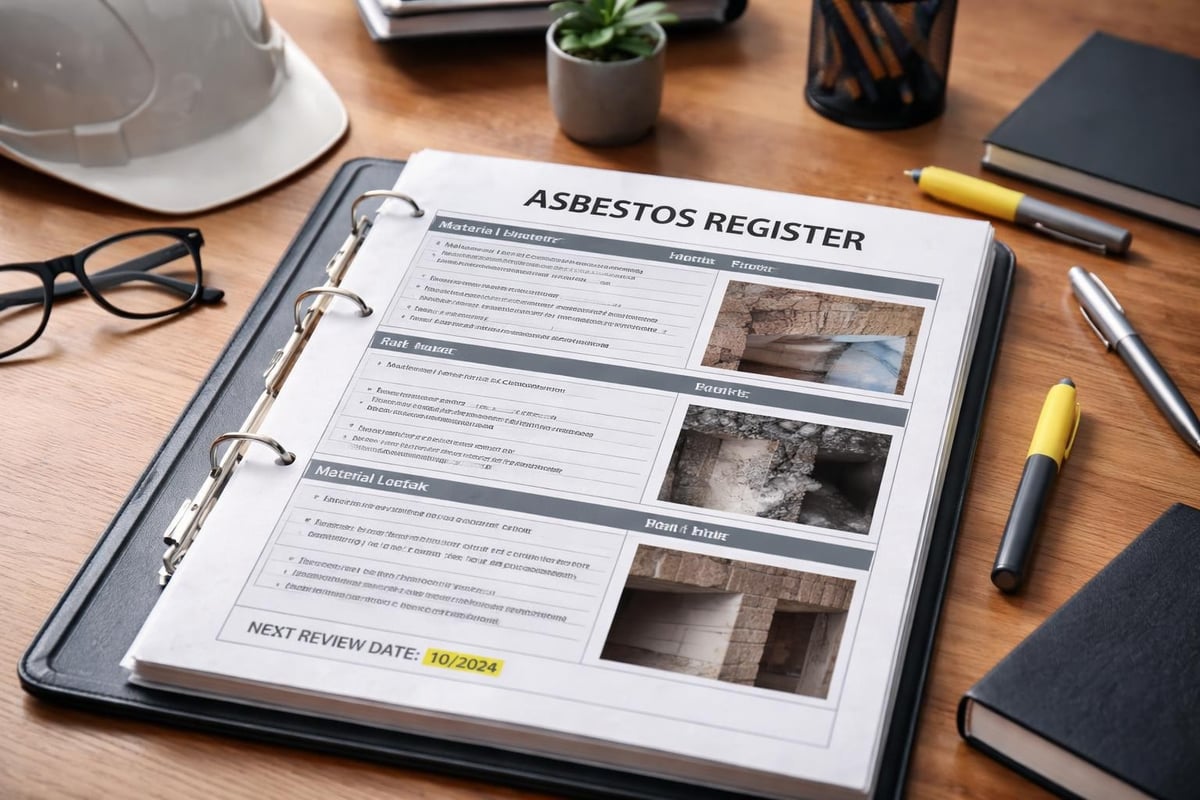
An effective asbestos register should include detailed information about each ACM, including its exact location, material type, condition assessment, and any management actions taken. The register must be regularly reviewed and updated whenever surveys are conducted, ACMs are removed, or building alterations occur. Professional asbestos register services ensure this documentation remains accurate and compliant.
Essential Register Information
The completeness of your asbestos register directly impacts your ability to manage risk effectively. Each entry should contain sufficient detail to allow anyone consulting the register to locate and identify the material without ambiguity.
- Material identification: Product type, asbestos type, and percentage content
- Location details: Floor, room number, and specific position within the room
- Photographic evidence: Clear images showing the material in situ
- Condition assessment: Current condition score and any damage or deterioration
- Risk rating: Priority score based on material assessment algorithms
- **Management actions:**封encapsulation, removal, monitoring, or no action required
Developing an Asbestos Management Plan
The asbestos management plan translates survey findings and register information into practical management actions. This document outlines how identified risks will be managed, who is responsible for specific tasks, and how the plan will be monitored and reviewed.
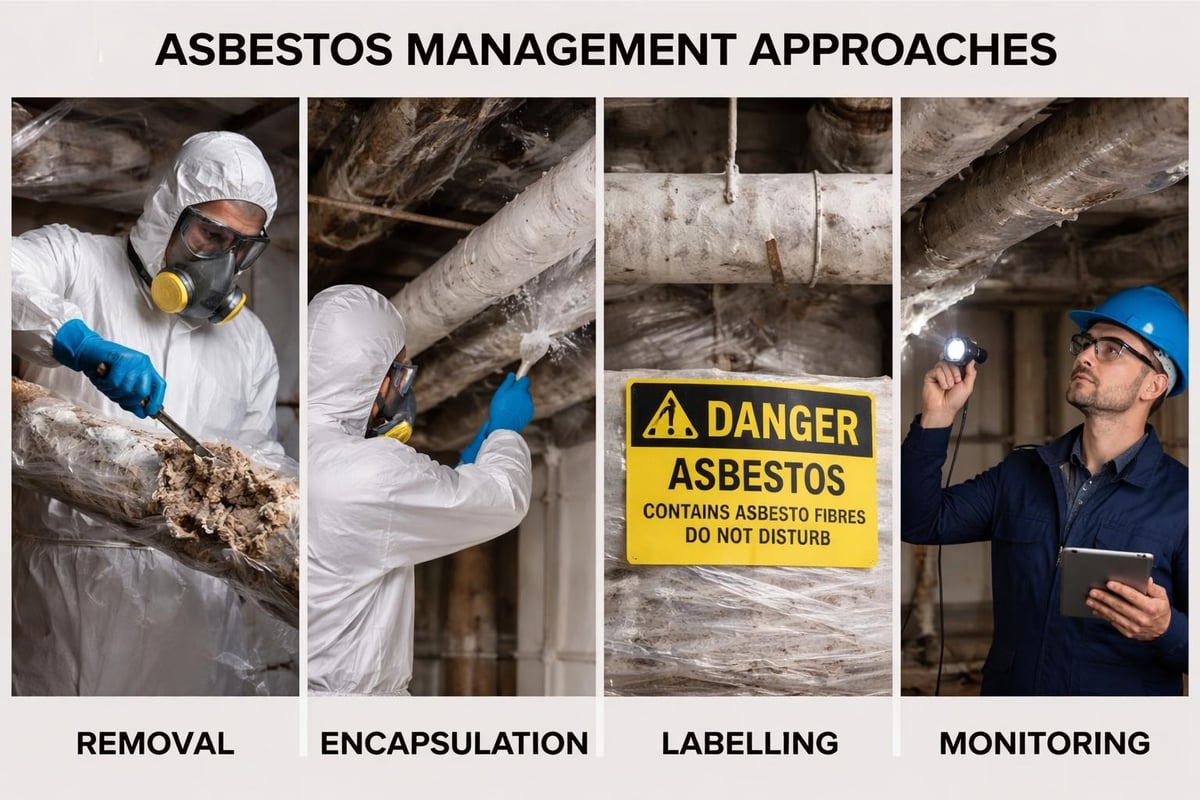
Effective management plans are proportionate to the risks identified. Not all asbestos requires immediate removal. In many cases, ACMs in good condition that are unlikely to be disturbed can be safely managed in situ through regular monitoring and appropriate precautions. The plan should clearly define management strategies for each identified ACM, ranging from removal to encapsulation, labelling, or ongoing monitoring.
Core management plan components:
- Risk prioritisation: Addressing highest risk materials first
- Management procedures: Specific actions for each ACM
- Responsibility assignment: Named individuals for each task
- Emergency procedures: Response protocols for unexpected disturbance
- Training requirements: Ensuring relevant personnel have appropriate awareness
- Review schedule: Regular plan updates and effectiveness monitoring
Professional management plan services ensure your documentation meets regulatory standards and provides practical, implementable guidance for your organisation.
Monitoring and Re-inspection
The asbestos duty to manage is an ongoing obligation, not a one-time exercise. Regular monitoring ensures that ACM conditions do not deteriorate and that management actions remain effective. The frequency of re-inspection depends on the material assessment and risk rating, with higher-risk materials requiring more frequent attention.
Typical re-inspection intervals range from six months for high-risk materials to annually or bi-annually for lower-risk items. Re-inspection surveys provide updated condition assessments and identify any changes that might affect risk levels or require additional management actions.
Re-inspection Triggers
| Trigger Event | Action Required | Timeframe |
|---|---|---|
| Scheduled review date | Routine condition assessment | As per management plan |
| Building alterations | Pre-work survey and plan update | Before works commence |
| Accidental damage | Immediate inspection and risk assessment | Within 24 hours |
| Change in building use | Comprehensive review of risks | Before use change |
| Previous ACM removal | Update register and management plan | Within one week of completion |
Providing Information to Others
A critical aspect of the asbestos duty to manage involves providing information about asbestos to anyone who might disturb it. This includes maintenance workers, contractors, emergency services, and building occupants. Failure to communicate asbestos information adequately represents one of the most common breaches of the duty to manage.
Before any work that might disturb the building fabric, dutyholders must share relevant sections of the asbestos register and management plan with contractors. This enables workers to plan their activities safely and take appropriate precautions. Many organisations implement permit-to-work systems to ensure this information exchange occurs systematically.
Educational facilities face particular challenges in communicating asbestos information. The asbestos in schools checklist addresses the specific requirements for protecting staff, students, and contractors in educational environments.
Practical Examples of Managing Asbestos Risks
Understanding how to apply the asbestos duty to manage in real-world scenarios helps dutyholders develop practical, proportionate approaches. The HSE provides examples of how asbestos risks can be managed across various building types and situations.
Common management scenarios include:
- Asbestos insulation board (AIB) ceiling tiles: Regular visual inspections, strict no-drilling policies, and clear labelling to prevent accidental disturbance
- Asbestos cement roof sheets: Periodic condition surveys, prevention of foot traffic, and safe access procedures for maintenance
- Pipe lagging in plant rooms: Restricted access, encapsulation where appropriate, and comprehensive contractor briefings
- Textured coatings: Sampling to confirm presence, labelling, and prohibition of removal without proper controls
- Floor tiles: Avoiding damage through appropriate maintenance procedures and covering with alternative flooring where practical
Each scenario requires a tailored approach based on material type, condition, location, and likelihood of disturbance. The knowledge hub offers additional guidance on managing specific ACM types effectively.
Training and Competency Requirements
Effective implementation of the asbestos duty to manage requires appropriately trained personnel at various levels. The dutyholder should ensure that anyone with asbestos-related responsibilities possesses the necessary knowledge and competency. According to UKATA guidance on duty to manage, training requirements vary depending on roles and responsibilities.
Training Levels
- Asbestos awareness: For anyone who might encounter asbestos during their work
- Duty to manage training: For those responsible for implementing and overseeing the management plan
- Surveyor qualifications: Professional accreditation for those conducting surveys
- Analyst certification: Laboratory personnel performing asbestos identification
Professional training and awareness programmes ensure your team possesses current knowledge of regulations, risk assessment methodologies, and management best practices. Regular refresher training maintains competency as regulations evolve and organisational roles change.
Compliance Audits and Record Keeping
Demonstrating compliance with the asbestos duty to manage requires robust record keeping and periodic auditing. Documentation should evidence that survey findings have been acted upon, management plans are being followed, and re-inspections occur as scheduled. In the event of HSE inspection or incident investigation, comprehensive records provide crucial evidence of regulatory compliance.
Compliance audits provide independent verification that management systems function effectively and identify areas for improvement. Regular audits help organisations maintain high standards and adapt to regulatory developments or changes in building use.
Essential records to maintain:
- Survey reports and certificates
- Asbestos register (current and historical versions)
- Management plan and review documentation
- Re-inspection reports and condition assessments
- Training records for relevant personnel
- Contractor information provision documentation
- Incident reports and corrective actions
- AIB removal certificates and clearance documentation
Digital Solutions for Asbestos Management
Modern technology increasingly supports effective implementation of the asbestos duty to manage. Digital platforms enable real-time access to asbestos registers, automated re-inspection scheduling, mobile survey data collection, and integrated contractor communication systems. These solutions improve accuracy, accessibility, and audit trails whilst reducing administrative burden.
Digital compliance systems integrate survey data, photographic evidence, and management actions into user-friendly interfaces accessible across organisations. Mobile applications allow surveyors to update information in the field, whilst dashboards provide oversight of compliance status and upcoming obligations.
Enforcement and Penalties
The HSE takes non-compliance with the asbestos duty to manage seriously, as evidenced by rising prosecution rates in recent years. Enforcement action can result from HSE inspections, workplace incidents, or employee complaints. Penalties range from improvement notices requiring specific actions within set timeframes to prohibition notices halting activities immediately.
Serious breaches can lead to prosecution, with unlimited fines for organisations and imprisonment for individuals in extreme cases. Beyond legal penalties, reputational damage and potential civil claims from exposed individuals create additional consequences for non-compliance.
Recent Enforcement Trends
Enforcement activity has intensified as the HSE focuses on systematic failures in asbestos management. Common breach categories include failure to conduct adequate surveys, outdated or incomplete asbestos registers, lack of management plans, insufficient re-inspection programmes, and failure to provide information to contractors.
The HSE's guidance on the duty to manage provides comprehensive information on regulatory expectations. Staying informed about enforcement priorities and emerging trends helps organisations maintain robust compliance frameworks.
Sector-Specific Considerations
Different sectors face unique challenges in implementing the asbestos duty to manage. Healthcare facilities must balance asbestos management with continuous operational requirements and vulnerable patient populations. Educational establishments require particular attention to protecting children whilst maintaining essential buildings. Industrial sites often contain complex plant and machinery with numerous ACMs in challenging locations.
Understanding sector-specific risks and management approaches ensures proportionate, practical compliance. Professional consultants with sector experience provide valuable insights into managing industry-specific challenges effectively. Regional variations in building stock also influence management approaches, with older industrial areas like Essex and Kent potentially containing higher ACM prevalence than newer developments.
Integration with Other Health and Safety Requirements
The asbestos duty to manage does not exist in isolation but forms part of broader health and safety management systems. Integration with construction design and management (CDM) regulations, workplace health and safety requirements, and facilities management protocols creates synergies and ensures comprehensive risk management.
Pre-construction information must include asbestos data, whilst emergency procedures should account for ACM locations. Project management services ensure asbestos considerations integrate seamlessly with refurbishment and construction activities, protecting workers and maintaining compliance throughout project lifecycles.
Future-Proofing Your Asbestos Management
Effective asbestos management looks beyond immediate compliance to anticipate future requirements and organisational changes. Building disposals, acquisitions, and alterations all trigger asbestos management obligations. Maintaining comprehensive, accessible documentation ensures smooth transitions and protects against legacy liabilities.
The pre-refurbishment checklist helps organisations prepare for planned works, ensuring asbestos considerations feature in early project planning. Proactive management reduces delays, controls costs, and protects project teams from unexpected asbestos discoveries during construction phases.
Meeting the asbestos duty to manage requires systematic approaches, professional expertise, and ongoing commitment to compliance. By understanding legal requirements, implementing robust management systems, and maintaining accurate documentation, organisations protect their people whilst fulfilling regulatory obligations. Asbestosurv Ltd delivers comprehensive asbestos management services nationwide, from initial surveys and register creation through ongoing monitoring and compliance support, ensuring your organisation maintains full regulatory compliance whilst protecting health and safety.
Need Professional Asbestos Advice?
Contact our expert team for guidance on your specific requirements
Contact Us