
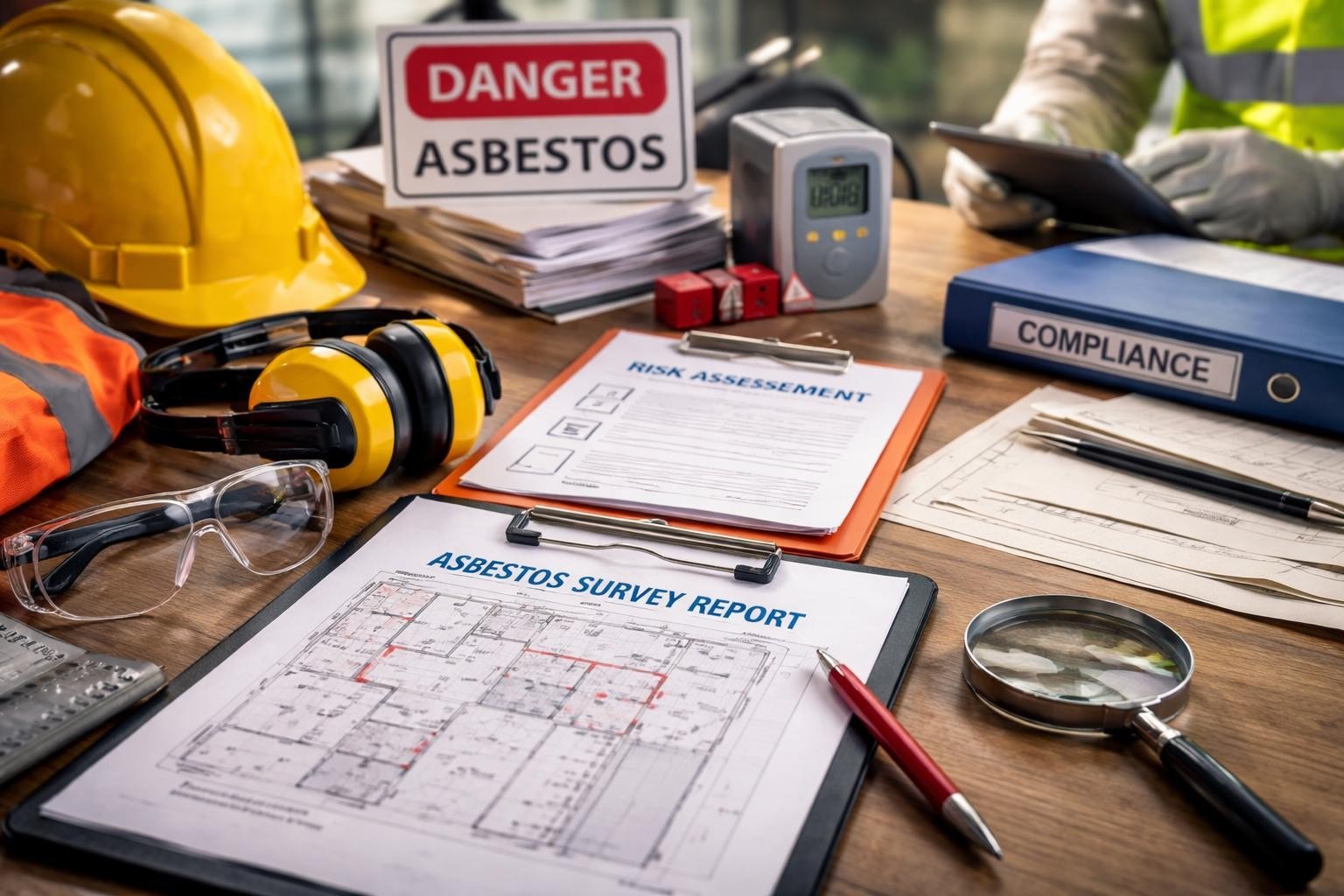
Asbestos Management: A Complete UK Compliance Guide
Asbestos management remains a critical responsibility for building owners, facilities managers, and employers across the United Kingdom. Despite the ban on asbestos use since 1999, millions of properties constructed before this date still contain asbestos-containing materials (ACMs) that require careful oversight. Effective asbestos management protects occupants, ensures regulatory compliance, and mitigates significant legal and financial risks. Understanding the comprehensive framework required for proper asbestos control is essential for anyone responsible for non-domestic premises or shared areas in residential buildings.
Understanding Asbestos Management Responsibilities
The Control of Asbestos Regulations 2012 places a statutory duty on those who manage non-domestic premises to manage asbestos risks effectively. This duty to manage requires responsible persons to identify the presence, location, and condition of ACMs, assess the associated risks, and implement appropriate control measures.
Property owners, landlords, and facilities managers cannot simply ignore the potential presence of asbestos. The presumption under UK regulations is that buildings constructed before 2000 contain asbestos unless proven otherwise through proper surveys. This legal framework ensures that professional asbestos surveys and management services form the foundation of any compliance strategy.
The Legal Framework
Compliance encompasses multiple regulatory requirements beyond the Control of Asbestos Regulations 2012. The Health and Safety at Work Act 1974 establishes overarching duties, whilst the Management of Health and Safety at Work Regulations 1999 require risk assessments covering all workplace hazards, including asbestos.
Key obligations include:
- Conducting suitable and sufficient asbestos surveys
- Maintaining accurate asbestos registers
- Implementing management plans for identified ACMs
- Providing information to anyone potentially exposed
- Monitoring material condition through regular inspections
- Ensuring safe work practices during maintenance activities
The EPA's asbestos management plan guidance provides additional international perspective on comprehensive documentation requirements, though UK regulations demand stricter compliance standards.
Conducting Comprehensive Asbestos Surveys
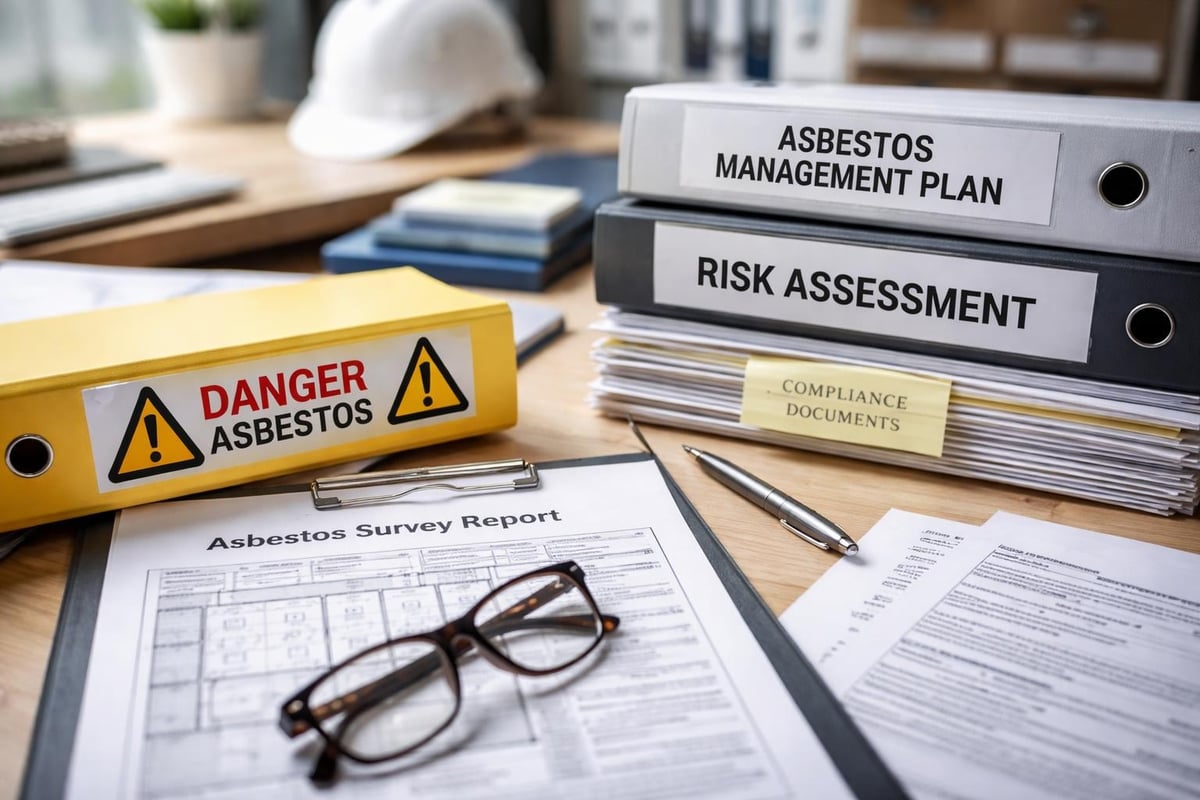
Asbestos surveys form the cornerstone of effective asbestos management. The type of survey required depends on the building's intended use and any planned works. Management surveys provide the standard assessment for buildings in normal occupation, whilst refurbishment and demolition surveys address more intrusive situations.
Management Survey Standards
Management surveys aim to locate and assess ACMs that could be damaged or disturbed during normal occupancy and maintenance. These surveys involve visual inspection, sampling of suspected materials, and laboratory analysis to confirm asbestos presence and type.
Surveyors must access all reasonably accessible areas, including ceiling voids, service ducts, and plant rooms. The survey report should provide comprehensive documentation including material locations, photographs, condition assessments, and risk ratings. This information feeds directly into the asbestos register and management plan.
Professional surveyors follow HSE guidance HSG264, which establishes technical competency requirements and survey methodologies. Organisations like Asbestosurv Ltd employ BOHS-qualified surveyors who understand building construction techniques across different eras, enabling accurate identification of potential ACM locations.
Refurbishment and Demolition Requirements
More intrusive refurbishment and demolition surveys become necessary before any structural work. These surveys must locate all ACMs in areas affected by planned works, requiring destructive inspection methods where needed.
The key difference lies in scope and intrusiveness. Whilst management surveys avoid damaging building fabric, refurbishment surveys systematically expose all structural elements within the work area. This thoroughness ensures contractors receive complete information, preventing dangerous discoveries during construction.
| Survey Type | Purpose | Scope | Intrusiveness |
|---|---|---|---|
| Management Survey | Normal occupation | Accessible areas | Minimally intrusive |
| Refurbishment Survey | Before alterations | Work area fully exposed | Destructive inspection |
| Demolition Survey | Complete demolition | Entire building | Fully intrusive |
Developing Effective Management Plans
Once surveys identify ACMs, organisations must develop comprehensive management plans documenting how identified materials will be controlled. These plans represent living documents requiring regular updates as building conditions change.
Essential Plan Components
Effective management plans contain specific information enabling practical implementation. The plan must clearly identify who holds responsibility for asbestos management, establish procedures for controlling risks, and set monitoring schedules.
Critical elements include:
- Material location details with precise descriptions and photographs
- Risk assessment outcomes for each identified ACM
- Control measures appropriate to assessed risks
- Monitoring schedules for re-inspecting material condition
- Emergency procedures for accidental damage or disturbance
- Communication protocols for informing contractors and occupants
- Review procedures ensuring the plan remains current
The EPA's guidance on developing O&M programmes offers useful frameworks, though UK-specific requirements demand more detailed risk assessments under the Control of Asbestos Regulations.
Risk Assessment Methodologies
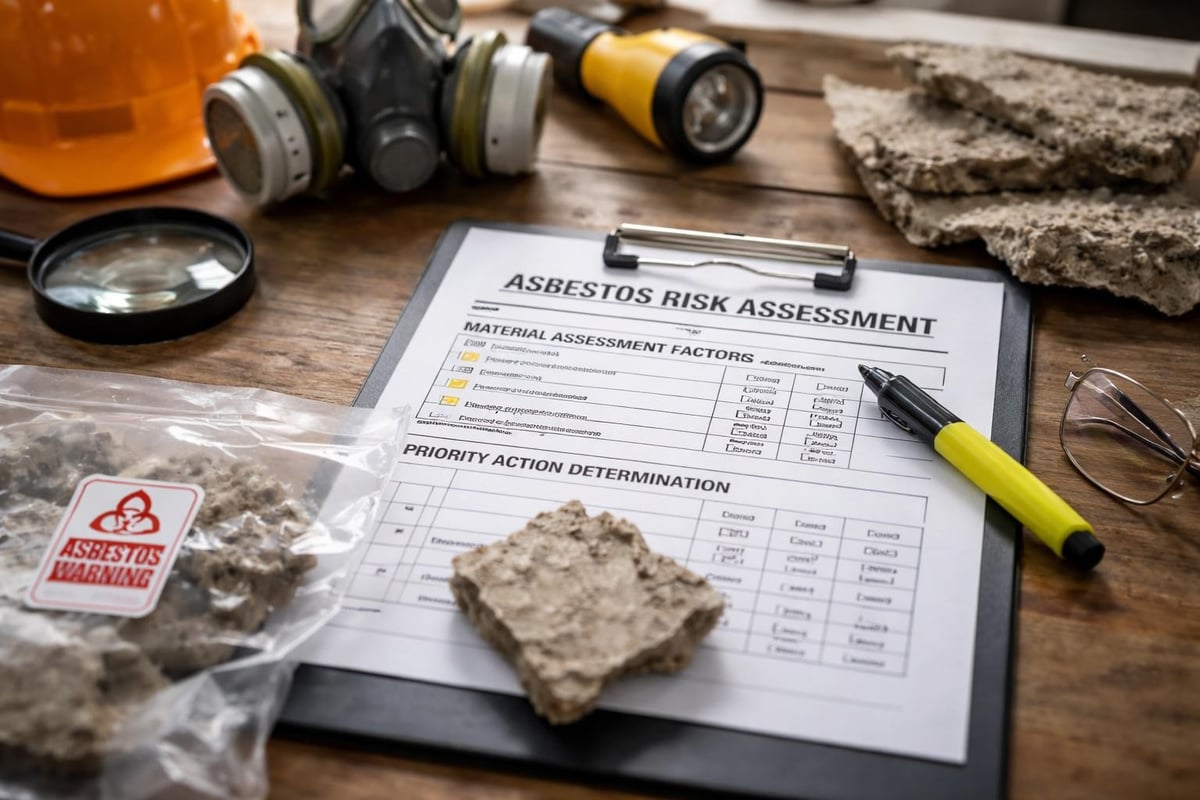
Asbestos risk assessment considers both the material's condition and its potential for disturbance. The combined score determines management priority, ranging from low-risk materials left undisturbed to high-priority items requiring immediate remediation.
Assessment factors include material type (with amphibole asbestos types scoring higher than chrysotile), surface treatment, damage extent, and accessibility. Normal occupant activities, maintenance frequency, and secondary disturbance potential all contribute to the overall risk profile.
Understanding duty to manage requirements helps landlords and property managers appreciate why systematic risk assessment cannot be avoided or delegated without maintaining overall responsibility.
Implementing Control Measures
Control measures prevent ACM disturbance and fibre release, protecting building occupants and maintenance personnel. The hierarchy of controls prioritises elimination through removal, followed by encapsulation, enclosure, and finally management in situ with appropriate precautions.
Removal Versus Management in Place
Complete asbestos removal eliminates future risks but generates immediate hazards during the removal process. Licensed contractors must handle high-risk materials under strict containment, creating temporary exposure risks and substantial costs.
Many ACMs in good condition pose minimal risk when left undisturbed. Management in place through regular monitoring often represents the safest immediate option, particularly for materials unlikely to be disturbed. This approach requires robust systems ensuring materials remain protected and their locations known.
Decision factors include:
- Material condition and type
- Likelihood of future disturbance
- Building use and occupancy patterns
- Planned refurbishment timescales
- Cost-benefit analysis of removal versus ongoing management
OSHA's guidance on evaluating and controlling exposure provides complementary workplace safety perspectives, though UK regulations establish more stringent control requirements for building management.
Safe Work Practices
Even minor maintenance activities can disturb ACMs if workers lack awareness. Safe work practices form an essential control layer, ensuring that routine tasks don't inadvertently damage materials or release fibres.
Organisations must establish permit-to-work systems for any activities potentially affecting ACMs. The EPA's safe work practices guidance emphasises procedural controls, whilst UK regulations demand competent supervision and appropriate precautions matched to risk levels.
Training programmes ensure maintenance staff recognise ACMs, understand disturbance risks, and follow established procedures. Annual refresher training maintains awareness, particularly important given staff turnover in facilities management roles.
Maintaining Asbestos Registers
Asbestos registers provide the primary information source for anyone working on or managing premises. These documents must be readily accessible, regularly updated, and clearly communicated to relevant parties.
Register Content Requirements
Comprehensive asbestos registers document every identified and presumed ACM location. Each entry should include the material's precise location (with room numbers and grid references), asbestos type, condition assessment, and risk rating.
Photographic records prove invaluable, particularly when briefing contractors unfamiliar with the premises. Floor plans marked with ACM locations provide visual clarity, whilst sample identification numbers link register entries to laboratory analysis certificates.
The register must clearly identify areas not accessed during surveys, preventing false assumptions about asbestos absence. This presumption-based approach ensures that inaccessible areas receive appropriate precautions until proven asbestos-free.
| Register Element | Purpose | Update Trigger |
|---|---|---|
| Material locations | Identify ACM presence | New surveys, remediation |
| Condition assessments | Track deterioration | Re-inspections, damage reports |
| Risk ratings | Prioritise actions | Condition changes, use changes |
| Sample results | Confirm asbestos presence | Laboratory analysis completion |
| Inaccessible areas | Flag presumed ACMs | Access gained, surveys extended |
Communication Protocols
Register information must reach everyone potentially exposed to asbestos risks. Duty holders should establish clear protocols ensuring contractors receive relevant extracts before commencing work.
Induction procedures for new building occupants should include asbestos awareness appropriate to their roles. Detailed information goes to maintenance staff and contractors, whilst general occupants need sufficient awareness to report damage and avoid disturbance.
The EPA's recordkeeping requirements emphasise documentation retention, with UK regulations similarly requiring indefinite record retention to support ongoing management responsibilities.
Regular Monitoring and Re-inspections
Asbestos management represents an ongoing commitment rather than a one-time exercise. Material conditions change over time, requiring systematic monitoring to detect deterioration before it creates significant risks.
Re-inspection Schedules
Re-inspection surveys should occur at intervals matched to material risk levels. High-risk materials in poor condition may require quarterly inspections, whilst low-risk items in good condition might need only annual checks.
The monitoring schedule should consider building use intensity, with high-traffic areas receiving more frequent attention. Schools require particular diligence given their mixed-use nature, and asbestos in schools checklists help educational facilities maintain appropriate oversight.
Re-inspections focus on condition changes since previous assessments. Surveyors look for physical damage, surface treatment failure, water damage, and any disturbance evidence. Photographic comparison against baseline surveys helps identify subtle deterioration.
Acting on Inspection Findings
Deteriorating materials trigger management plan reviews and potentially remedial actions. Minor damage might be addressed through encapsulation or repair, whilst significant deterioration may necessitate removal.
The management plan should establish clear action triggers and response procedures. Responsibility assignments ensure someone takes ownership of implementing necessary remedies rather than simply noting concerns without action.
Emergency procedures address unexpected discoveries or accidental damage. Building occupants need simple reporting mechanisms, whilst facilities managers require protocols for securing damaged areas and arranging specialist assessment.

Working with Specialist Consultants
Effective asbestos management demands specialist expertise spanning surveying, risk assessment, project management, and regulatory compliance. Few organisations maintain this breadth of knowledge internally, making consultant relationships essential.
Selecting Competent Surveyors
Technical competence represents the primary selection criterion for asbestos consultants. BOHS P402 and P403 qualifications demonstrate surveyor competency, whilst UKAS accreditation for sampling and laboratory analysis ensures reliable material identification.
Consultants should demonstrate insurance coverage appropriate to potential risks, with professional indemnity and public liability policies protecting clients against errors or incidents. Membership in professional bodies like RICS or AIEMA indicates commitment to continuing professional development and ethical standards.
Experience with similar building types proves valuable, as construction methods and typical ACM locations vary between property ages and uses. Industrial premises differ significantly from offices or schools, requiring surveyors familiar with relevant building practices.
Comprehensive Service Provision
Beyond initial surveys, organisations benefit from consultants offering integrated services including air monitoring and clearance testing, project management for removal works, and compliance audits verifying management system effectiveness.
This integrated approach ensures consistency across the asbestos management lifecycle. Single-source responsibility simplifies communication and accountability, particularly during complex refurbishment projects requiring multiple survey types and ongoing monitoring.
Training and awareness programmes delivered by consultants ensure internal teams understand their responsibilities. Tailored training addresses specific roles, from executive awareness for board members to detailed technical training for facilities managers.
Planning for Refurbishment and Demolition
Major building works create heightened asbestos risks requiring enhanced management procedures. The pre-refurbishment checklist approach ensures systematic preparation before contractors arrive on site.
Pre-construction Requirements
Notification requirements under the Control of Asbestos Regulations and Construction (Design and Management) Regulations demand early asbestos consideration. Designers must incorporate survey findings into planning, whilst principal contractors need complete ACM information before mobilisation.
The EPA's NESHAP regulations overview describes emission control requirements during demolition, with UK regulations similarly prioritising asbestos removal before major structural works.
Tendering documentation should clearly specify asbestos-related requirements, preventing contractors from claiming unforeseen conditions. Survey reports, asbestos registers, and management plans form essential tender package components, enabling accurate pricing and proper risk allocation.
Project Oversight
Effective project management during asbestos removal ensures licensable work proceeds under proper controls. Independent oversight verifies contractor compliance with method statements, notification requirements, and waste disposal regulations.
Air monitoring during removal works confirms containment effectiveness and clearance achievement. Four-stage clearance testing following HSG248 methodology provides assurance that areas are safe for reoccupation before contractors demobilise.
Documentation retention proves crucial, with waste consignment notes, clearance certificates, and contractor licenses forming the compliance audit trail. These records demonstrate regulatory compliance and protect against future liability claims.
Digital Management Solutions
Modern asbestos management increasingly relies on digital platforms streamlining register maintenance, inspection scheduling, and compliance reporting. Digital compliance solutions replace paper-based systems with accessible, updateable databases.
Technology Benefits
Cloud-based asbestos registers enable authorised access from multiple locations, ensuring contractors and facilities teams reference current information. Automated alerts trigger re-inspection schedules, preventing oversight of monitoring requirements.
Mobile survey applications allow direct data capture on-site, reducing transcription errors and accelerating report production. Photographic integration links images directly to register entries, whilst GPS tagging provides precise location records.
Document management features maintain complete audit trails, tracking register amendments and management plan revisions. Version control prevents outdated information circulation, whilst user permissions ensure only authorised personnel make changes.
Implementation Considerations
Digital transition requires careful data migration from existing paper records. Historical survey reports need digitising, with information extracted into standardised database formats enabling consistent reporting and analysis.
Training ensures users understand system capabilities and access procedures. Different permission levels accommodate varying responsibilities, from read-only access for general building managers to full editing rights for asbestos coordinators.
System selection should consider integration capabilities with existing facilities management platforms. Standalone asbestos databases may duplicate information held in CAFM systems, whilst integrated approaches provide single-source facility data.
Managing Multi-site Portfolios
Organisations controlling multiple properties face amplified asbestos management challenges. Consistency across sites becomes essential, requiring standardised procedures whilst accommodating site-specific circumstances.
Centralised Oversight Models
Portfolio management benefits from centralised coordination establishing consistent standards whilst delegating site-level implementation to local managers. Corporate asbestos policies define minimum requirements, survey frequencies, and training standards applicable across all locations.
Regional service delivery models balance efficiency with local responsiveness. Organisations operating across areas like Essex, London, Kent, Hertfordshire, and Suffolk benefit from consultants offering consistent service across these regions.
Consolidating asbestos management data across portfolios enables trend analysis and resource optimisation. Identifying common material types or deterioration patterns informs strategic planning, whilst centralised procurement of surveys and remediation works achieves economies of scale.
Performance Monitoring
Key performance indicators track compliance across multi-site portfolios. Metrics might include survey currency percentages, overdue re-inspection numbers, and remediation completion rates. Dashboard reporting provides executive visibility of enterprise-wide compliance status.
Audit programmes verify local implementation of corporate standards. Periodic compliance reviews check register accuracy, management plan updates, and training record currency. Findings inform continuous improvement initiatives and resource allocation.
Benchmarking between sites identifies best practices and improvement opportunities. Sites achieving high compliance scores with efficient resource use provide models for struggling locations.
Preparing for Regulatory Changes
Asbestos regulations continue evolving as scientific understanding advances and enforcement priorities shift. Forward-looking asbestos management anticipates changes rather than reacting to new requirements.
Current Regulatory Landscape
The 2012 Control of Asbestos Regulations currently govern UK asbestos management, with HSE providing guidance interpretation through approved codes of practice and guidance documents. Enforcement activity increasingly targets persistent non-compliance, with improvement notices and prosecutions addressing serious breaches.
Brexit's regulatory implications remain relatively limited for asbestos management, as UK regulations already exceeded minimum EU requirements. However, ongoing divergence from European standards requires monitoring to ensure continued best practice alignment.
HSE consultations and policy statements signal future enforcement priorities. Recent emphasis on competency standards for asbestos professionals suggests tightening qualification requirements, whilst focus on non-licensed work suggests enhanced controls for lower-risk activities.
Building Compliance Resilience
Organisations investing in comprehensive asbestos management systems weather regulatory changes more easily than those maintaining minimum compliance. Robust management plans, detailed registers, and documented decision-making processes demonstrate commitment exceeding basic legal requirements.
Professional development investment ensures internal teams and consultants maintain current knowledge. Regular knowledge hub resources and industry publications provide regulatory update channels, whilst professional network participation enables peer learning.
Proactive compliance reviews identify gaps before regulators discover them. Internal audits using compliance improvement frameworks assess management system effectiveness and implement enhancements maintaining regulatory currency.
Effective asbestos management protects building occupants, ensures regulatory compliance, and mitigates organisational risks through systematic identification, assessment, and control of asbestos-containing materials. The frameworks and practices outlined above provide comprehensive approaches for organisations managing asbestos responsibilities across diverse property portfolios. Asbestosurv Ltd offers the full range of professional services required to establish and maintain compliant asbestos management programmes, from initial surveys through ongoing monitoring and specialist consultancy. Contact their experienced team to discuss how comprehensive asbestos management services can support your compliance obligations and protect your stakeholders.
Need Professional Asbestos Advice?
Contact our expert team for guidance on your specific requirements
Contact Us