

Asbestos P405: Essential Guide to Management Qualification
The asbestos P405 qualification represents a critical milestone for professionals seeking to manage asbestos-containing materials (ACMs) within buildings across the United Kingdom. As a proficiency-level certification awarded by the British Occupational Hygiene Society (BOHS), this credential equips individuals with the comprehensive knowledge and practical skills necessary to develop asbestos management plans, conduct risk assessments, and ensure compliance with the Control of Asbestos Regulations 2012. For organisations managing properties built before 2000, having staff qualified to asbestos P405 standard ensures robust compliance with the duty to manage asbestos, protecting both building occupants and the wider workforce from the serious health risks associated with asbestos exposure.
Understanding the Asbestos P405 Qualification Framework
The BOHS P405 certification focuses specifically on management of asbestos in buildings, including comprehensive oversight of asbestos removal operations. This advanced qualification builds upon foundational knowledge to address the complex challenges faced by duty holders, building managers, and asbestos consultants.
Core Components of P405 Training
The asbestos P405 course typically spans five days of intensive tuition, covering both theoretical principles and practical applications. Participants engage with real-world scenarios that mirror the challenges they will encounter when managing asbestos in occupied buildings, refurbishment projects, and demolition activities.
Key subject areas include:
- Comprehensive understanding of asbestos types, properties, and associated health risks
- Detailed analysis of UK asbestos legislation and regulatory frameworks
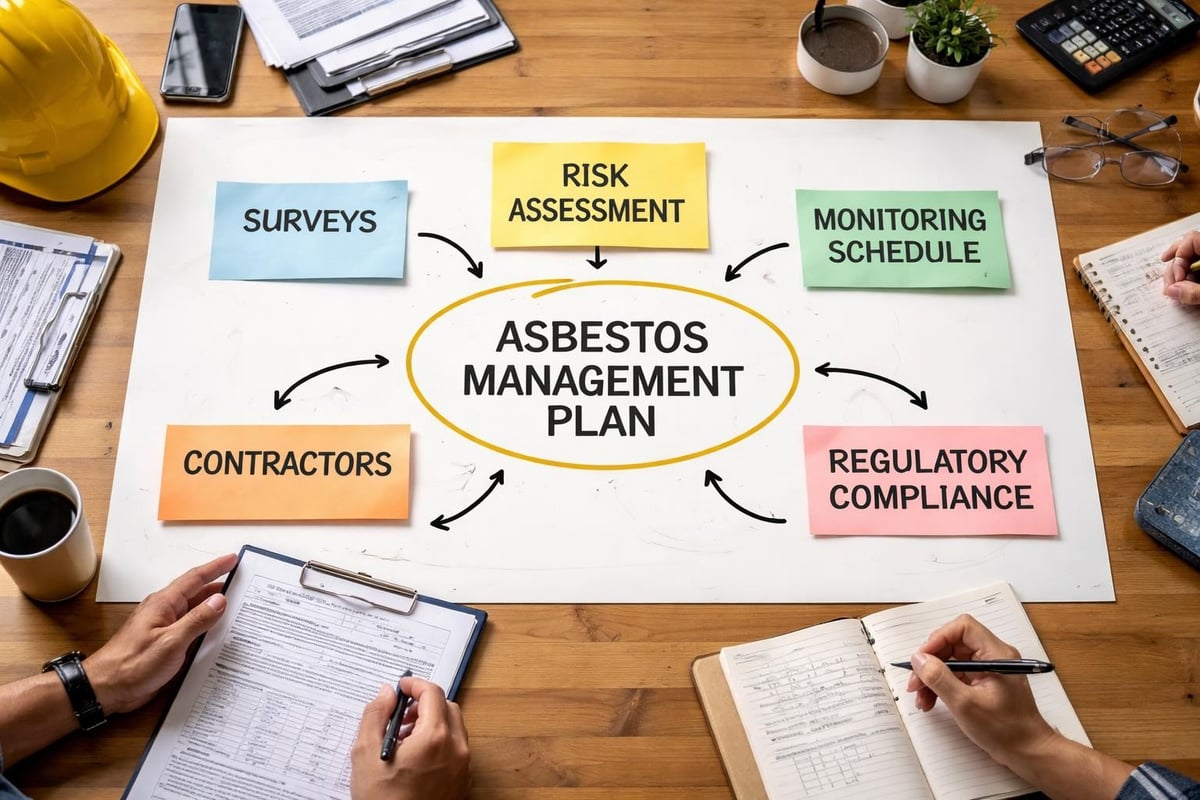
- Development and implementation of asbestos management plans
- Risk assessment methodologies and prioritisation matrices
- Selection and appointment of licensed asbestos removal contractors
- Project management principles for asbestos remediation works
- Clearance testing procedures and reoccupation certification requirements
The qualification also emphasises practical competencies, ensuring candidates can translate theoretical knowledge into effective management decisions. This approach aligns with industry best practices and supports organisations in meeting their duty to manage landlord responsibilities.

Entry Requirements and Prerequisites
Before pursuing asbestos P405 certification, candidates must demonstrate foundational knowledge through completion of the BOHS P400 Asbestos Foundation Module. This prerequisite ensures all participants possess baseline understanding of asbestos hazards, control measures, and legal obligations.
The P400 module introduces essential concepts that the asbestos P405 course develops into advanced competencies. This structured progression pathway ensures professionals develop expertise systematically rather than attempting to grasp complex management principles without adequate foundation.
Assessment Methods and Certification Process
Unlike some vocational qualifications that rely solely on written examinations, asbestos P405 assessment employs a comprehensive approach designed to evaluate both theoretical understanding and practical application capabilities.
Examination Structure
Candidates face two distinct assessment components that together determine their competency. The written examination tests knowledge retention and understanding of regulatory requirements, whilst practical exercises evaluate decision-making abilities in realistic scenarios.
| Assessment Component | Format | Duration | Pass Mark |
|---|---|---|---|
| Written Examination | Multiple choice and short answer questions | 2 hours | 60% |
| Practical Exercise | Case study analysis and management plan development | Variable | Satisfactory completion |
| Oral Examination | Viva voce with assessors | 30-45 minutes | Demonstrated competence |
The oral examination represents a particularly valuable component, allowing assessors to probe candidates' understanding of complex situations and evaluate their reasoning processes. This approach ensures asbestos P405 holders possess genuine competence rather than merely memorised information.
Certification Validity and Professional Development
Upon successful completion, candidates receive BOHS certification valid indefinitely. However, professional competence requires ongoing development as regulations evolve and industry practices advance. Many asbestos P405 holders pursue refresher training every three to five years to maintain currency with emerging standards and techniques.
Professional organisations increasingly expect duty holders to demonstrate continuous professional development, particularly when managing complex asbestos scenarios. This expectation reflects the serious nature of asbestos management and the potential consequences of inadequate oversight. Those involved in air monitoring and clearance testing activities may also pursue complementary qualifications such as P404.
Practical Applications in Asbestos Management
The asbestos P405 qualification translates directly into enhanced capability across numerous professional responsibilities. Qualified individuals bring structured, evidence-based approaches to situations where asbestos management decisions carry significant health, legal, and financial implications.
Developing Comprehensive Management Plans
One primary application involves creating robust asbestos management plans that satisfy regulatory requirements whilst remaining practical for day-to-day building operations. P405-qualified professionals understand how to balance risk reduction with operational continuity, ensuring proportionate responses to identified hazards.
Effective management plans developed by asbestos P405 holders typically include:
- Comprehensive asbestos registers documenting location, condition, and accessibility
- Risk assessments prioritising actions based on material condition and exposure potential
- Scheduled inspection programmes ensuring ongoing condition monitoring
- Emergency response procedures for unexpected disturbance or damage
- Communication protocols informing building users and contractors of ACM locations
- Review mechanisms ensuring plans remain current as buildings evolve
These elements combine to create living documents that guide organisational responses to asbestos presence, reducing risks whilst avoiding unnecessary expenditure on premature removal. Understanding how to develop such plans represents core asbestos P405 competency.
Managing Asbestos Removal Projects
When removal becomes necessary, asbestos P405 qualified professionals provide essential oversight ensuring work proceeds safely, legally, and effectively. This responsibility extends beyond simply appointing licensed contractors to encompass comprehensive project management from initial planning through final clearance certification.
The qualification equips individuals to evaluate contractor competence, scrutinise method statements, implement appropriate controls, and verify work completion to required standards. Without this expertise, organisations risk appointing unsuitable contractors or failing to identify deficient work practices that compromise safety.
Professionals managing refurbishment and demolition surveys particularly benefit from asbestos P405 knowledge, as these intrusive investigations often precede major building works requiring careful asbestos coordination.
Regulatory Context and Compliance Requirements
The Control of Asbestos Regulations 2012 establishes the legal framework within which asbestos P405 qualified professionals operate. Understanding this regulatory landscape forms a substantial component of the qualification curriculum, ensuring certificate holders can navigate complex compliance obligations confidently.
The Duty to Manage Asbestos
Regulation 4 imposes a duty to manage asbestos on those responsible for non-domestic premises. This obligation requires duty holders to identify asbestos presence, assess risks, implement management measures, and maintain records of actions taken.
Whilst regulations do not explicitly mandate asbestos P405 certification, the Health and Safety Executive (HSE) guidance emphasises that duty holders must possess or have access to sufficient expertise to discharge these responsibilities effectively. In practice, many organisations recognise P405 qualification as demonstrating the required competence level.
The duty to manage applies across diverse sectors including commercial offices, educational establishments, healthcare facilities, and public buildings. Each sector presents unique challenges requiring adapted approaches, which asbestos P405 training addresses through varied case studies and scenario analysis.
Interaction with Other Asbestos Qualifications
The BOHS qualification framework includes several asbestos-related certifications serving different professional roles. Understanding how asbestos P405 relates to these parallel qualifications helps organisations structure their competence frameworks appropriately.
| Qualification | Primary Focus | Typical Holders |
|---|---|---|
| P400 | Foundation awareness | Building managers, facilities staff |
| P401 | Surveying and sampling | Asbestos surveyors |
| P402 | Building surveys and management | Surveying company staff |
| P403 | Supervision of removal | Removal supervisors |
| P404 | Clearance testing | Analysts and consultants |
| P405 | Management including removal | Senior managers, consultants |
This framework ensures appropriate competence levels across different functions, from frontline surveyors conducting management surveys to senior managers developing organisational asbestos strategies.
Career Development and Professional Opportunities
Achieving asbestos P405 certification opens substantial career opportunities within asbestos management, consultancy, facilities management, and construction sectors. Employers increasingly value this credential when recruiting for roles carrying asbestos management responsibilities.
Employment Sectors Valuing P405 Qualification
Professional opportunities include:
- Asbestos consultancy firms providing specialist advice to clients
- Facilities management organisations overseeing diverse property portfolios
- Local authorities managing public buildings and housing stock
- Educational institutions with duty to manage responsibilities
- Healthcare providers operating complex estates
- Construction companies undertaking refurbishment and demolition projects
- Property management companies serving commercial landlords
Each sector offers distinct challenges and career pathways, with asbestos P405 qualification providing the foundational competence necessary for advancement. Many professionals combine this certification with complementary qualifications in building surveying, project management, or health and safety to enhance their versatility.
Salary Implications and Career Progression
Professional competence demonstrated through asbestos P405 certification typically correlates with enhanced earning potential. Roles requiring this qualification often command salaries reflecting the specialist knowledge and regulatory responsibilities involved.
Entry-level positions such as assistant asbestos consultant may offer starting salaries around £25,000 to £30,000 annually, whilst experienced professionals managing complex portfolios or leading consultancy teams can earn £45,000 to £65,000 or more. Independent consultants with established client bases may achieve higher earnings, particularly when providing specialist services beyond routine management advice.
Career progression often follows pathways from assistant roles through to senior consultant positions, technical management, or business ownership. The asbestos P405 qualification provides the technical credibility necessary for advancement whilst professional success depends equally on commercial acumen, client relationship skills, and continuous technical development.

Training Providers and Course Selection
Numerous approved training centres across the UK deliver asbestos P405 courses, each offering slightly different approaches to content delivery, scheduling, and candidate support. Selecting an appropriate provider represents an important decision affecting learning experience and examination success rates.
Evaluating Training Quality
The BOHS approves training providers meeting specific quality standards, but considerable variation exists in teaching approaches, facilities, and candidate support. Prospective students benefit from investigating several providers before committing to a particular course.
Factors to consider when selecting training include:
- Pass rates: Established providers should willingly share historical examination success data
- Tutor experience: Instructors with extensive practical asbestos management backgrounds offer valuable real-world insights
- Course materials: Comprehensive handouts and reference materials support revision and future professional practice
- Practical exercises: Realistic case studies and hands-on activities enhance learning retention
- Venue facilities: Comfortable, well-equipped training environments contribute to effective learning
- Post-course support: Access to tutors for clarification after training completion aids examination preparation
Many organisations choose to arrange bespoke in-house training when qualifying multiple staff members simultaneously. This approach can prove cost-effective whilst allowing customisation of case studies to reflect the organisation's specific asbestos management challenges.
Course Delivery Formats
Traditional classroom delivery remains the dominant format for asbestos P405 training, reflecting the interactive nature of effective competence development. However, training providers increasingly incorporate blended learning approaches combining online pre-course materials with intensive face-to-face sessions.
Some providers offer accelerated delivery options condensing content into fewer, longer days, whilst others maintain traditional five-day schedules allowing time for information absorption between sessions. Individual learning preferences and work commitments typically determine the most suitable format.
Integration with Organisational Asbestos Management
Organisations gain maximum value from asbestos P405 qualified staff when competence translates into enhanced management systems, improved risk control, and demonstrable regulatory compliance. This integration requires conscious effort beyond simply sponsoring qualification achievement.
Embedding Competence within Management Frameworks
Effective organisations establish clear accountability structures defining how P405-qualified individuals contribute to asbestos management. This clarity ensures expertise influences decision-making at appropriate levels rather than remaining isolated within technical roles.
Typical responsibilities assigned to asbestos P405 holders include:
- Reviewing and approving asbestos management plans developed by external consultants
- Conducting periodic compliance audits ensuring procedures remain effective
- Providing technical guidance to operational staff encountering potential ACMs
- Evaluating contractor competence when appointing removal specialists
- Liaising with enforcing authorities during inspections or incident investigations
- Developing organisational procedures and work instructions for asbestos management
These responsibilities create value by applying specialist knowledge to real-world challenges, reducing organisational risk exposure whilst ensuring cost-effective approaches to asbestos management. Organisations investing in compliance audits often designate P405-qualified staff to coordinate these reviews.
Supporting Continuous Professional Development
Maintaining competence requires ongoing professional development beyond initial qualification achievement. Forward-thinking organisations support this development through various mechanisms ensuring staff remain current with evolving standards and emerging best practices.
Effective CPD approaches include:
- Attendance at industry conferences and technical seminars
- Participation in professional networks and peer discussion groups
- Subscription to technical publications and regulatory update services
- Refresher training addressing specific knowledge gaps or emerging topics
- Involvement in complex projects stretching technical capabilities
- Mentoring relationships with more experienced practitioners
This investment in ongoing development protects both individual careers and organisational capability, ensuring asbestos P405 competence remains relevant and effective as the regulatory landscape and industry practices evolve.
Common Challenges and Solutions
Professionals pursuing or holding asbestos P405 qualification encounter various challenges affecting their effectiveness. Understanding these obstacles and proven solutions helps both individuals and organisations maximise the qualification's value.
Examination Preparation Difficulties
Many candidates find the breadth of material covered by asbestos P405 training challenging to absorb fully within the course duration. The qualification's proficiency level demands detailed understanding across numerous technical, legal, and practical domains.
Successful candidates typically adopt structured revision approaches following course completion, dedicating significant time to reviewing materials, practising case study analysis, and testing knowledge retention. Study groups formed with fellow candidates provide mutual support and knowledge sharing that enhances preparation effectiveness.
Some candidates struggle particularly with practical exercises requiring integration of multiple knowledge areas into coherent management decisions. Addressing this challenge requires practising realistic scenarios, seeking feedback from experienced practitioners, and developing systematic decision-making frameworks that can be applied consistently.
Applying Theory to Complex Situations
Newly qualified asbestos P405 holders sometimes find translating classroom learning into effective responses to real-world challenges more difficult than anticipated. Buildings present infinite variation in asbestos presence, condition, and management contexts that training cannot fully replicate.
Building confidence through graduated responsibility proves effective, with new certificate holders initially supporting experienced colleagues on complex projects before assuming independent responsibility. This mentoring approach allows practical skill development whilst maintaining appropriate safeguards against inadequate decision-making.
Access to specialist technical support resources, whether through professional networks, consultancy relationships, or organisational knowledge bases, provides valuable safety nets when encountering unfamiliar situations. Even experienced asbestos P405 professionals recognise that certain scenarios warrant consultation with specialists possessing deeper expertise in specific technical areas.
The asbestos P405 qualification provides essential competence for professionals managing asbestos-containing materials in buildings, combining comprehensive regulatory knowledge with practical decision-making capabilities that protect public health whilst ensuring organisational compliance. Whether you're seeking to develop internal capabilities or require specialist support for complex asbestos management challenges, Asbestosurv Ltd delivers professional asbestos surveys and consultancy services backed by qualified, experienced professionals across the UK. Contact our team to discuss how we can support your asbestos management requirements with expert guidance tailored to your specific circumstances.
Need Professional Asbestos Advice?
Contact our expert team for guidance on your specific requirements
Contact Us