

Asbestos Register HSE: Compliance Guide for 2026
Managing asbestos in commercial and residential properties remains a critical responsibility for building owners and duty holders across the United Kingdom. The asbestos register hse requirements form the cornerstone of effective asbestos management, providing a documented record of asbestos-containing materials within buildings. Understanding these regulations and implementing proper documentation systems protects not only occupants and workers but also ensures legal compliance with the Control of Asbestos Regulations 2012. This comprehensive guide explores the essential elements of maintaining an HSE-compliant asbestos register, the legal framework underpinning these requirements, and practical strategies for effective asbestos documentation.
Understanding the Asbestos Register HSE Requirements
The Health and Safety Executive mandates that duty holders maintain accurate records of asbestos-containing materials within non-domestic premises. This legal obligation stems from the duty to manage asbestos, which applies to anyone responsible for maintaining or repairing buildings.
An asbestos register hse compliant document serves multiple purposes within the regulatory framework. It provides a central repository of information about asbestos location, type, and condition. The register enables informed decision-making regarding maintenance activities, refurbishment projects, and emergency responses.
What Must Be Included in Your Register
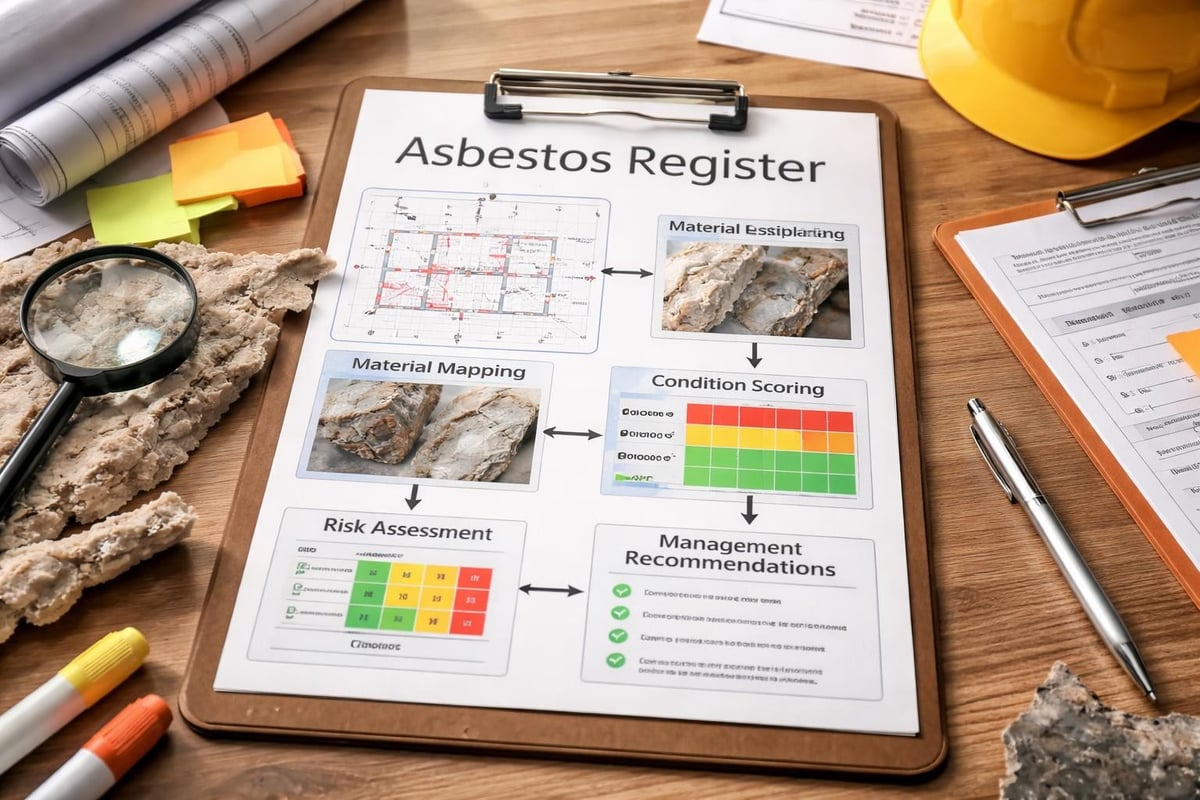
Every compliant asbestos register must contain specific information to meet HSE standards:
- Location details of all identified asbestos-containing materials with precise room numbers and descriptions
- Material type including the asbestos variety (chrysotile, amosite, or crocidolite)
- Condition assessment scoring the current state of each material
- Risk rating calculated from exposure potential and material condition
- Photographic evidence documenting the appearance and location
- Survey date and surveyor details for traceability
- Recommendations for management, monitoring, or removal
The HSE guidance on creating an asbestos register provides detailed specifications for record-keeping standards. Professional surveyors compile this information through systematic inspection and sampling programmes.
Legal Framework Governing Asbestos Registers
The Control of Asbestos Regulations 2012 establishes the legal foundation for asbestos management in the UK. Regulation 4 specifically addresses the duty to manage asbestos, requiring duty holders to take reasonable steps to determine asbestos presence and maintain records.
Failure to maintain an adequate asbestos register hse compliant documentation can result in enforcement action. The Health and Safety Executive possesses authority to issue improvement notices, prohibition notices, and prosecute serious breaches. Penalties for non-compliance include unlimited fines and imprisonment for up to two years in severe cases.
| Regulation | Requirement | Consequence of Non-Compliance |
|---|---|---|
| Regulation 4 | Duty to manage asbestos | Improvement notice, fines up to £20,000 |
| Regulation 5 | Identification of asbestos | Prohibition notice, unlimited fines |
| Regulation 6 | Assessment and monitoring | Prosecution, potential imprisonment |
| Regulation 7 | Asbestos management plan | Enforcement action, legal costs |
Beyond regulatory compliance, maintaining proper documentation protects against civil litigation. Should an individual develop asbestos-related disease, comprehensive records demonstrate due diligence and appropriate risk management.
Who Bears Responsibility
The duty to manage asbestos typically falls upon:
- Building owners for properties they own and control
- Landlords for common areas and building fabric
- Managing agents acting on behalf of property owners
- Facilities managers responsible for building maintenance
- Employers for workplaces they occupy and control
Understanding whether asbestos is present in your building represents the first step in fulfilling these obligations. Professional management surveys provide the foundation for accurate register creation.
Creating an Effective Asbestos Register
Developing a comprehensive asbestos register hse requirements demand systematic approach combining professional expertise with ongoing maintenance protocols. The process begins with commissioning a qualified asbestos surveyor to conduct a thorough building assessment.
Initial Survey and Documentation
Management surveys form the standard approach for occupied buildings. These non-intrusive inspections identify accessible asbestos-containing materials without causing significant disruption. Surveyors examine all accessible areas, taking samples where materials cannot be identified visually.
The surveyor's report provides the data necessary for register compilation. This includes detailed location plans, material descriptions, condition assessments, and photographic records. Professional consultancies transform this raw data into accessible register formats, often incorporating digital platforms for ease of access.
Refurbishment and demolition projects require more intrusive surveys. These investigations access all areas affected by planned works, ensuring contractors receive complete information before disturbing building fabric. The pre-refurbishment checklist outlines essential considerations for project planning.

Digital Versus Paper Systems
Modern asbestos registers increasingly utilise digital platforms offering significant advantages over traditional paper systems:
Digital Register Benefits:
- Instant access for authorised personnel from multiple locations
- Automatic update notifications and version control
- Integration with maintenance management systems
- Searchable databases reducing information retrieval time
- Backup and disaster recovery capabilities
- Audit trails documenting register access and modifications
Paper Register Considerations:
- No technology dependencies during power failures
- Simple implementation without software costs
- Familiar format for all staff members
- Physical presence in site offices
Professional organisations like Asbestosurv Ltd provide digital compliance solutions that combine accessibility with robust security measures. These platforms ensure information remains available to those who need it whilst preventing unauthorised access.
Maintaining and Updating Your Register
An asbestos register hse compliant system requires ongoing maintenance rather than one-time creation. The Control of Asbestos Regulations mandate regular review and update procedures to ensure information accuracy.
Regular Review Cycles
Establish formal review schedules based on building use and asbestos material condition:
- Annual reviews for all buildings containing asbestos
- Six-monthly inspections for high-risk materials in poor condition
- Quarterly checks for areas undergoing active maintenance programmes
- Immediate updates following any building works, incidents, or material removal
Each review should verify existing records, assess material condition changes, and update risk ratings accordingly. Re-inspection surveys conducted by qualified professionals ensure objectivity and compliance with current standards.
Trigger Events Requiring Updates
Certain activities necessitate immediate register amendments:
- Refurbishment projects exposing previously inaccessible areas
- Asbestos removal requiring register entries marked as removed
- Building extensions adding new areas to the register scope
- Damage incidents affecting asbestos material condition
- Survey discoveries identifying previously unknown materials
- Ownership changes requiring register transfer and verification
The HSE's comprehensive asbestos information provides detailed guidance on managing these situations. Documentation must reflect current building conditions at all times.
Making the Register Accessible
Creating an asbestos register hse documentation fulfils only part of the legal obligation. Duty holders must ensure information reaches those who need it, when they need it.
Distribution and Access Protocols
Effective register management requires clear protocols for information sharing:
| Stakeholder Group | Access Level | Distribution Method | Update Frequency |
|---|---|---|---|
| Maintenance staff | Full register | Digital platform + site copy | Real-time |
| Contractors | Relevant sections | Pre-work briefing pack | Project-specific |
| Emergency services | Building overview | Site emergency folder | Quarterly |
| Management team | Summary reports | Dashboard access | Monthly |
| Occupants | General awareness | Notice boards | As required |
Site-based copies should remain readily available in prominent locations, typically the main office or security desk. Many organisations maintain physical registers in protective folders alongside emergency procedures and building plans.
Pre-Work Information Sharing
The Control of Asbestos Regulations require duty holders to provide asbestos information before work commences. This applies to all contractors and maintenance personnel whose activities might disturb building fabric.
Establish systematic procedures ensuring every contractor receives relevant register extracts before accessing the site. This includes electricians, plumbers, decorators, and facilities maintenance teams. Documentation should include acknowledgement forms confirming contractor receipt and understanding of asbestos information.
Educational institutions face particular challenges managing multiple contractors and activities. The asbestos in schools checklist addresses sector-specific considerations for register management and information sharing.
Integrating Registers with Management Plans
The asbestos register hse requirements form one component of comprehensive asbestos management. The register provides foundational data that informs broader management planning and risk control strategies.

Developing Comprehensive Management Plans
Asbestos management plans build upon register information to establish control measures, responsibilities, and procedures. The plan documents how the organisation will manage asbestos risks, incorporating:
- Control measures preventing material disturbance
- Emergency procedures for accidental damage
- Training programmes ensuring staff competence
- Monitoring schedules tracking material condition
- Review procedures maintaining plan currency
The management plan references the register as its authoritative source for asbestos location and condition data. Any register updates trigger corresponding plan reviews to maintain consistency across documentation.
Risk Assessment and Prioritisation
Not all asbestos-containing materials present equal risk. The register's risk ratings enable prioritised action planning, directing resources toward highest-risk situations.
Material risk assessment considers multiple factors:
- Material type with amphibole asbestos (amosite, crocidolite) presenting higher risk
- Condition ranging from good condition to severely damaged
- Surface treatment distinguishing sealed from friable materials
- Accessibility assessing likelihood of disturbance
- Extent quantifying the amount of material present
- Human exposure evaluating occupancy patterns and activities
The HSE guidance on identifying asbestos and assessing its condition provides standardised assessment methodologies. Professional consultants calculate standardised risk scores enabling objective prioritisation.
Common Register Management Challenges
Maintaining an effective asbestos register hse compliant system presents practical challenges that organisations must address through robust procedures and appropriate resources.
Accuracy and Completeness Issues
Registers often suffer from incomplete information, particularly in complex buildings with extensive modification histories. Areas of concern include:
- Inaccessible locations not surveyed during initial assessments
- Hidden materials behind wall linings, above ceilings, or under floors
- Undocumented works where previous removals lack proper records
- Material identification where visual inspection proves inconclusive
- Historic surveys conducted before current standards applied
Addressing these gaps requires ongoing vigilance and systematic investigation during refurbishment projects. The presumption that materials contain asbestos until proven otherwise provides a safety margin when information remains uncertain.
Version Control and Update Management
Multiple register versions create confusion and safety risks. Without clear version control, contractors may work from outdated information showing removed materials as present, or worse, failing to identify actual asbestos.
Implement strict version control procedures:
- Unique version numbers for each register iteration
- Issue dates clearly marked on all pages
- Change logs documenting all amendments
- Obsolete copy withdrawal removing outdated versions from circulation
- Authorisation procedures requiring formal approval before updates
Digital platforms automatically manage versioning, reducing administrative burden whilst improving reliability. Cloud-based systems ensure all users access current information without manual distribution requirements.
Training and Competence Requirements
Effective asbestos register hse management depends upon competent personnel understanding their responsibilities and executing them properly. The duty to manage includes ensuring adequate training for all involved parties.
Duty Holder Training Needs
Building owners and facilities managers require asbestos awareness training covering:
- Legal obligations under the Control of Asbestos Regulations
- Register creation, maintenance, and review procedures
- Risk assessment principles and prioritisation methods
- Information sharing requirements with contractors
- Emergency response protocols for material damage
- Management plan development and implementation
The duty to manage landlord guide addresses specific considerations for property owners with multiple tenanted premises. Professional training and awareness programmes ensure duty holders maintain current knowledge.
Contractor and Worker Requirements
Anyone working in buildings potentially containing asbestos needs appropriate information and training. This ranges from general awareness for office workers to specialist qualifications for maintenance staff.
Asbestos awareness training must cover:
- Properties and health risks of asbestos materials
- Building types and locations where asbestos occurs
- Recognition of common asbestos-containing materials
- Actions required when asbestos is suspected or confirmed
- Emergency procedures following accidental disturbance
Maintenance personnel frequently encounter asbestos during routine work. Their training should emphasise register consultation before starting any task that might disturb building fabric.
Audit and Compliance Verification
Regular compliance audits verify that asbestos register hse requirements are met and management systems function effectively. These reviews identify gaps, weaknesses, and improvement opportunities before regulatory inspectors discover them.
Internal Audit Programmes
Establish systematic internal audit schedules examining:
- Register completeness against survey reports and building records
- Update compliance verifying reviews occur at required intervals
- Access arrangements confirming authorised personnel can retrieve information
- Information sharing checking contractors receive appropriate briefings
- Training records ensuring staff maintain current competence
- Management plan alignment verifying consistency between documents
Professional compliance audits provide independent verification and expert recommendations. Third-party assessment identifies issues that internal reviews might overlook, particularly regarding interpretation of regulatory requirements.
Regulatory Inspection Preparedness
HSE inspectors may request asbestos documentation during routine inspections or following incidents. Preparedness requires maintaining readily accessible records demonstrating compliance.
| Document Type | Required Content | Retention Period |
|---|---|---|
| Survey reports | Complete findings with plans and photos | Building lifetime |
| Register versions | All iterations with change logs | Minimum 40 years |
| Training records | Attendance and competence evidence | 5 years minimum |
| Review documentation | Inspection findings and actions | 5 years minimum |
| Contractor briefings | Information provision evidence | 5 years minimum |
| Incident reports | Damage events and responses | 40 years minimum |
Digital archiving systems simplify long-term record retention whilst ensuring information remains accessible when required. The HSE's duty to manage overview confirms documentation expectations during inspections.
Sector-Specific Considerations
Different building types and occupancy patterns create unique asbestos register hse management challenges requiring tailored approaches.
Educational Facilities
Schools and universities manage particularly complex situations with multiple buildings, diverse activities, and vulnerable populations. Register management must account for:
- Holiday period access enabling intrusive surveys when students absent
- Multiple stakeholder communication reaching staff, contractors, and governing bodies
- Frequent minor works requiring continuous contractor management
- Science laboratory considerations with specialist equipment and services
- Historic building fabric in older educational establishments
Educational settings benefit from appointing dedicated asbestos coordinators who oversee register maintenance, contractor briefings, and compliance monitoring throughout the academic year.
Healthcare Premises
Hospitals and care facilities present unique challenges combining continuous operation with extensive service installations. Register management considerations include:
- 24/7 operational requirements limiting survey access opportunities
- Infection control constraining work methods and access routes
- Emergency response needs requiring immediate register consultation
- Medical equipment potentially containing asbestos components
- Patient safety as paramount consideration during management activities
Healthcare organisations typically integrate asbestos registers with estates management systems, enabling facilities teams to cross-reference information during maintenance planning and emergency responses.
Commercial and Industrial Properties
Warehouses, factories, and commercial premises often contain extensive asbestos in insulation, roofing, and wall panels. Register management priorities include:
- Large building footprints requiring comprehensive survey programmes
- Industrial processes potentially affecting asbestos condition
- Contractor activity levels necessitating robust briefing systems
- Machinery maintenance accessing services potentially containing asbestos
- Structural modifications frequently exposing previously hidden materials
Industrial premises benefit from visual management approaches, including asbestos location marking systems complementing written registers. However, labelling must not suggest materials are safe to disturb.
Future-Proofing Your Register System
As technology evolves and regulatory expectations develop, asbestos register hse management systems must adapt to remain effective and compliant.
Emerging Technologies
Building Information Modelling (BIM) platforms increasingly incorporate asbestos data within comprehensive digital building models. These systems enable three-dimensional visualisation of asbestos locations, improving contractor understanding and reducing disturbance risks.
Mobile applications allow on-site register consultation via smartphones and tablets, enabling maintenance teams to verify asbestos information immediately before work commences. GPS-enabled systems can trigger automatic alerts when workers enter areas containing asbestos materials.
Artificial intelligence and machine learning applications are being developed to analyse survey photographs, potentially identifying asbestos-containing materials more reliably than visual inspection alone. However, these technologies currently complement rather than replace professional surveyor expertise.
Regulatory Developments
Asbestos regulations continue evolving as knowledge advances and enforcement priorities shift. Recent trends include:
- Increased enforcement activity with higher fines for non-compliance
- Enhanced duty holder accountability requiring demonstrable competence
- Digital record expectations as standard rather than optional
- Extended liability periods recognising long latency of asbestos diseases
- Improved guidance materials clarifying regulatory expectations
Staying informed about regulatory developments ensures management systems remain compliant. Professional consultancies like Asbestosurv Ltd monitor regulatory changes and advise clients on necessary system modifications.
Maintaining an effective asbestos register hse compliant system represents a critical responsibility for building owners and duty holders, combining legal obligations with moral duty to protect building occupants and workers. Comprehensive documentation, regular reviews, and systematic information sharing form the foundation of successful asbestos management. Professional consultancies provide the expertise and support necessary to develop robust register systems that meet current requirements whilst adapting to future challenges. For expert assistance with asbestos surveys, register creation, and ongoing compliance management, Asbestosurv Ltd delivers professional solutions tailored to your specific requirements across the UK.
Need Professional Asbestos Advice?
Contact our expert team for guidance on your specific requirements
Contact Us