
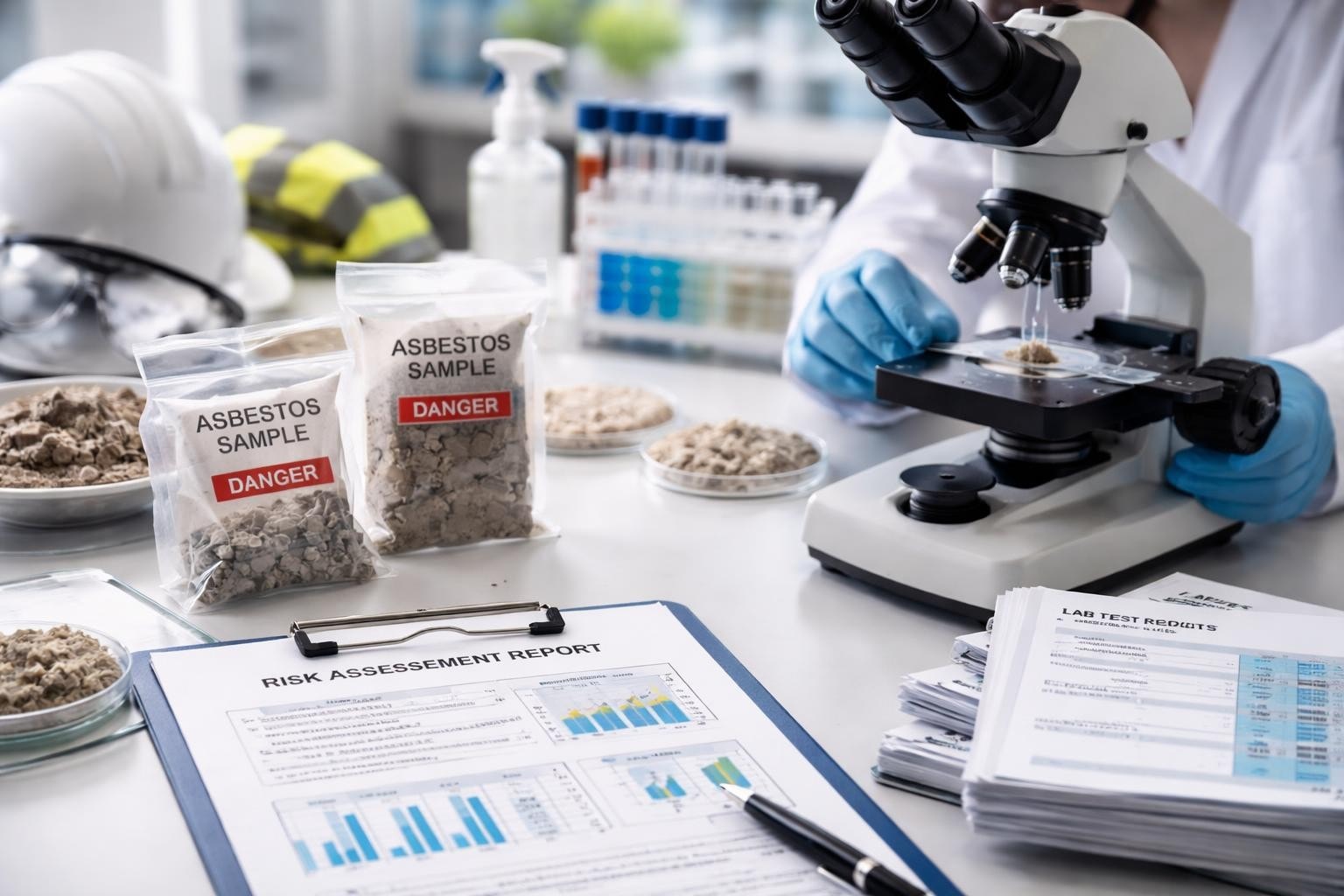
Asbestos Sampling: Essential Guide for UK Properties
Asbestos remains one of the most significant health hazards in buildings constructed before 2000, making professional identification and analysis crucial for property safety. Understanding the principles and practices behind asbestos sampling enables property owners, facilities managers, and compliance officers to make informed decisions about material testing, risk assessment, and regulatory adherence. The process combines systematic collection techniques, laboratory analysis, and detailed documentation to determine the presence, type, and condition of asbestos-containing materials (ACMs) within a structure.
Understanding the Purpose of Asbestos Sampling
Asbestos sampling serves multiple critical functions within comprehensive property management. Identification remains the primary objective, confirming whether suspect materials contain asbestos fibres and determining their specific type. The OSHA monitoring methods for chrysotile asbestos provide detailed frameworks for understanding different asbestos varieties and their characteristics.
Beyond simple identification, sampling enables quantitative assessment of asbestos content within materials. This measurement proves essential for planning remediation strategies and estimating costs accurately. Professional sampling and laboratory analysis services ensure precise quantification that meets regulatory standards.
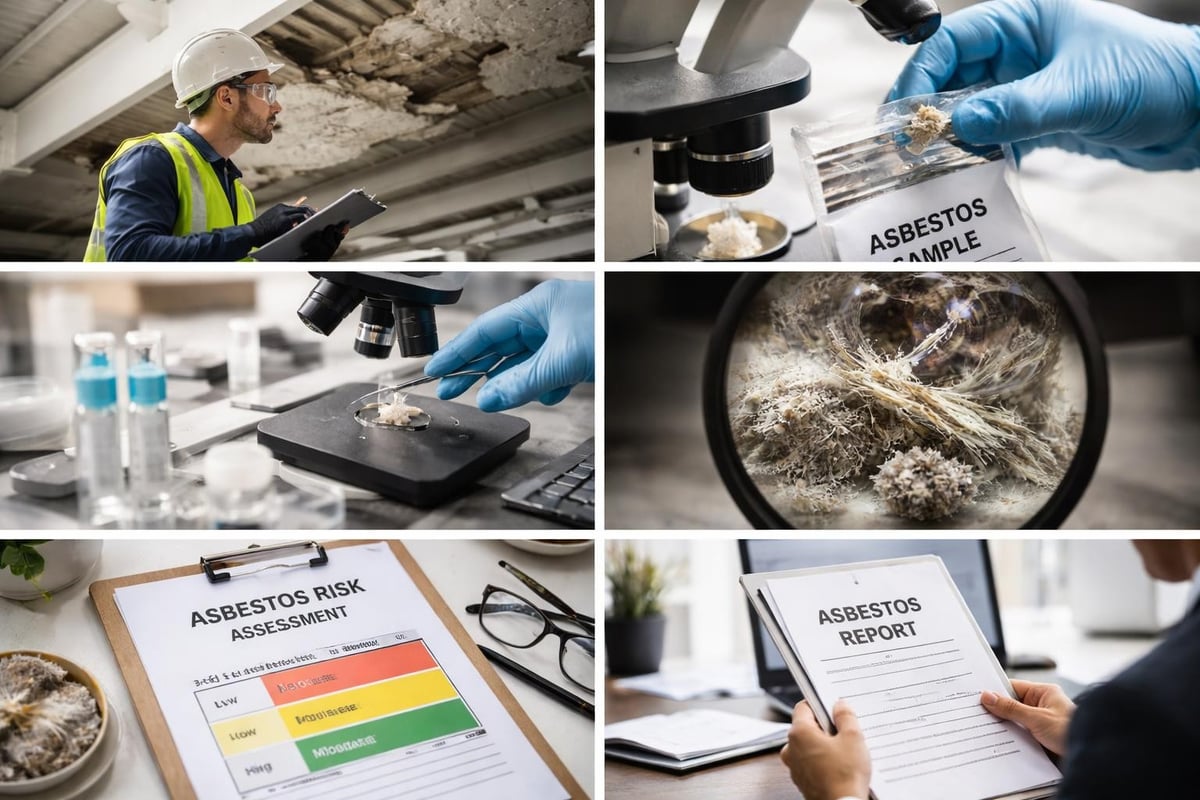
Risk evaluation represents another fundamental purpose. Understanding the condition and friability of ACMs determines their immediate danger level and informs management priorities. Materials in poor condition releasing fibres pose significantly greater risks than those in good condition that remain stable.
When Sampling Becomes Mandatory
UK regulations require sampling under specific circumstances:
- Prior to refurbishment or demolition work affecting suspect materials
- When management surveys identify presumed ACMs requiring confirmation
- Following incidents that may have disturbed asbestos materials
- During compliance audits when material status remains unverified
- When air monitoring indicates potential fibre release
The pre-refurbishment checklist outlines critical sampling requirements before construction activities commence.
Types of Asbestos Sampling Methods
Different scenarios demand specific sampling approaches, each with distinct advantages and applications.
Bulk Material Sampling
Bulk sampling involves collecting small portions of suspect materials for laboratory analysis. This method provides definitive identification of asbestos presence, type, and concentration within building materials.
Surveyors select representative samples from:
- Surface layers of textured coatings
- Core sections of insulation materials
- Fragments of ceiling tiles or floor coverings
- Sections of pipe lagging or sprayed coatings
Sample size typically ranges between 5-10 grams, sufficient for comprehensive analysis whilst minimising material disturbance. Professionals employ specialised tools and containment procedures to prevent fibre release during collection.
Air Monitoring and Fibre Counting
Air sampling measures airborne asbestos fibre concentrations in specific environments. This technique proves invaluable during:
- Baseline assessments before remediation work begins
- Personal exposure monitoring for workers in asbestos environments
- Clearance testing following abatement activities
- Background monitoring in occupied buildings with known ACMs
The ASTM D7201-06(2020) standard establishes protocols for counting airborne fibres using phase contrast microscopy, ensuring consistency across laboratories. Professional air monitoring and clearance testing services apply these standards rigorously.
| Sampling Type | Primary Use | Analysis Method | Typical Duration |
|---|---|---|---|
| Bulk Material | Material identification | Polarised Light Microscopy (PLM) | 24-48 hours |
| Air Monitoring | Exposure assessment | Phase Contrast Microscopy (PCM) | 4-8 hours collection |
| Surface Wipe | Contamination verification | Transmission Electron Microscopy (TEM) | Variable |
| Soil Sampling | Site contamination | EPA methods | 48-72 hours |
Surface and Wipe Sampling
Surface sampling detects asbestos contamination on building surfaces, furniture, or equipment. This approach uses moistened wipes or vacuum cassettes to collect settled dust and fibres from defined areas.
Common applications include:
- Post-abatement verification of cleaning effectiveness
- Contamination assessment in adjacent areas
- Investigation following suspected disturbance events
- Routine monitoring in buildings with deteriorating ACMs
The Sampling Process: Step-by-Step Methodology

Proper technique ensures sample integrity whilst protecting personnel and building occupants from exposure. The Chartered Institution of Building Services Engineers guidance provides detailed protocols for building services professionals.
Pre-Sampling Preparation
Thorough preparation minimises risks and ensures regulatory compliance:
Risk assessment documentation identifies potential hazards specific to the sampling location. This includes evaluating material accessibility, working at height requirements, and potential disturbance to other building materials.
Notification procedures inform building occupants and relevant parties about sampling activities. Many organisations maintain strict protocols requiring advance notice to facility managers, security personnel, and area occupants.
Equipment preparation ensures all necessary tools remain readily available. Standard equipment includes sample containers, labelling materials, moisture suppressants, sealants, personal protective equipment (PPE), and decontamination supplies.
Sample Collection Techniques
Professional surveyors follow systematic procedures:
- Area preparation establishes controlled conditions around the sampling location, minimising disturbance and containing potential fibre release
- Material wetting applies controlled moisture to reduce dust generation during sampling
- Careful extraction removes representative material portions using appropriate tools for each material type
- Immediate sealing places samples in airtight containers, preventing contamination and fibre escape
- Surface repair applies sealant to exposed areas, restoring material integrity
Each sample receives unique identification linking it to specific locations documented in survey records. Detailed photographic evidence supports sample location verification.
Chain of Custody and Documentation
Rigorous documentation maintains sample integrity throughout the analysis process:
- Sample labels include unique identifiers, collection date, surveyor name, and material description
- Chain of custody forms track sample handling from collection through laboratory receipt
- Site plans mark exact sample locations with grid references
- Condition assessments record material state before sampling
This documentation proves essential for regulatory compliance and legal defensibility.
Laboratory Analysis Methods
Accredited laboratories employ sophisticated techniques to identify and quantify asbestos in collected samples.
Polarised Light Microscopy (PLM)
PLM represents the standard method for bulk material analysis. This technique identifies asbestos types based on optical properties including:
- Refractive indices under specific light conditions
- Crystal structure and morphology
- Fibre colour and pleochroism
- Extinction characteristics
Analysts prepare samples by isolating fibres from the bulk material matrix, then examine them under polarised light at magnifications between 100x and 400x. The method reliably detects asbestos concentrations above 1% and distinguishes between chrysotile, amosite, crocidolite, and other asbestos varieties.
Transmission Electron Microscopy (TEM)
TEM provides higher sensitivity for low-concentration samples and precise fibre identification. This advanced technique proves necessary when:
- PLM results remain inconclusive
- Very low asbestos concentrations require verification
- Regulatory standards demand higher analytical sensitivity
- Air sample analysis requires fibre counting and sizing
The EPA framework for asbestos investigation outlines TEM applications in comprehensive site assessments.
Quality Assurance in Laboratory Testing
Reputable laboratories maintain rigorous quality control:
| Quality Measure | Purpose | Frequency |
|---|---|---|
| Blank samples | Contamination detection | Every sample batch |
| Reference materials | Accuracy verification | Monthly minimum |
| Proficiency testing | External validation | Quarterly/Annual |
| Equipment calibration | Measurement precision | Per manufacturer specifications |
| Analyst certification | Competency assurance | Annual renewal |
These measures ensure consistent, reliable results across different analysts and timeframes.
Interpreting Sampling Results
Understanding laboratory reports enables informed decision-making regarding asbestos management strategies.
Result Classifications
Laboratories report findings using standardised terminology:
Positive identification confirms asbestos presence, specifying type and concentration percentage. Results might indicate "15% chrysotile asbestos" or "amosite asbestos detected at 8%". The OSHA data on amosite asbestos provides detailed information about this particularly hazardous variety.
Non-detected indicates no asbestos fibres identified within the sample. However, this doesn't necessarily mean the entire material remains asbestos-free, as sampling captures only small portions.
Trace amounts describe asbestos below quantification limits, typically under 1%. Regulatory treatment of trace findings varies by jurisdiction and material application.
Risk Assessment Based on Results
Sampling results inform comprehensive risk evaluations considering multiple factors:
- Asbestos type: Amosite and crocidolite pose greater health risks than chrysotile
- Concentration percentage: Higher concentrations generally indicate greater risk
- Material condition: Friable, damaged materials release fibres more readily
- Location accessibility: Materials in occupied or high-traffic areas require priority attention
- Intended work scope: Planned activities that might disturb materials escalate urgency
Professional management surveys integrate sampling results within broader risk assessment frameworks.
Regulatory Compliance and Standards
UK asbestos regulations establish strict requirements for sampling procedures, analyst qualifications, and result interpretation.
Analyst Competency Requirements
Regulations mandate specific qualifications:
- BOHS P401 certification for bulk sample analysis
- BOHS P402 qualification for air monitoring using PCM
- RSPH/BOHS P403 certification for surveying and sampling procedures
- ISO 17025 accreditation for laboratory operations
These credentials ensure analysts possess necessary technical knowledge and practical competencies. The team at Asbestosurv Ltd maintains current certifications across all relevant disciplines.
Documentation and Record-Keeping
Compliance demands comprehensive documentation:
- Sample registers cataloguing all samples collected from each property
- Laboratory certificates providing official analysis results
- Photographic evidence showing sample locations and material conditions
- Survey reports integrating sampling data within overall asbestos assessments
- Management plans detailing actions based on sampling findings
These records support duty to manage compliance for responsible parties.
Common Sampling Challenges and Solutions
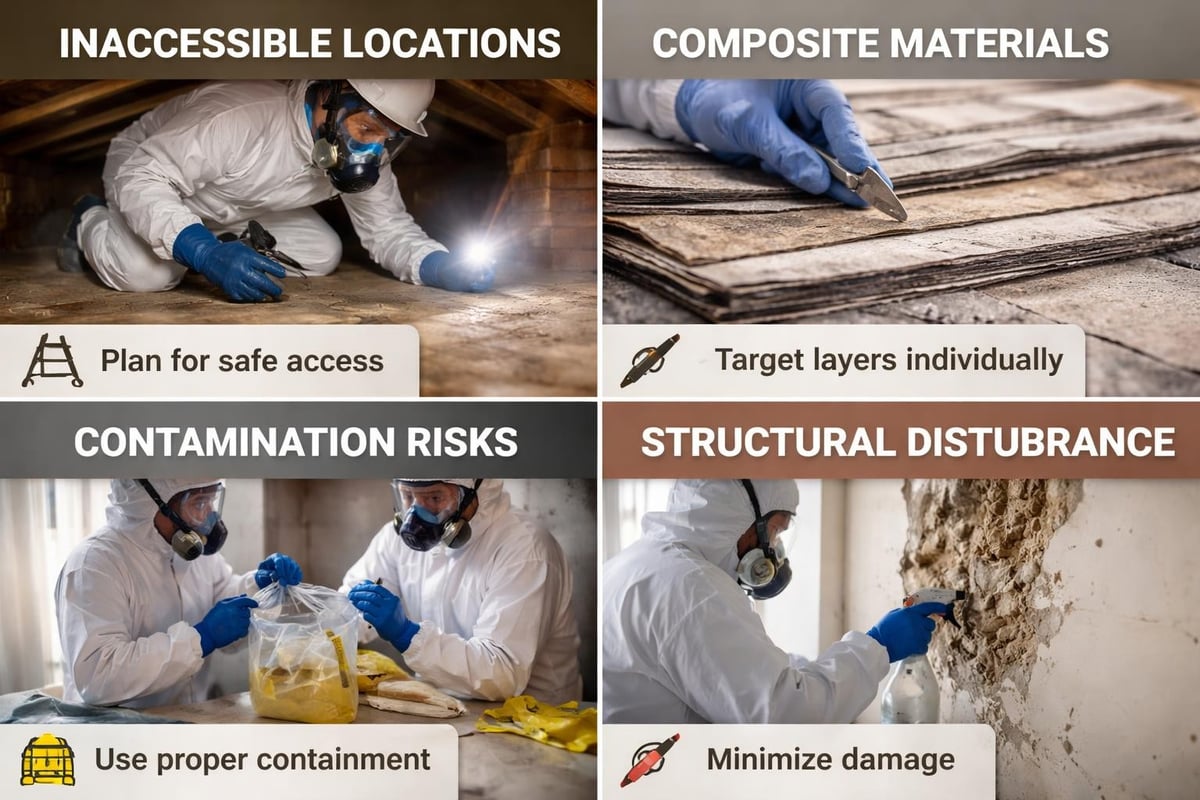
Professional surveyors regularly encounter situations requiring specialised approaches.
Inaccessible Locations
Materials in roof voids, behind fixed equipment, or within structural cavities present access difficulties. Solutions include:
- Scaffolding or powered access for high-level materials
- Endoscopic inspection using borescopes before sampling
- Coordinated shutdowns enabling equipment removal
- Alternative assessment methods when sampling proves impractical
Sometimes presuming asbestos presence without sampling provides the safest, most cost-effective approach for inaccessible materials.
Composite Materials and Layered Systems
Many building materials comprise multiple layers, each potentially containing different asbestos types. Flooring systems commonly include vinyl surface layers, adhesive compounds, backing papers, and underlayments.
Comprehensive sampling requires:
- Systematic layer separation during sample collection
- Individual analysis of each distinct layer
- Detailed documentation linking results to specific material components
- Representative sampling across different building areas
Contamination Prevention
Cross-contamination during sampling compromises result accuracy. Rigorous protocols prevent this issue:
- Clean tools between samples or use disposable equipment
- Process samples in controlled sequences from presumed negative to positive
- Maintain separate storage for different sample types
- Employ proper decontamination procedures for reusable equipment
Professional practices ensure sample integrity throughout collection and transport.
Integration with Broader Asbestos Management
Asbestos sampling doesn't exist in isolation but forms part of comprehensive management strategies.
Management Survey Integration
Sampling validates presumptions made during visual assessments. Surveyors conducting refurbishment and demolition surveys rely heavily on sampling to provide definitive material identification before intrusive work proceeds.
Results populate asbestos registers, inform risk assessments, and guide management decisions. The digital compliance solutions offered by modern consultancies integrate sampling data seamlessly within management systems.
Ongoing Monitoring Programmes
Properties with known ACMs require periodic reassessment:
- Re-inspection surveys evaluate material condition changes
- Air monitoring confirms continued containment effectiveness
- Additional sampling verifies suspect materials identified since initial surveys
- Update protocols maintain current records reflecting building modifications
These programmes ensure continued regulatory compliance and occupant safety.
Project Planning and Contractor Briefings
Sampling results directly inform project specifications and contractor requirements. Detailed material identification enables:
- Accurate cost estimation for remediation work
- Appropriate method statement development
- Correct licensing determination for removal activities
- Specific waste classification and disposal planning
The project management services provided by specialist consultancies coordinate these elements effectively.
Regional Considerations Across the UK
Asbestos sampling practices remain consistent nationwide, but regional building stock variations influence sampling frequency and material types encountered.
London and Southeast England
Dense urban environments with diverse building ages require extensive sampling programmes. Properties in London, Surrey, and Kent often feature complex refurbishments spanning decades, creating layered ACM challenges.
Commercial property conversions particularly demand comprehensive sampling as original industrial materials often contained asbestos products now hidden behind modern finishes.
Eastern England
Industrial heritage across Essex, Suffolk, and Norfolk means sampling frequently identifies asbestos insulation, cement products, and specialized industrial materials. Agricultural buildings converted to residential use present unique sampling challenges.
Educational Facilities
Schools throughout regions including Hertfordshire and Cambridgeshire require specialized approaches. The asbestos in schools checklist addresses specific sampling considerations for educational environments, where occupant safety demands particular attention.
Emerging Technologies and Future Developments
Asbestos sampling continues evolving with technological advancement and regulatory refinement.
Rapid Analysis Techniques
Research explores faster identification methods reducing laboratory turnaround times. Portable X-ray diffraction devices and infrared spectroscopy show promise for preliminary field screening, though regulatory acceptance requires further validation.
Digital Documentation Systems
Modern surveying increasingly employs digital capture technologies:
- Tablet-based data collection eliminating transcription errors
- GPS-enabled photography automatically geotagging sample locations
- Cloud synchronization providing real-time data access
- QR code labelling linking physical samples to digital records
These innovations enhance accuracy whilst improving efficiency.
Enhanced Safety Protocols
Ongoing research into containment methods and PPE effectiveness continually refines sampling safety. Studies examining asbestos exposure and abatement methods inform evolving best practices across the industry.
Cost Considerations and Value Justification
Understanding sampling economics helps property managers budget appropriately whilst recognizing value beyond simple price comparisons.
Pricing Structures
Asbestos sampling costs vary based on several factors:
- Sample quantity: Bulk discounts often apply for multiple samples
- Material accessibility: Difficult locations increase collection time
- Analysis method: TEM costs significantly more than PLM
- Turnaround requirements: Expedited results command premium pricing
- Travel distances: Remote locations may incur additional charges
Typical bulk sample analysis ranges from £25-50 per sample, whilst air monitoring costs £100-300 per sample depending on analysis requirements.
Return on Investment
Professional sampling delivers value through:
| Benefit | Financial Impact |
|---|---|
| Accurate material identification | Prevents unnecessary removal costs |
| Regulatory compliance | Avoids enforcement penalties |
| Liability reduction | Minimizes legal exposure risks |
| Insurance validation | Supports coverage requirements |
| Project planning certainty | Reduces contingency requirements |
Investing in comprehensive sampling ultimately reduces total project costs whilst ensuring safety.
Professional asbestos sampling provides essential data for informed decision-making about material management, regulatory compliance, and occupant safety. Understanding the methodologies, regulatory requirements, and integration within broader management strategies enables property owners and facilities managers to approach asbestos challenges confidently. For comprehensive asbestos sampling, laboratory analysis, and expert consultancy across the UK, Asbestosurv Ltd delivers professional services ensuring full regulatory compliance and property safety.
Need Professional Asbestos Advice?
Contact our expert team for guidance on your specific requirements
Contact Us