
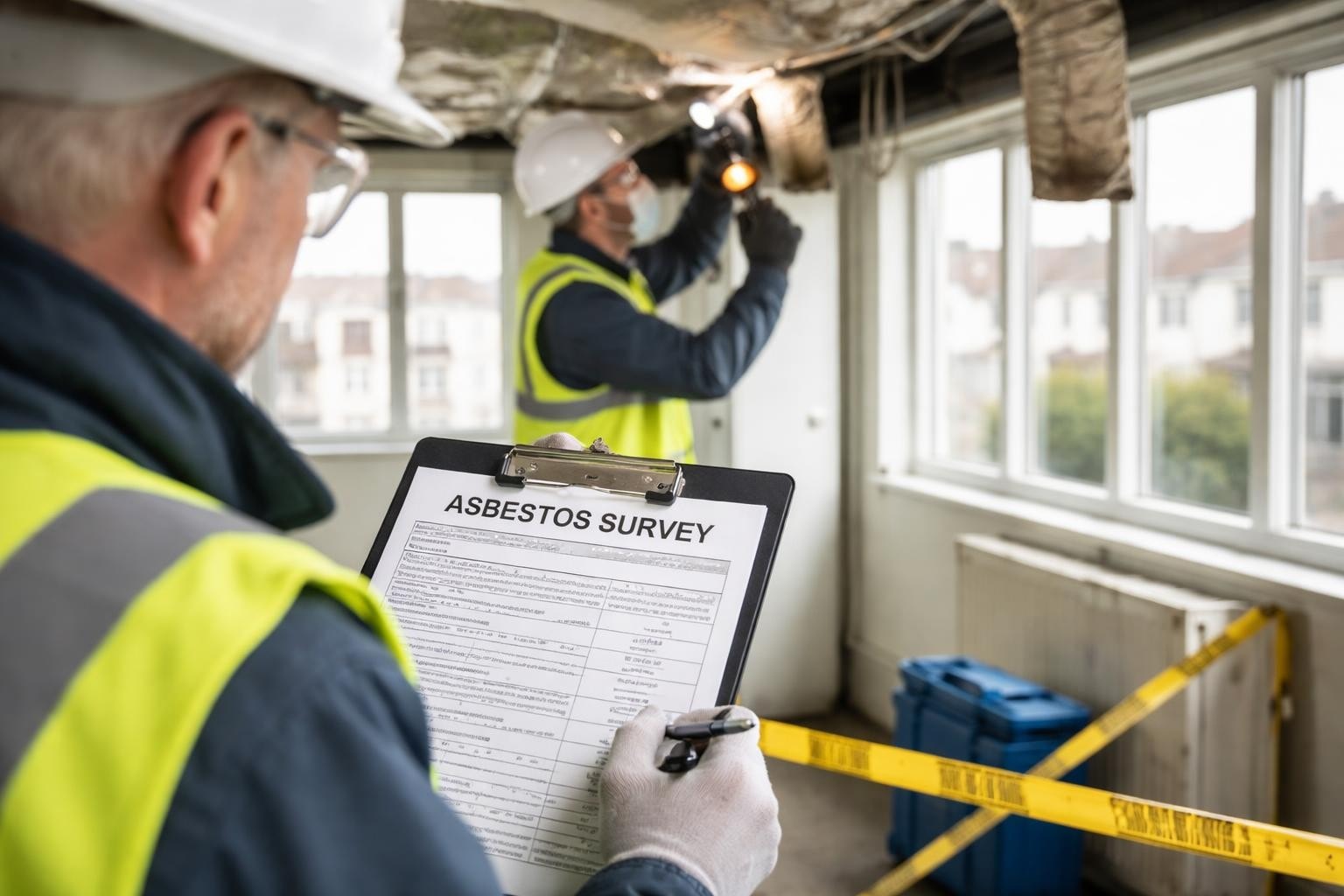
Asbestos Survey Essex: Complete Guide for 2026
Property owners and managers across Essex face ongoing responsibilities regarding asbestos management, particularly in buildings constructed before the year 2000. Understanding the requirements for an asbestos survey Essex property owners must fulfil ensures compliance with UK regulations whilst protecting occupants from potential health risks. Whether you're managing a commercial building in Chelmsford, overseeing a school in Colchester, or planning refurbishment works in Southend, professional asbestos surveying forms the cornerstone of responsible property management and regulatory adherence.
Understanding Asbestos Survey Requirements in Essex
The Control of Asbestos Regulations 2012 establishes clear obligations for property owners and duty holders throughout Essex. Legal requirements for asbestos surveys mandate that anyone with responsibility for maintaining or repairing non-domestic premises must identify the presence of asbestos-containing materials (ACMs).
An asbestos survey Essex businesses commission serves multiple critical functions. These inspections create a comprehensive record of ACM locations, assess the condition of identified materials, and inform ongoing management strategies. The regulations apply to a wide range of properties, including commercial buildings, industrial facilities, educational establishments, healthcare premises, and multi-occupancy residential buildings.
Who Needs an Asbestos Survey in Essex?
Essex property owners face specific circumstances requiring professional asbestos surveys:
- Commercial landlords with buildings constructed before 2000
- Facilities managers responsible for maintaining business premises
- Educational institutions managing schools and colleges
- Healthcare providers overseeing hospitals and care facilities
- Local authorities managing public buildings and housing stock
- Property developers planning refurbishment or demolition works
The duty to manage asbestos extends beyond simply commissioning an initial survey. Regular reviews, updates to asbestos registers, and re-inspections form essential components of ongoing compliance.
Types of Asbestos Surveys Available in Essex
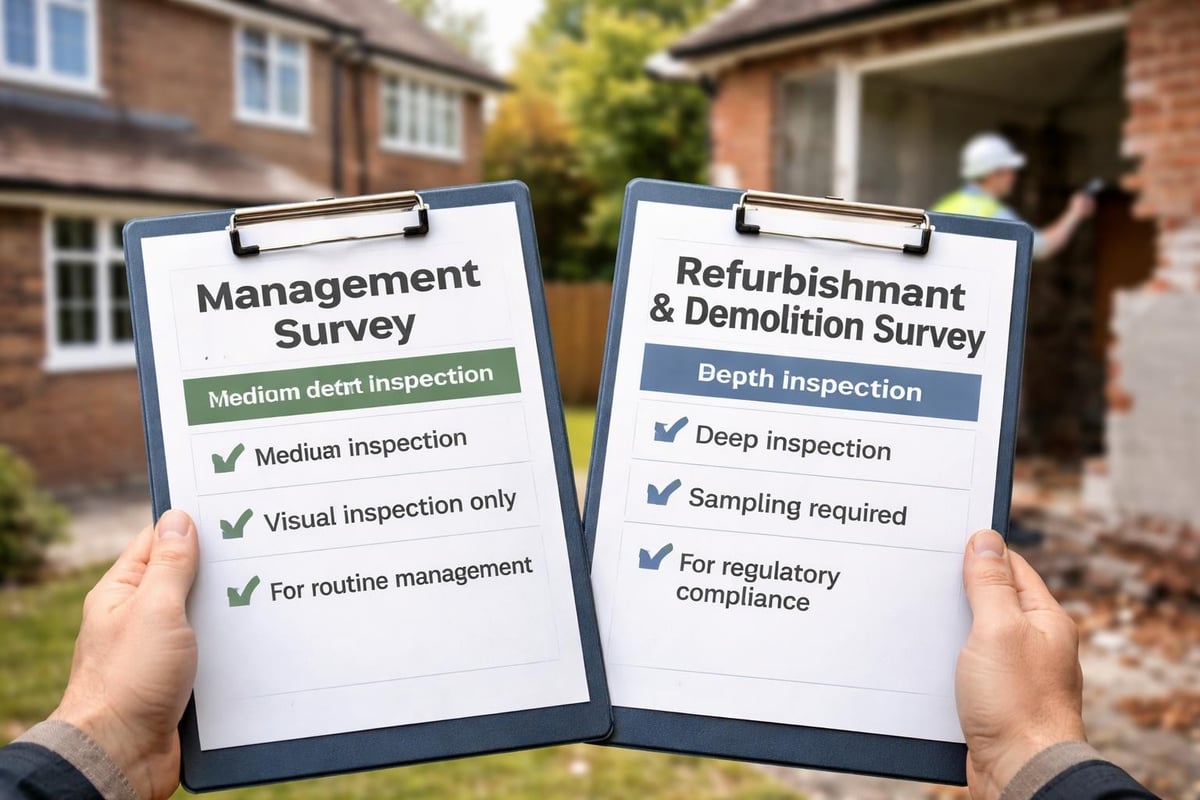
Selecting the appropriate asbestos survey Essex properties require depends on the building's condition, intended use, and planned activities. The Health and Safety Executive recognises two primary survey types, each serving distinct purposes within the regulatory framework.
Management Surveys
Management surveys represent the standard assessment for occupied buildings where normal maintenance activities occur. These surveys locate and assess ACMs that could be disturbed during everyday operations or routine maintenance work.
The surveyor inspects all accessible areas, collecting samples where necessary to confirm material composition. The resulting report provides detailed information about ACM locations, conditions, and recommended management actions. This documentation forms the foundation of your asbestos register and management plan.
Management surveys typically involve:
- Visual inspection of accessible building areas
- Sampling of suspected asbestos materials
- Laboratory analysis of collected samples
- Risk assessment based on material condition
- Detailed reporting with photographic evidence
- Recommendations for ongoing management
Refurbishment and Demolition Surveys
Properties undergoing significant alteration or demolition require more intrusive investigations. Refurbishment and demolition surveys involve destructive inspection techniques to identify all ACMs within the affected areas.
These comprehensive assessments ensure contractors can work safely and comply with the Control of Asbestos Regulations. The survey scope encompasses all areas where refurbishment or demolition activities will occur, often requiring the building to be unoccupied during inspection.
| Survey Type | Purpose | Building Status | Inspection Depth | Sampling Approach |
|---|---|---|---|---|
| Management | Ongoing ACM management | Occupied | Non-destructive | Targeted samples |
| Refurbishment | Pre-renovation works | May be occupied | Partially destructive | Extensive samples |
| Demolition | Complete building removal | Unoccupied | Fully destructive | Comprehensive samples |
Selecting a Competent Asbestos Surveyor in Essex
The quality of your asbestos survey Essex property receives directly correlates with the surveyor's qualifications, experience, and professional accreditation. Guidance on selecting surveyors emphasises verifying credentials and industry certifications.
Professional surveyors should hold recognised qualifications such as the BOHS P402 certificate (Building Surveys and Bulk Sampling). Additionally, membership in professional bodies demonstrates ongoing commitment to industry standards and continuing professional development.
Essential surveyor qualifications include:
- BOHS P402 certification for building surveys
- RSPH/BOHS P403 for air monitoring (where applicable)
- UKAS-accredited laboratory analysis partnerships
- Professional indemnity insurance coverage
- Relevant industry experience in Essex properties
When commissioning an asbestos survey Essex property managers should verify the surveyor's understanding of local building types. Essex features diverse architectural styles, from Victorian terraces in coastal towns to modern commercial developments in major centres. Experience with similar properties enhances survey accuracy and relevance.
The Asbestos Survey Process in Essex Properties
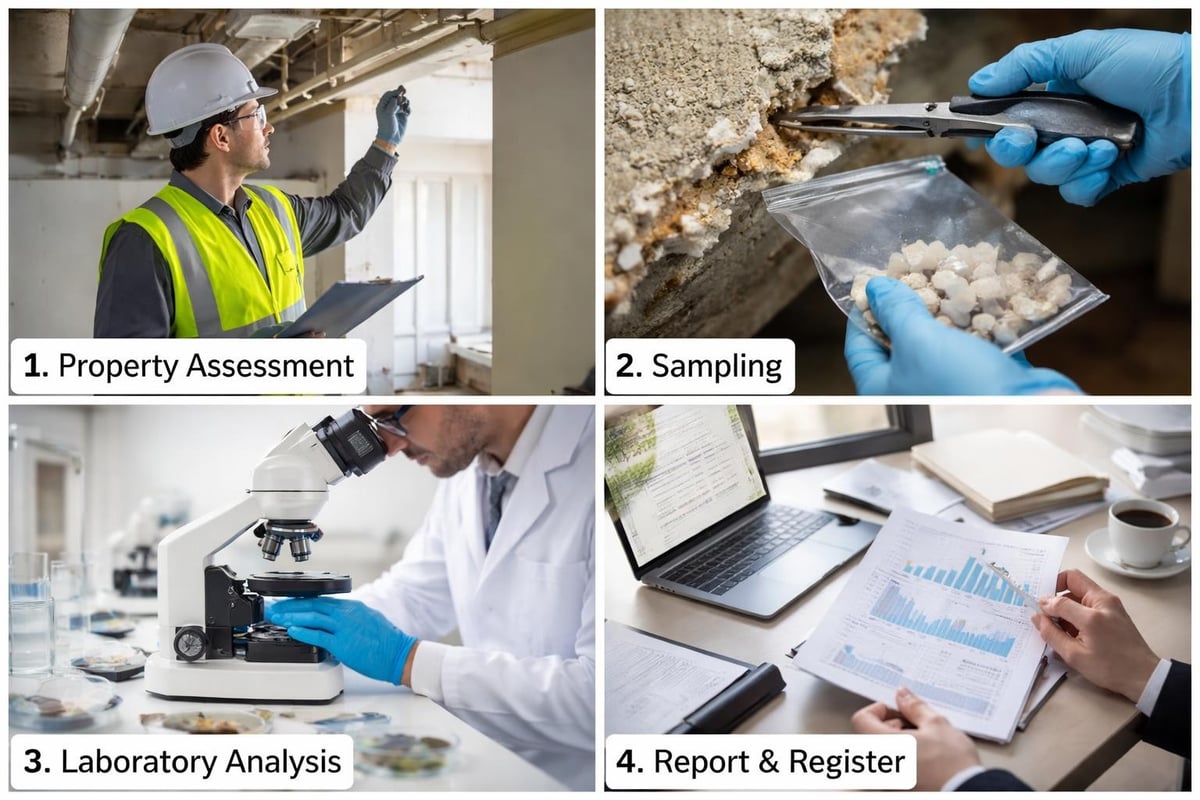
Understanding what occurs during an asbestos survey Essex buildings undergo helps property managers prepare effectively and ensure comprehensive coverage. Professional surveyors follow systematic procedures aligned with HSE guidance and industry best practices.
Pre-Survey Preparation
Effective surveys begin with thorough preparation. Surveyors review building plans, previous asbestos records, and construction history. Property managers should provide access to all relevant areas and inform occupants about the inspection schedule.
The surveyor establishes the survey scope, confirming which areas require inspection based on the survey type and intended building use. For schools, asbestos surveys and building works require particular attention to timing and occupant safety.
On-Site Inspection and Sampling
During the site visit, surveyors systematically examine the property, documenting building materials and identifying suspected ACMs. They assess material condition using standardised scoring systems that evaluate factors such as surface treatment, extent of damage, and accessibility.
Sample collection follows strict protocols to minimise fibre release whilst obtaining representative material specimens. Each sample receives unique identification, with locations recorded photographically and on building plans. Samples proceed to UKAS-accredited laboratories for analysis.
Laboratory Analysis and Reporting
Laboratory technicians analyse samples using polarised light microscopy or transmission electron microscopy, identifying asbestos types and concentrations. Analysis results combine with site observations to produce comprehensive survey reports.
Professional reports include:
- Executive summary of findings
- Detailed ACM register with locations
- Photographic evidence and floor plans
- Material condition assessments
- Risk evaluations and priority ratings
- Management recommendations
- Laboratory certificates for all samples
Legal Obligations and Compliance in Essex
Essex property owners must understand their legal responsibilities regarding asbestos management. The Control of Asbestos Regulations 2012 establishes duty holder obligations extending beyond initial survey commissioning.
Duty to Manage Requirements
Non-domestic premises require duty holders to take reasonable steps to determine whether ACMs are present, assess their condition and monitor changes, create asbestos registers and management plans, and provide information to anyone who might disturb asbestos during their work.
The duty to manage framework applies to employers, building owners, landlords, and managing agents. Shared responsibilities exist where multiple parties have roles in building management or maintenance.
Enforcement and Penalties
The Health and Safety Executive enforces asbestos regulations across Essex, conducting inspections and investigating incidents. Non-compliance can result in improvement notices, prohibition notices, prosecution, and substantial fines or imprisonment for serious breaches.
Recent enforcement actions demonstrate regulatory authorities' commitment to asbestos safety. Property owners who fail to commission appropriate surveys or implement adequate management systems face significant legal and financial consequences.
Survey Frequency and Re-Inspection Schedules
Regular asbestos inspections maintain compliance and protect building occupants. The frequency of an asbestos survey Essex properties require depends on several factors, including material condition, building activities, and previous assessment findings.
Recommended re-inspection intervals:
| Material Condition | Re-Inspection Frequency | Risk Level |
|---|---|---|
| Good condition | 12 months | Low |
| Fair condition | 6 months | Medium |
| Poor condition | 3 months or immediate action | High |
| Post-remediation | Before reoccupation | Variable |
Re-inspection surveys assess whether ACM conditions have changed since the previous inspection. These focused assessments update asbestos registers and inform ongoing management decisions without requiring comprehensive re-surveying.
Managing Asbestos Survey Findings
Receiving your asbestos survey Essex property report represents the beginning of ongoing management responsibilities rather than the completion of compliance activities. Effective implementation of survey recommendations protects occupants whilst maintaining regulatory adherence.
Creating Effective Asbestos Registers
The asbestos register documents all identified or presumed ACMs within your property. This living document requires regular updates following re-inspections, remedial works, or building alterations. Digital asbestos registers provide accessible, searchable records that facilitate information sharing with contractors and maintenance personnel.
Registers should clearly communicate ACM locations, types, conditions, and management actions. Visual aids such as annotated floor plans and photographs enhance understanding, particularly for contractors unfamiliar with the building.
Developing Management Plans
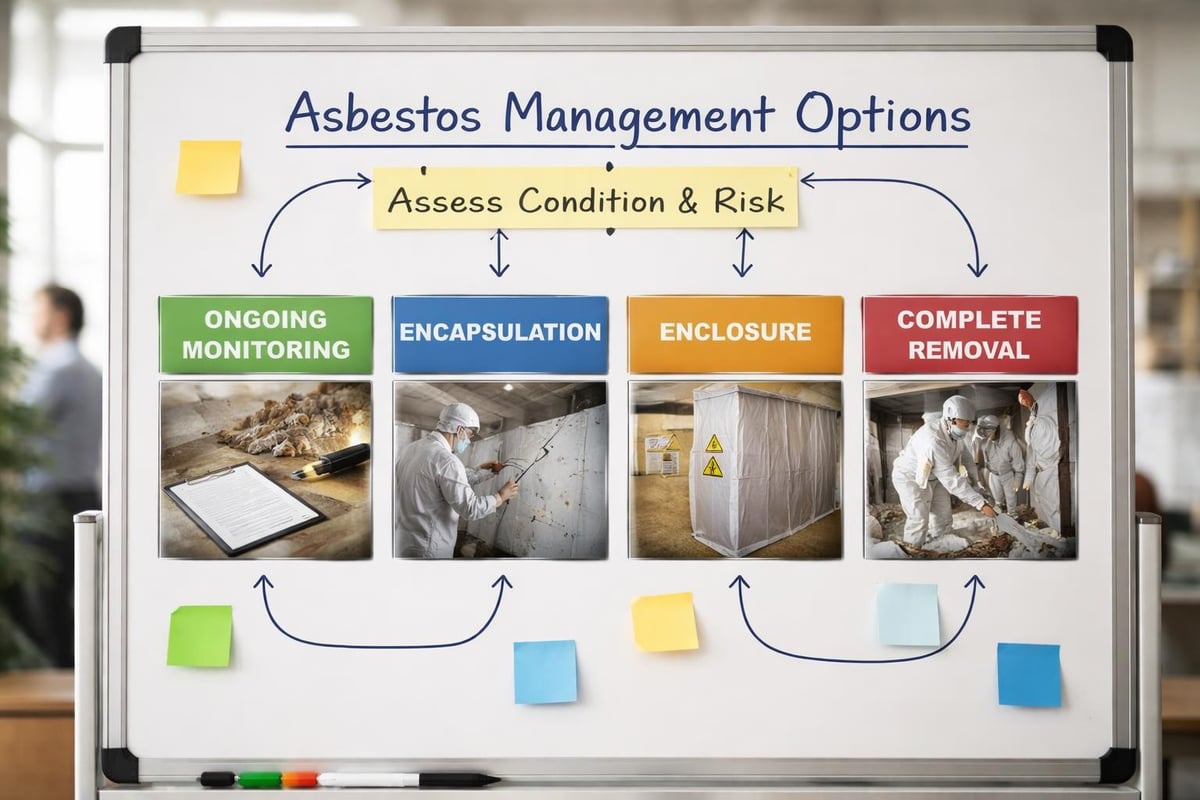
Asbestos management plans translate survey findings into practical control measures. These documents establish procedures for monitoring ACM conditions, controlling access to areas containing asbestos, managing emergency situations, and communicating risks to building users and contractors.
Effective plans designate responsible persons, set review schedules, and outline emergency response procedures. Regular plan reviews ensure continued relevance as building use patterns evolve or remedial works occur.
Cost Considerations for Essex Asbestos Surveys
Investment in professional asbestos survey Essex properties require varies based on multiple factors. Understanding cost drivers helps property managers budget appropriately whilst ensuring adequate survey scope and quality.
Factors affecting survey costs include:
- Property size and complexity
- Survey type (management versus refurbishment/demolition)
- Number of samples requiring laboratory analysis
- Access challenges or hazardous conditions
- Surveyor travel distances across Essex
- Report turnaround requirements
Management surveys for typical commercial premises might range from several hundred to several thousand pounds, depending on building size and complexity. Refurbishment and demolition surveys generally cost more due to their intrusive nature and comprehensive scope.
False economies from selecting surveyors based solely on price can result in incomplete assessments, inadequate reports, or non-compliant recommendations. Professional surveyors with appropriate qualifications and insurance provide better long-term value through comprehensive, defensible assessments.
Specialist Survey Considerations for Essex Buildings
Essex's diverse building stock presents unique surveying challenges requiring specialist knowledge and experience. Understanding these considerations ensures appropriate survey commissioning and effective ACM management.
Historical and Listed Buildings
Essex contains numerous historical properties where asbestos surveys must balance thorough investigation with heritage conservation. Surveyors require sensitivity to preservation requirements whilst ensuring comprehensive ACM identification.
Period properties often contain asbestos in unexpected locations, including decorative plasterwork, historic heating systems, and early electrical installations. Experienced surveyors recognise these applications and employ appropriate sampling strategies.
Educational Establishments
Schools across Essex require particular attention to asbestos safety protocols. Educational settings demand careful scheduling to minimise disruption whilst ensuring comprehensive coverage of all teaching and support spaces.
Surveyors must understand school-specific risks, including higher occupancy densities, vulnerable populations, and frequent maintenance activities. The University of Essex's approach demonstrates comprehensive institutional asbestos management through regular condition checks and accessible registers.
Industrial and Commercial Premises
Essex's commercial and industrial properties often contain extensive asbestos installations in plant rooms, production areas, and building services. Surveys require coordination with operational requirements, sometimes necessitating out-of-hours access or phased inspections.
Industrial surveyors need familiarity with process equipment, thermal insulation systems, and fire protection materials commonly used in manufacturing and warehousing facilities across the county.
Integrating Surveys with Broader Compliance Strategies
An asbestos survey Essex property managers commission forms one component within comprehensive health and safety management systems. Integration with related compliance activities enhances efficiency and demonstrates systematic risk management.
Compliance Auditing
Regular compliance audits verify that asbestos management systems function effectively. Audits assess register accuracy, plan implementation, training effectiveness, and contractor management procedures.
Professional auditing identifies gaps or weaknesses in management systems before regulatory inspections or incidents occur. This proactive approach demonstrates duty holder diligence and commitment to continuous improvement.
Training and Awareness
Effective asbestos management requires appropriate training and awareness across all staff levels. Different roles require varying knowledge depths, from basic awareness for general staff to detailed understanding for maintenance personnel and managers.
Regular training updates ensure personnel remain current with regulatory requirements and organisational procedures. Competent staff recognition of potential ACMs reduces inadvertent disturbance risks.
Air Monitoring and Clearance Testing
Following remedial works, air monitoring and clearance testing verify that areas are safe for reoccupation. These services complement initial surveys by confirming successful asbestos removal or encapsulation.
Background air monitoring establishes baseline fibre concentrations in occupied buildings, providing reassurance and detecting any unexpected releases. Specialist monitoring becomes particularly important in sensitive environments such as healthcare facilities or schools.
Four-stage clearance procedures following asbestos removal involve visual inspection, air sampling, laboratory analysis, and independent certification. Only after successful clearance can areas return to normal use, protecting occupants from residual contamination.
Regional Expertise Across Essex
Asbestos survey Essex requirements benefit from surveyors with detailed knowledge of local building types, construction practices, and regional architecture. Essex spans diverse areas, from coastal towns to inland market centres, each with characteristic building styles and asbestos applications.
Professional asbestos services across Essex recognise these regional variations. Surveyors familiar with local construction methods identify typical ACM locations more efficiently whilst recognising unusual applications requiring particular attention.
Understanding Essex planning requirements, conservation area restrictions, and local authority expectations enhances survey effectiveness. Regional expertise facilitates smoother communication with local building control departments and planning authorities where heritage properties require sensitive management approaches.
Technology and Digital Asbestos Management
Modern asbestos management increasingly embraces digital technologies that enhance accessibility, accuracy, and compliance documentation. Digital transformation improves how survey information is captured, stored, and shared across organisations.
Digital compliance platforms provide cloud-based asbestos registers accessible from any device. Mobile applications enable real-time updates during re-inspections, whilst QR code systems link physical locations to digital records.
Geographic information systems (GIS) integration allows spatial visualisation of ACM locations, supporting strategic planning for remediation programmes. Digital platforms facilitate audit trails, demonstrating compliance history and management action implementation.
Professional asbestos surveys form the foundation of effective asbestos management, protecting occupants whilst ensuring regulatory compliance across Essex properties. Understanding survey types, legal obligations, and implementation requirements enables property managers to fulfil duty holder responsibilities confidently. Whether you're managing commercial premises, educational establishments, or industrial facilities, Asbestosurv Ltd delivers comprehensive asbestos survey and management services throughout Essex, combining technical expertise with practical support to achieve full regulatory compliance.
Need Professional Asbestos Advice?
Contact our expert team for guidance on your specific requirements
Contact Us