
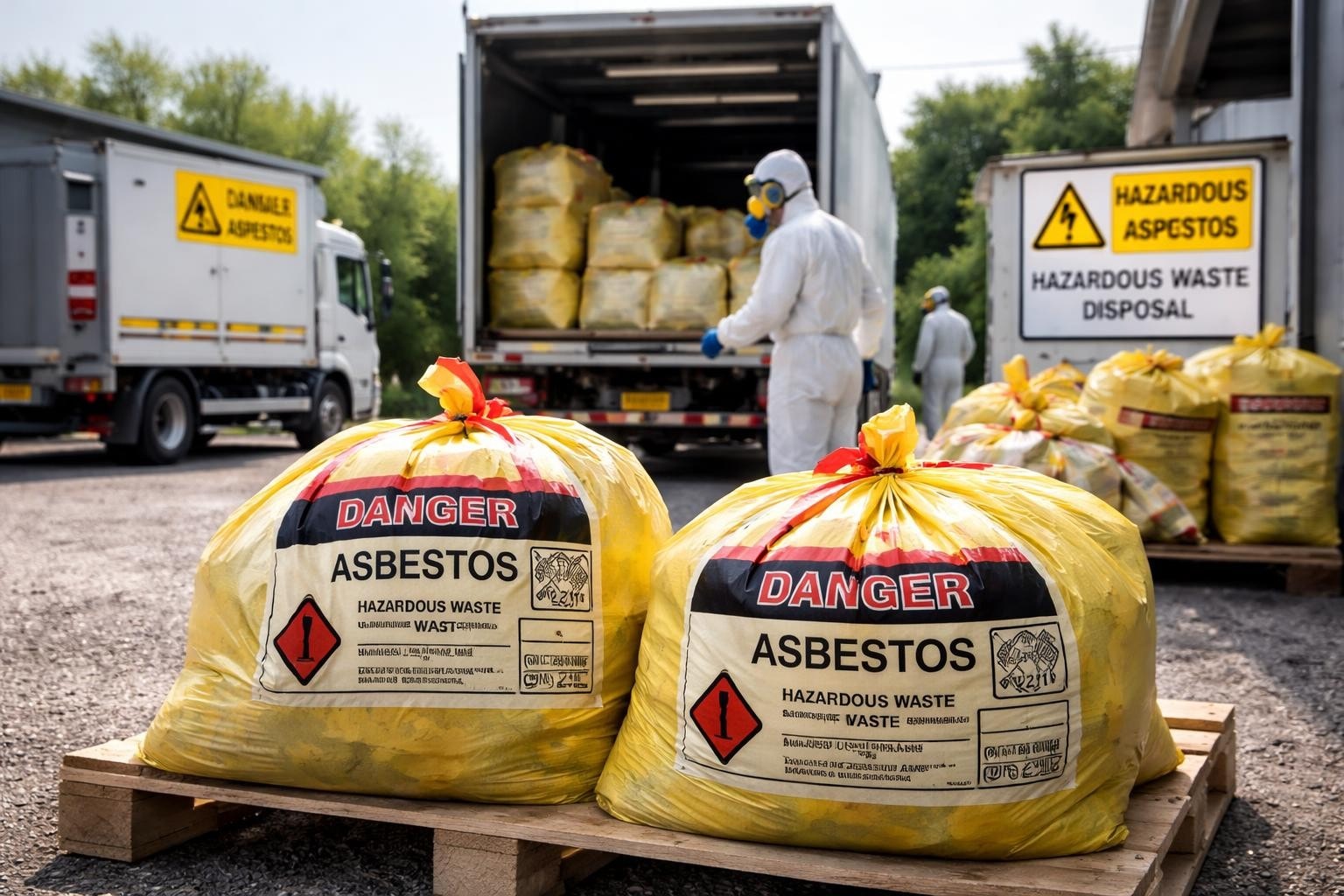
Asbestos Waste Disposal: UK Compliance & Safety Guide
Managing asbestos waste disposal correctly is crucial for protecting public health, safeguarding the environment, and ensuring legal compliance across the United Kingdom. With stringent regulations governing every stage of the process, from initial identification to final disposal at licensed facilities, businesses and property owners must understand their responsibilities. Improper handling can result in severe penalties, environmental contamination, and serious health risks to workers and the public. This comprehensive guide explores the regulatory framework, disposal methods, transportation requirements, and best practices that organisations must follow when dealing with asbestos-containing materials in 2026.
Understanding Asbestos Waste Classification
Asbestos waste falls into distinct categories that determine handling requirements and disposal procedures. The classification system helps ensure appropriate safety measures are applied throughout the disposal process.
Friable vs Non-Friable Asbestos
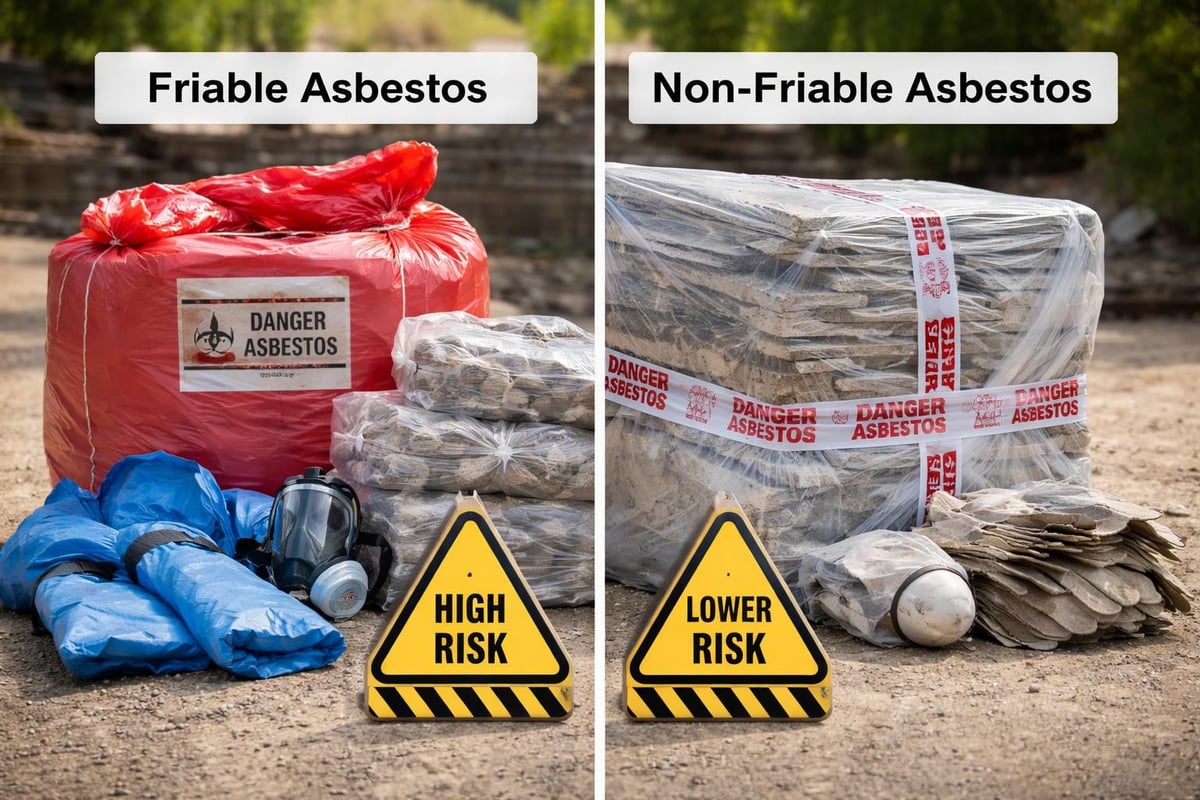
Friable asbestos can be crumbled, pulverised, or reduced to powder by hand pressure when dry. This category presents the highest risk as fibres release easily into the air. Common examples include:
- Spray-on insulation coatings
- Thermal insulation materials
- Damaged asbestos cement products
- Asbestos paper or cardboard
- Degraded textured coatings
Non-friable asbestos is bonded within a matrix that prevents easy fibre release. Whilst generally safer to handle, these materials can become friable through damage, weathering, or improper removal. The handling of asbestos-containing materials during demolition requires careful assessment of material condition.
| Classification | Fibre Release Risk | Common Examples | Packaging Requirements |
|---|---|---|---|
| Friable | High | Spray coatings, insulation, pipe lagging | Double-wrapped, leak-tight containers |
| Non-Friable (intact) | Low | Asbestos cement sheets, floor tiles | Single-wrapped, sealed bags or shrink-wrapped |
| Non-Friable (damaged) | Medium to High | Broken cement sheets, abraded materials | Double-wrapped as friable asbestos |
Hazardous Waste Designation
All asbestos waste is classified as hazardous under UK and EU regulations. This designation triggers specific legal obligations for duty holders, including registration requirements, consignment notes, and strict record-keeping. The Environment Agency maintains oversight of asbestos waste disposal facilities, ensuring only appropriately licensed sites accept asbestos materials.
Legal Framework for Asbestos Waste Disposal
The regulatory landscape governing asbestos waste disposal combines multiple pieces of legislation designed to protect workers, the public, and the environment.
Control of Asbestos Regulations 2012
These regulations establish the primary framework for managing asbestos in the UK. They mandate that asbestos waste must be:
- Properly identified and assessed before removal
- Handled only by competent, trained personnel
- Packaged and labelled according to specific requirements
- Transported using licensed carriers
- Disposed of at permitted facilities
Duty holders must maintain detailed records of all asbestos waste movements for a minimum of three years. Licensed asbestos removal contractors must hold appropriate certification and follow notification procedures for most work with asbestos.
Hazardous Waste Regulations
The Hazardous Waste (England and Wales) Regulations 2005 (as amended) require premises producing asbestos waste to register with the Environment Agency unless exempt. Similar regulations apply in Scotland and Northern Ireland. Consignment notes must accompany every transfer of asbestos waste, creating an auditable chain of custody from removal to final disposal.
Professional asbestos surveys and management services help organisations navigate these complex regulatory requirements whilst maintaining full compliance.
Safe Removal and Packaging Requirements
Proper removal and packaging form the foundation of safe asbestos waste disposal. These procedures prevent fibre release and protect everyone involved in the waste management chain.
Removal Procedures
Licensed contractors must follow strict protocols during asbestos removal:
- Establish containment areas with negative air pressure systems
- Use appropriate respiratory protective equipment (RPE)
- Employ wet removal methods to suppress dust generation
- Conduct air monitoring throughout the removal process
- Decontaminate all equipment and personnel before leaving the work area
- Perform thorough visual inspections and air testing before reoccupation
The scope of work determines whether a licensed contractor is mandatory. Non-licensed work is permitted only for minimal amounts of non-friable asbestos and certain low-risk activities, though strict procedures still apply.
Packaging Standards
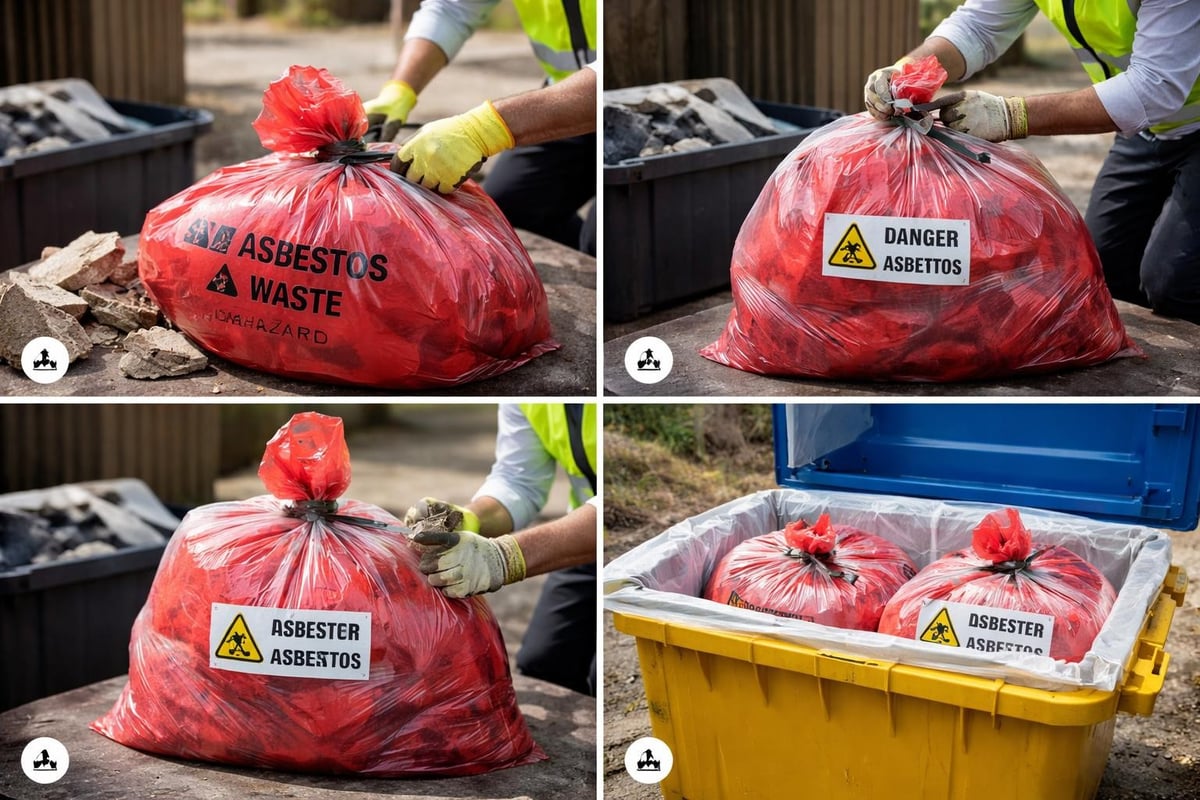
All asbestos waste requires secure packaging in UN-approved containers or bags specifically designed for asbestos. The packaging must:
- Be constructed from heavy-duty polythene (minimum 500 gauge for single bags, 250 gauge for double-bagging)
- Remain completely sealed and leak-tight
- Display clear warning labels identifying the contents as asbestos
- Include consignment note reference numbers
- Be suitable for the specific asbestos type being disposed
Double-bagging procedure for friable asbestos:
- Place waste in the first sealed bag inside the controlled area
- Clean the exterior of the first bag whilst still in containment
- Place the first bag into a second sealed bag
- Label both bags with appropriate asbestos warning signs
- Complete all documentation before removal from site
Rigid containers may be required for sharp materials like broken asbestos cement sheets to prevent bag puncture during handling and transport.
Transportation Compliance
Moving asbestos waste from the removal site to disposal facilities involves specific legal requirements governing carriers, vehicles, and documentation.
Licensed Waste Carriers
Only registered waste carriers holding appropriate licences may transport asbestos waste on public roads. Carriers must:
- Maintain current Environment Agency registration
- Provide vehicles suitable for asbestos transport
- Train drivers in asbestos waste handling procedures
- Carry emergency response equipment and information
- Follow designated routing when required by local authorities
The vehicle must prevent any release of asbestos fibres during transport. Loads should be secured to prevent shifting, and separate compartments must isolate asbestos from other waste types.
Consignment Note System
The consignment note creates a legal record of waste transfer. Understanding standards for asbestos waste handling provides insight into comprehensive tracking systems. Each consignment note must include:
| Required Information | Details |
|---|---|
| Waste producer details | Full name, address, registration number |
| Waste carrier details | Company name, licence number, vehicle registration |
| Waste description | Type, quantity, classification code |
| Receiving facility | Site name, permit number, address |
| Date and signatures | All parties must sign before transport |
Copies must be retained by the waste producer, carrier, and receiving facility for three years. Electronic consignment notes are now accepted, streamlining the documentation process whilst maintaining full traceability.
Approved Disposal Sites and Methods
Asbestos waste disposal in the UK is restricted to specifically licensed landfill sites meeting stringent operational standards.
Licensed Landfill Facilities
Not all landfill sites accept asbestos waste. Facilities must hold environmental permits explicitly authorising asbestos disposal. These sites operate under strict conditions including:
- Designated asbestos disposal areas separated from other waste
- Controlled tipping procedures to prevent bag damage
- Immediate covering of asbestos waste with inert material
- Air monitoring programmes to detect any fibre release
- Enhanced record-keeping and site management protocols
The number of licensed asbestos disposal facilities has decreased in recent years, making advance booking essential. Some facilities impose restrictions on acceptable asbestos types or quantities, requiring prior notification for large loads.
Cell Containment Method
The standard disposal method involves permanent containment within engineered landfill cells. The asbestos waste collection and disposal regulations demonstrate international approaches to secure containment. Asbestos waste is:
- Deposited in dedicated cells designed for hazardous materials
- Covered immediately with inert material to prevent disturbance
- Compacted minimally to avoid bag rupture
- Sealed permanently within multiple barrier layers
- Monitored long-term to ensure containment integrity
Modern landfill engineering incorporates multiple protective layers including impermeable liners, leachate collection systems, and cap systems designed to isolate asbestos permanently from the environment.
Cost Considerations and Planning
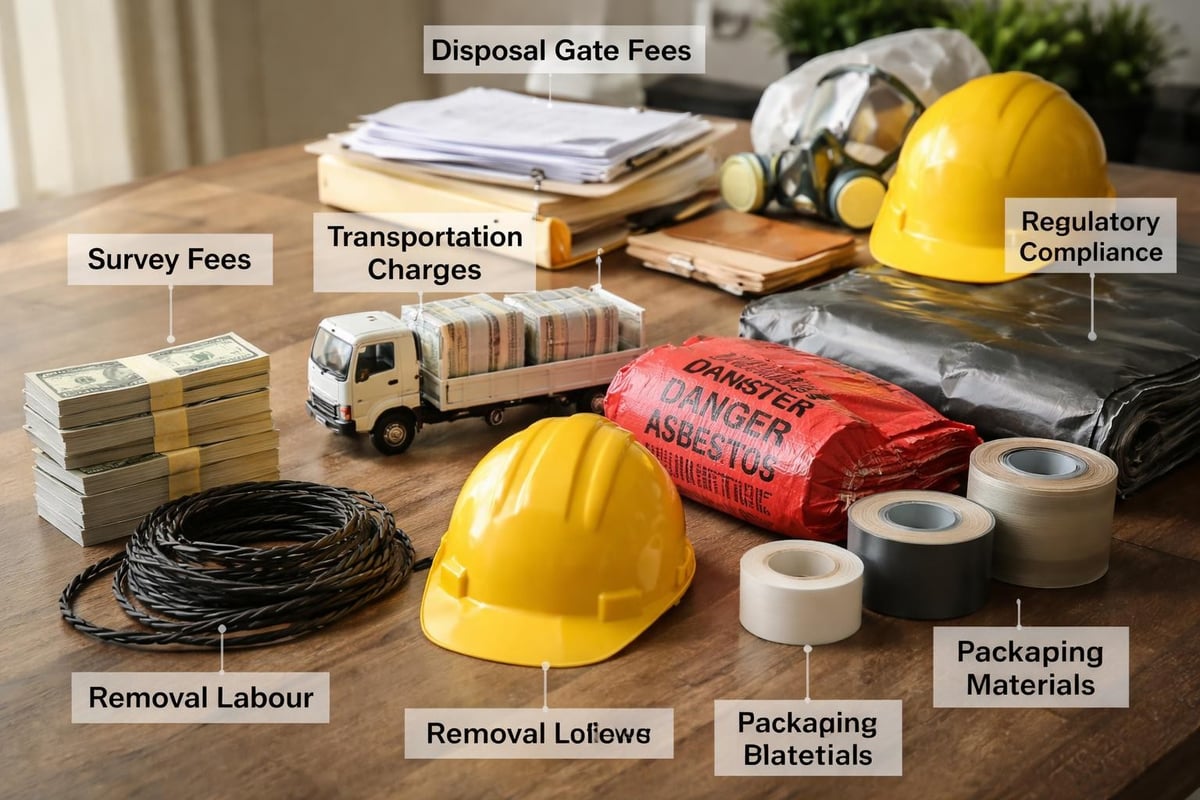
Budgeting for asbestos waste disposal requires understanding the various cost elements involved in the complete process.
Direct Disposal Costs
Disposal costs vary significantly based on multiple factors:
- Waste quantity - Most sites charge per tonne with minimum loads applying
- Asbestos type - Friable materials often incur premium rates
- Geographic location - Transport distance to licensed facilities affects overall cost
- Site accessibility - Difficult access increases removal time and expense
- Project complexity - High-risk environments require additional safety measures
Typical disposal gate fees at licensed facilities range from £150 to £400 per tonne in 2026, though regional variations exist. Some facilities impose minimum charges regardless of actual tonnage.
Hidden and Associated Costs
Beyond direct disposal fees, comprehensive budgeting should account for:
- Pre-removal asbestos surveys and sampling
- Air monitoring during and after removal
- Waste packaging materials and containers
- Licensed carrier transportation fees
- Consignment note administration
- Emergency decontamination facilities
- Post-removal clearance certification
Professional project management helps avoid cost overruns by ensuring accurate upfront assessment and efficient execution.
Documentation and Record-Keeping
Maintaining comprehensive records is both a legal requirement and a practical necessity for demonstrating compliance.
Mandatory Documentation
Every asbestos waste disposal project generates essential documentation:
Survey and assessment records identify asbestos locations, types, and conditions. These inform removal planning and waste classification.
Notification documents submitted to the Health and Safety Executive (where required) detail the scope of work, timescales, and contractor details.
Method statements and risk assessments document how work will be conducted safely, addressing specific site hazards.
Air monitoring results provide objective evidence that fibre levels remained within acceptable limits throughout the project.
Consignment notes track waste from generation through disposal, with copies retained by all parties.
Disposal certificates issued by receiving facilities confirm final disposal location and date.
Retention Requirements
UK regulations mandate minimum retention periods for asbestos-related records:
- Consignment notes: 3 years
- Air monitoring results: 5 years
- Health surveillance records: 40 years (for exposed workers)
- Asbestos register entries: Permanent (for buildings)
Many organisations retain records indefinitely to address potential future enquiries or property transactions.
Common Disposal Violations and Penalties
Understanding frequent compliance failures helps organisations avoid costly mistakes and legal consequences.
Typical Violations
Regulatory authorities prosecute numerous asbestos waste offences annually:
- Fly-tipping of asbestos waste in unauthorised locations
- Using unlicensed carriers for transportation
- Incomplete or missing consignment notes
- Inadequate packaging leading to fibre release
- Failing to notify authorities before removal work
- Disposing of asbestos at non-permitted facilities
- Inadequate worker training and protection
Even well-intentioned organisations can face penalties for administrative errors or procedural oversights. The complexity of regulations for proper asbestos handling underscores the need for professional guidance.
Enforcement and Penalties
Penalties for asbestos waste disposal violations have increased significantly. Courts now regularly impose:
| Violation Type | Typical Penalty Range |
|---|---|
| Minor procedural breaches | £5,000 - £20,000 |
| Unauthorised disposal | £20,000 - £100,000+ |
| Serious safety violations | Unlimited fines plus imprisonment |
| Corporate manslaughter (fatalities) | Unlimited fines plus director imprisonment |
Beyond financial penalties, organisations face reputational damage, loss of operating licences, and potential civil claims from affected parties.
Best Practices for Compliance
Implementing robust procedures ensures consistent compliance whilst protecting health and safety.
Pre-Project Planning
Successful asbestos waste disposal begins with thorough preparation:
- Commission comprehensive asbestos surveys before any demolition or refurbishment
- Engage licensed contractors with proven track records
- Verify all waste facilities accept your specific asbestos types
- Obtain necessary permits and complete notification requirements
- Establish clear communication channels between all project stakeholders
Understanding asbestos handling and disposal guidance from multiple jurisdictions reveals best practice approaches applicable to UK contexts.
Quality Assurance Measures
Building quality checks into the disposal process catches errors before they become violations:
- Conduct pre-start site inspections confirming all safety measures are in place
- Implement daily compliance checklists for removal teams
- Perform independent air monitoring by accredited laboratories
- Review all documentation for completeness before waste leaves site
- Obtain photographic evidence of proper packaging and disposal
- Schedule post-project audits to identify improvement opportunities
Worker Training and Competence
Everyone involved in asbestos waste disposal requires appropriate training. Competence levels include:
Awareness training for those who might encounter asbestos in their work but don't directly handle it.
Category A training for workers handling non-licensed asbestos work, valid for three years.
Category B training for licensed asbestos removal work, requiring annual refresher courses.
Maintaining training records demonstrates compliance and ensures workers understand their responsibilities throughout the asbestos waste disposal process.
Emergency Response Procedures
Despite careful planning, unexpected situations occasionally arise requiring immediate response to prevent harm.
Containment Breach Protocols
If asbestos waste packaging fails during handling or transport:
- Immediately stop all work in the affected area
- Evacuate non-essential personnel to safe locations
- Establish a contamination control zone around the breach
- Deploy emergency response equipment including PPE and damping agents
- Contact regulatory authorities as required by the incident severity
- Conduct air monitoring to assess fibre levels
- Engage specialist cleaning contractors for decontamination
Emergency response kits should accompany all asbestos waste transport, containing appropriate PPE, warning signs, damping agents, and emergency contact information.
Incident Reporting
Serious incidents require notification to the Health and Safety Executive under RIDDOR (Reporting of Injuries, Diseases and Dangerous Occurrences Regulations). Reportable asbestos incidents include:
- Uncontrolled release of asbestos fibres
- Worker exposure exceeding control limits
- Equipment failures compromising containment
- Accidents resulting in injury during asbestos handling
Maintaining detailed incident logs supports continuous improvement and demonstrates regulatory compliance.
Future Developments in Asbestos Disposal
The asbestos waste disposal landscape continues to evolve as technology advances and regulatory frameworks adapt.
Emerging Technologies
Research into alternative disposal methods aims to address landfill capacity constraints:
Thermal treatment processes heat asbestos to temperatures exceeding 1,000°C, transforming crystalline structures into non-hazardous materials suitable for recycling.
Chemical treatment methods use various reagents to break down asbestos fibres at molecular level, though commercial viability remains under evaluation.
Stabilisation techniques encapsulate asbestos within inert matrices, reducing long-term environmental risks.
Whilst these technologies show promise, traditional landfill disposal remains the only widely available and cost-effective method in the UK for 2026.
Regulatory Trends
Ongoing regulatory developments aim to enhance protection and streamline compliance:
- Enhanced digital reporting systems reducing administrative burden
- Stricter enforcement of disposal facility standards
- Increased penalties for violations to deter non-compliance
- Harmonisation of requirements across UK nations
- Greater emphasis on duty holder accountability
Staying informed about regulatory changes ensures organisations maintain compliance as requirements evolve.
Proper asbestos waste disposal protects public health, prevents environmental contamination, and ensures legal compliance throughout the removal and disposal chain. Whether you're planning a small refurbishment or a major demolition project, professional guidance ensures every stage meets current regulatory requirements. Asbestosurv Ltd provides comprehensive asbestos surveys and management services across the UK, offering expert consultancy including management surveys, air monitoring, and laboratory analysis to support safe and compliant asbestos waste disposal for your organisation.
Need Professional Asbestos Advice?
Contact our expert team for guidance on your specific requirements
Contact Us