
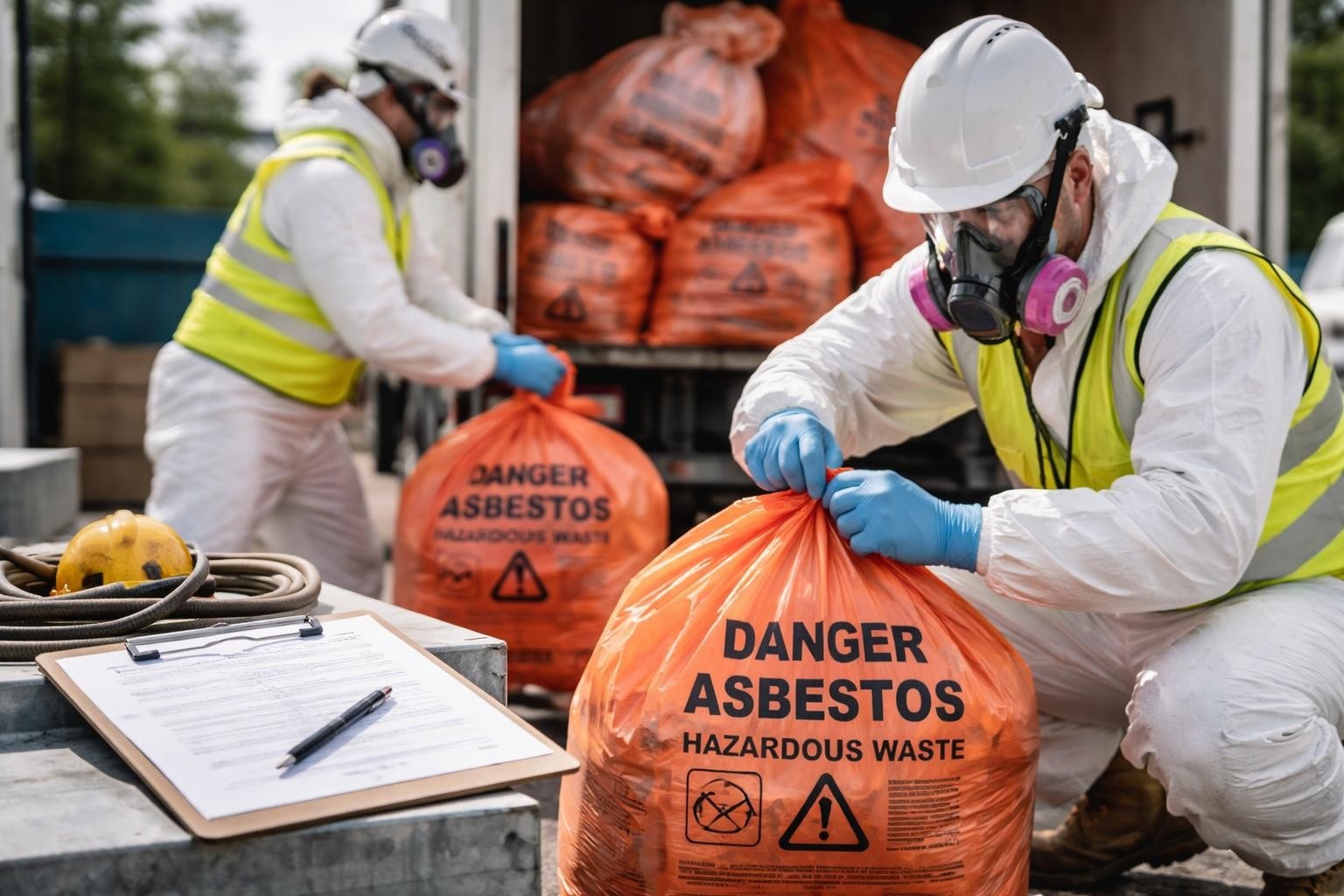
Asbestos Waste Disposal Company: Complete UK Guide 2026
Managing asbestos-containing materials requires more than just identification and removal-proper disposal through a licensed asbestos waste disposal company forms a critical component of any asbestos management strategy. As property owners, facilities managers, and contractors navigate the complexities of UK asbestos regulations in 2026, understanding the role and responsibilities of these specialist companies becomes essential. The disposal process involves intricate regulatory frameworks, specialist transport requirements, and designated facilities, all designed to protect public health and the environment from this hazardous material.
Understanding the Role of an Asbestos Waste Disposal Company
An asbestos waste disposal company operates within a highly regulated environment, providing essential services that bridge the gap between asbestos removal and final containment. These organisations hold specific licences and permits that authorise them to transport, process, and dispose of asbestos waste according to strict governmental standards.
The responsibilities extend far beyond simply collecting materials. Professional disposal companies maintain complete chain-of-custody documentation, ensure proper packaging meets regulatory standards, and transport waste exclusively to licensed disposal facilities. According to EPA asbestos laws and regulations, comprehensive tracking systems must be in place throughout the entire disposal process.
Key Services Provided
Licensed disposal companies offer a range of specialised services:
- Collection and transportation of bagged asbestos waste from removal sites
- Provision of appropriate packaging materials and containers
- Completion of consignment notes and waste transfer documentation
- Coordination with licensed landfill sites
- Maintenance of disposal certificates for regulatory compliance
- Emergency response services for unexpected asbestos discoveries
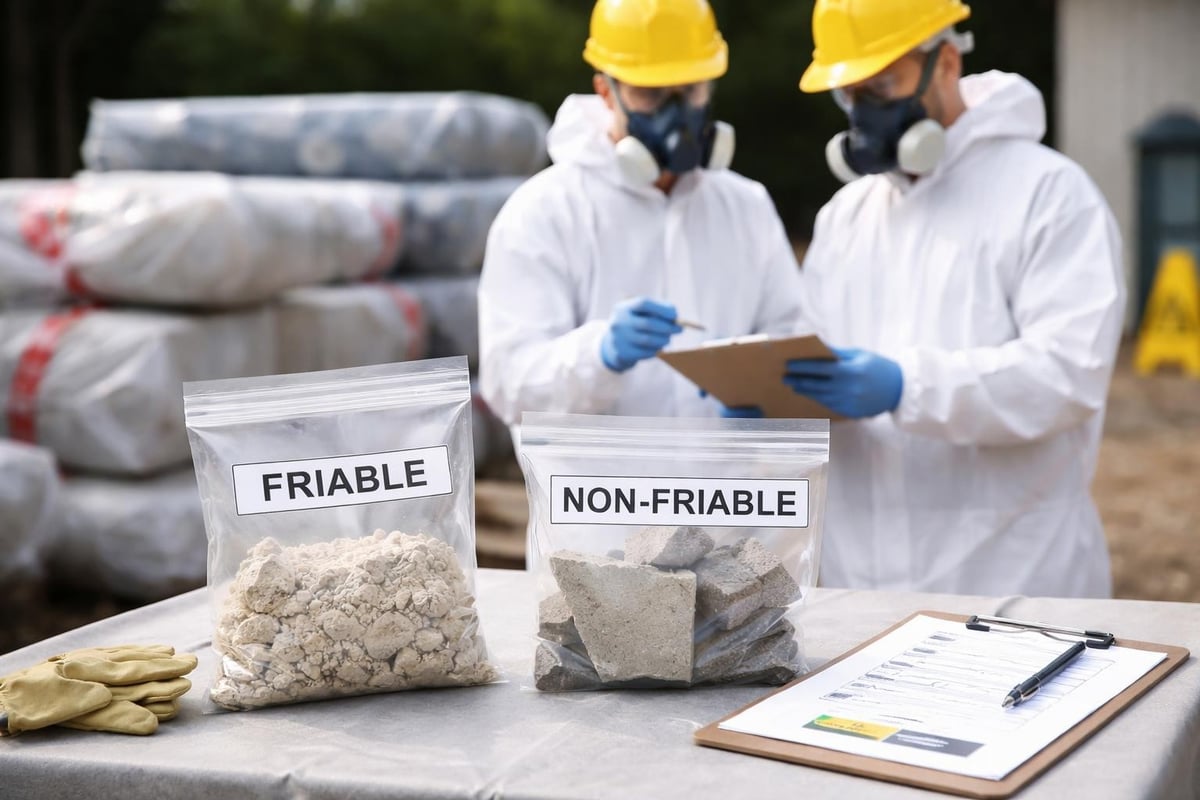
The distinction between different types of asbestos waste significantly impacts disposal procedures. Friable asbestos, which can be crumbled by hand pressure, requires more stringent handling than non-friable materials bonded within other substances.
Regulatory Framework Governing Asbestos Disposal
UK legislation establishes comprehensive requirements for asbestos waste management. The Control of Asbestos Regulations 2012 forms the cornerstone of asbestos legislation, working alongside the Environmental Protection Act 1990 and the Hazardous Waste Regulations 2005.
Every stage of the disposal process falls under regulatory oversight. Property owners commissioning refurbishment demolition surveys must understand their duty to ensure waste reaches appropriately licensed facilities. The regulations specify that asbestos waste must be:
- Double-bagged in approved UN-rated packaging
- Clearly labelled with hazard warnings
- Transported only by licensed carriers
- Accompanied by proper consignment notes
- Disposed of at permitted sites only
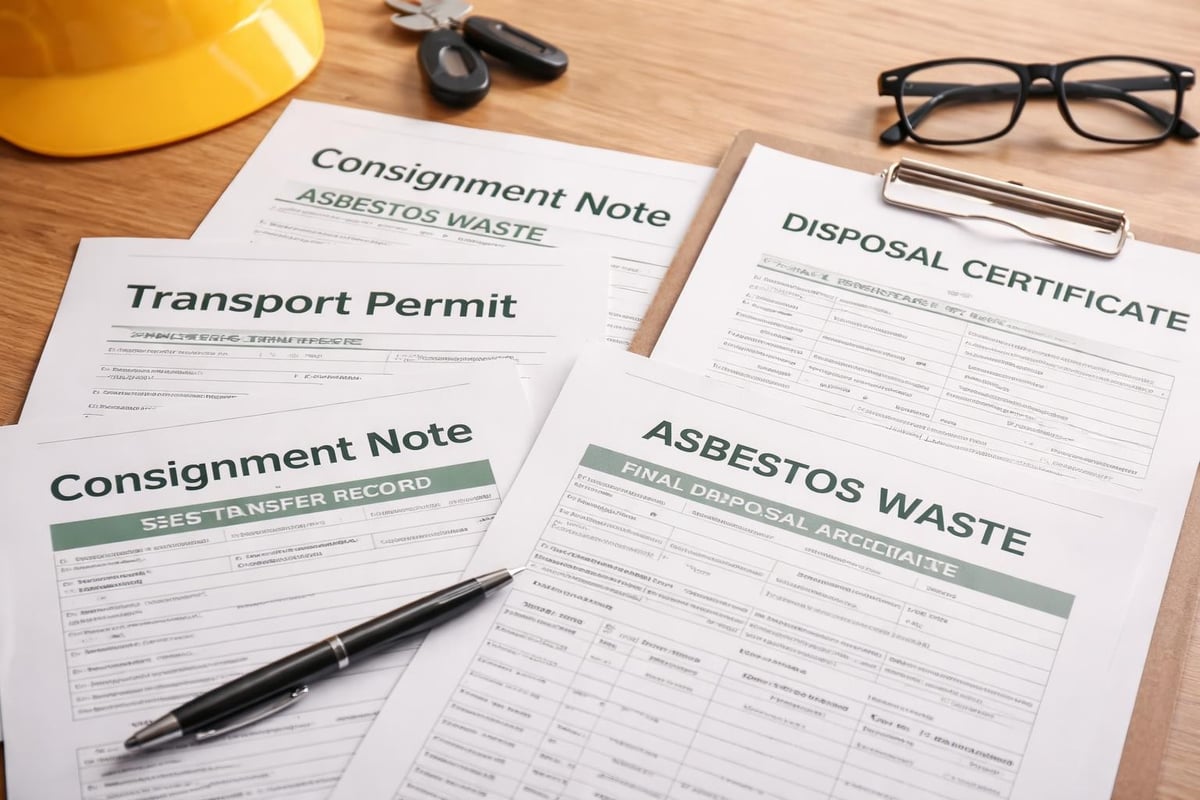
Documentation Requirements
| Document Type | Purpose | Retention Period |
|---|---|---|
| Consignment Note | Tracks waste from origin to disposal | 3 years minimum |
| Waste Transfer Note | Records handover between parties | 2 years minimum |
| Disposal Certificate | Confirms final disposal at licensed site | Permanent |
| Transport Permit | Authorises vehicle for hazardous waste | Duration of validity |
Understanding asbestos regulations helps ensure compliance throughout the disposal chain. Failure to maintain proper documentation can result in significant penalties for both the waste producer and the disposal company.
Selecting the Right Asbestos Waste Disposal Company
Choosing an appropriate disposal partner requires careful evaluation of several critical factors. Not all companies maintain the same standards or possess equivalent capabilities, making due diligence essential.
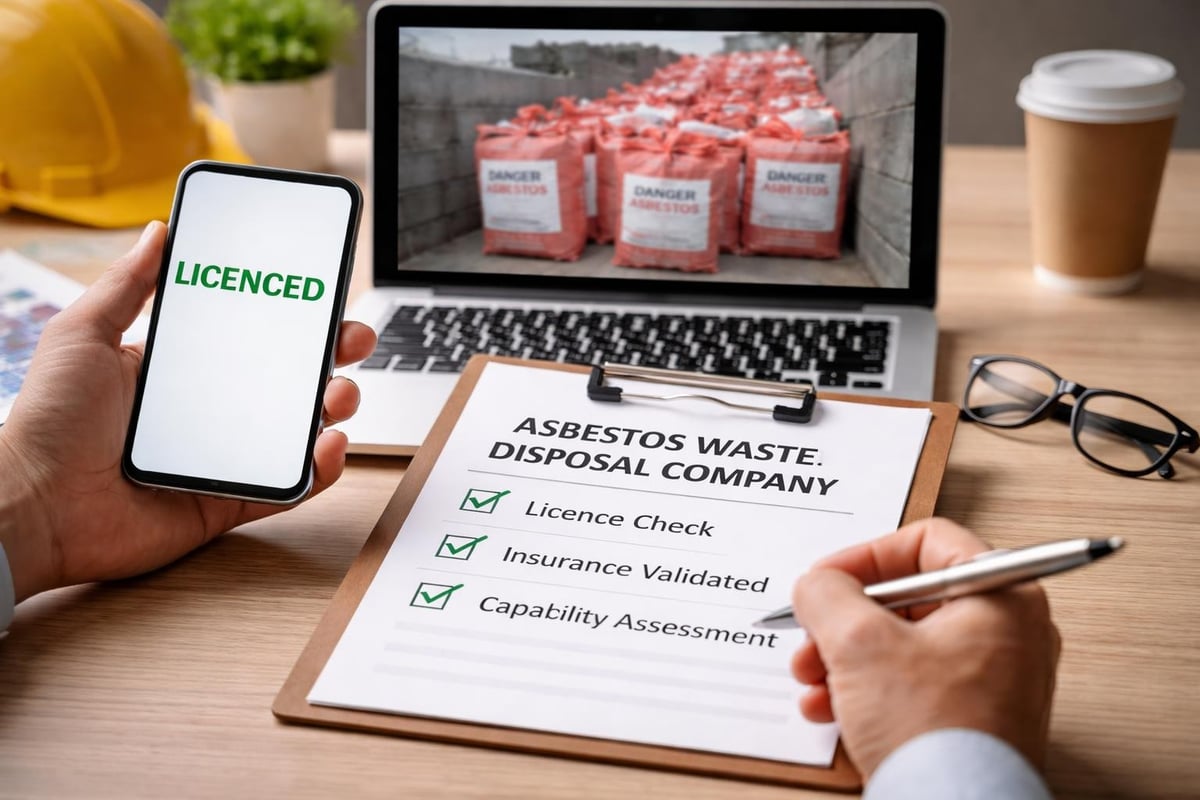
Licensing and accreditation represent the foundation of any reputable asbestos waste disposal company. Verify that the company holds:
- Current Environment Agency waste carrier licence
- Hazardous waste transport authorisation
- Valid public liability insurance (minimum £5 million)
- Professional indemnity coverage
- Membership in relevant trade associations
The EPA's overview of asbestos national emission standards provides context for understanding federal requirements that inform UK best practices.
Evaluation Criteria
Experience within your specific sector matters considerably. A company regularly handling commercial demolition waste may approach requirements differently than one specialising in domestic projects. Ask potential disposal partners about:
- Years operating in asbestos waste management
- Volume of waste processed annually
- Geographic coverage and response times
- Emergency call-out capabilities
- Client references from similar projects
Transparency in pricing structures prevents unexpected costs. Reputable companies provide detailed quotations breaking down collection, transport, disposal, and documentation fees separately.
The Disposal Process: From Site to Landfill
Understanding the complete disposal workflow helps property managers and contractors plan projects effectively whilst ensuring regulatory compliance.
Initial coordination begins during the project planning phase. When commissioning management surveys, consider disposal logistics alongside removal planning. An asbestos waste disposal company typically requires advance notice of collection dates, waste volumes, and access requirements.
Collection and Transportation
Packaging preparation must occur before the disposal company arrives. Asbestos waste requires double-bagging in 200-micron polythene sacks bearing appropriate labels. Non-friable sheet materials may be wrapped rather than bagged, provided wrapping prevents fibre release.
The collection process follows strict protocols:
- Site inspection to verify packaging meets standards
- Completion of consignment note documentation
- Loading into designated vehicles with sealed compartments
- Immediate transport to licensed disposal facility
- No intermediate storage or transfers
Vehicles transporting asbestos must display hazard warning placards and carry emergency response information. Drivers require specific training in hazardous materials handling.
Final Disposal Methods
Licensed landfill sites maintain dedicated cells for asbestos waste, separated from general refuse. The Code of Federal Regulations waste disposal standards outlines similar principles to UK requirements, emphasising containment and prevention of fibre release.
Waste arrives at the facility, undergoes verification checks, and receives placement in designated areas. Cover materials are applied immediately to prevent exposure. The disposal site issues certificates confirming proper disposal, which the asbestos waste disposal company forwards to the waste producer.
Cost Considerations and Budgeting
Disposal costs represent a significant portion of overall asbestos management expenses. Understanding pricing structures enables accurate project budgeting and prevents financial surprises.
Pricing typically depends on several variables:
- Volume or weight of asbestos waste
- Waste classification (friable versus non-friable)
- Collection location and accessibility
- Distance to nearest licensed disposal facility
- Packaging materials required
- Documentation and administrative services
| Waste Type | Typical Price Range | Minimum Charge |
|---|---|---|
| Bagged Friable ACM | £15-25 per bag | £200-300 |
| Wrapped Sheet ACM | £10-18 per sheet | £200-300 |
| Bulk Demolition Waste | £150-250 per tonne | £500 |
| Emergency Collection | Premium 50-100% | £400-600 |
Hidden costs often emerge from inadequate planning. Rush collections, weekend services, or failed access attempts all incur additional charges. Proper coordination between removal contractors, disposal companies, and site managers minimises these expenses.
Many disposal companies offer account facilities for regular clients, potentially reducing per-collection costs. Property portfolios requiring ongoing asbestos management may benefit from framework agreements establishing fixed pricing.
Integration with Comprehensive Asbestos Management
An asbestos waste disposal company functions as one component within a broader asbestos management ecosystem. Effective coordination between survey, removal, and disposal activities ensures seamless project execution.
Asbestos management plans should identify disposal requirements during initial planning stages. This foresight enables:
- Accurate cost estimation including disposal fees
- Scheduling coordination between removal and collection
- Appropriate packaging material procurement
- Documentation preparation in advance
Quality Assurance Through Air Monitoring
Following asbestos removal, air monitoring and clearance testing verifies that work areas are safe for reoccupation. This testing occurs after waste removal but before final disposal confirmation, ensuring complete project closure.
The disposal company's role extends beyond physical waste removal. Providing disposal certificates completes the regulatory compliance chain, demonstrating that materials reached appropriate facilities. These certificates form permanent records within asbestos registers, documenting the complete lifecycle of identified materials.
Common Challenges and Solutions
Even well-planned disposal operations encounter obstacles. Recognising potential issues enables proactive mitigation strategies.
Access difficulties frequently complicate waste collection. Urban sites, listed buildings, and operational facilities present unique challenges. An experienced asbestos waste disposal company assesses access during quotation, identifying potential limitations before collection day. Solutions might include:
- Smaller vehicles for restricted access
- Manual handling for areas inaccessible to machinery
- Timed collections during low-activity periods
- Coordination with traffic management authorities
Unexpected waste volumes create another common challenge. When refurbishment projects uncover more asbestos than anticipated, disposal logistics require rapid adjustment. Maintaining relationships with flexible disposal companies ensures additional collections can be arranged promptly.
Documentation Discrepancies
Regulatory documentation demands precision. Errors in consignment notes, incorrect waste classifications, or missing information can delay disposal or create compliance issues. Professional disposal companies verify documentation accuracy before leaving sites, catching errors whilst correction remains straightforward.
The Maine Department of Environmental Protection's asbestos guidance emphasises proper handling and documentation, principles equally applicable within UK contexts.
Environmental and Health Considerations
Beyond regulatory compliance, responsible asbestos waste disposal protects environmental and public health. An asbestos waste disposal company implements measures preventing fibre release throughout handling, transport, and final disposal.
Environmental protection measures include:
- Sealed transport compartments preventing airborne release
- Vehicle decontamination procedures after each collection
- Route planning avoiding unnecessary public exposure
- Emergency response protocols for incidents
- Continuous driver training on hazard management
Licensed disposal facilities employ sophisticated monitoring systems detecting any fibre release. Regular environmental sampling around landfill perimeters ensures containment effectiveness. These facilities must demonstrate ongoing compliance with environmental permits covering air quality, groundwater protection, and operational standards.
Long-term Containment
Asbestos remains hazardous indefinitely. Unlike some wastes that degrade or become inert over time, asbestos fibres retain their harmful properties permanently. Licensed disposal sites therefore implement long-term management strategies ensuring perpetual containment.
Understanding these environmental considerations reinforces why choosing a reputable asbestos waste disposal company matters. Cut-price operators lacking proper facilities or procedures create risks extending far beyond immediate regulatory penalties.
Special Circumstances and Specialist Services
Certain situations demand specialist disposal capabilities beyond standard collection services.
Emergency response becomes necessary when unexpected asbestos discoveries occur during construction or maintenance work. Property managers need disposal companies offering rapid response, potentially within hours rather than days. These services typically command premium pricing but prevent project delays and minimise exposure risks.
Schools face unique challenges under asbestos regulations. The asbestos in schools checklist highlights specific considerations for educational facilities, including disposal timing that minimises disruption and ensures student safety. Disposal companies experienced in educational sector work understand these requirements and plan collections accordingly.
Industrial facilities generating ongoing asbestos waste from maintenance activities may require regular scheduled collections rather than one-off services. Framework agreements with disposal companies establish predictable costs and ensure waste never accumulates beyond safe management levels.
Cross-border Considerations
Projects near international borders occasionally raise questions about disposal facility location. UK regulations require disposal at licensed UK facilities unless specific exemptions apply. An asbestos waste disposal company operating legally will only use appropriately permitted sites, regardless of potentially lower costs elsewhere.
Future Developments in Asbestos Disposal
The asbestos management industry continues evolving, with disposal practices advancing alongside technological and regulatory developments.
Digital documentation systems increasingly replace paper-based consignment notes, improving traceability whilst reducing administrative burdens. Electronic consignment notes offer real-time tracking, automated compliance checks, and permanent digital archives. Forward-thinking disposal companies invest in these systems, delivering enhanced service to clients whilst strengthening regulatory compliance.
Research into asbestos neutralisation technologies continues, though widespread commercial application remains distant. Current methods under investigation include thermal treatment and chemical decomposition. Should viable neutralisation become available, it would revolutionise disposal by rendering fibres harmless rather than requiring perpetual containment.
Regulatory frameworks will likely strengthen rather than relax. Increased scrutiny of waste carrier licences, enhanced enforcement activities, and stricter facility standards represent probable directions. Choosing disposal partners committed to exceeding minimum standards provides protection against future regulatory tightening.
Building Long-term Disposal Partnerships
Property portfolios requiring ongoing asbestos management benefit from established relationships with reliable disposal companies. Rather than sourcing disposal services separately for each project, developing partnerships offers numerous advantages.
Consistency in service delivery comes from familiarity with specific properties, access requirements, and organisational procedures. Disposal companies working repeatedly with the same clients develop efficient processes reducing administrative overhead and minimising delays.
Preferential pricing often accompanies regular business relationships. Volume-based discounts, reduced minimum charges, or fixed-rate agreements create cost predictability whilst potentially lowering overall expenses.
Priority service during busy periods represents another partnership benefit. Construction activity peaks create demand spikes for disposal services. Established clients receive preferential scheduling, ensuring projects progress on schedule regardless of market conditions.
Communication channels become streamlined through ongoing relationships. Account managers understand client requirements, anticipate needs, and proactively address potential issues before they escalate.
Integration with Duty to Manage Responsibilities
Property owners hold legal obligations under the duty to manage asbestos in non-domestic premises. The landlord guide to duty to manage explains these responsibilities, which extend to ensuring proper disposal when asbestos removal becomes necessary.
Duty holders must verify that asbestos waste disposal companies handling materials from their properties hold appropriate licences and follow correct procedures. This verification forms part of demonstrating compliance with regulatory requirements.
Maintaining comprehensive records proves essential. Disposal certificates should be retained permanently within property asbestos registers, documenting the complete history of identified materials. When properties transfer ownership, these records accompany the transaction, informing new duty holders of historical asbestos management activities.
Regular compliance audits assess whether disposal procedures meet current standards. Compliance audits examine documentation chains, verify disposal company credentials, and ensure all regulatory requirements are satisfied.
Effective asbestos waste disposal requires specialist expertise, comprehensive regulatory knowledge, and meticulous attention to detail throughout every stage of the process. Selecting the right asbestos waste disposal company protects both immediate project success and long-term regulatory compliance. Asbestosurv Ltd provides comprehensive asbestos management services across the UK, supporting clients from initial surveys through removal coordination and ensuring all disposal activities meet current regulatory standards. Contact their experienced team to discuss how professional asbestos management can safeguard your property and occupants.
Need Professional Asbestos Advice?
Contact our expert team for guidance on your specific requirements
Contact Us