
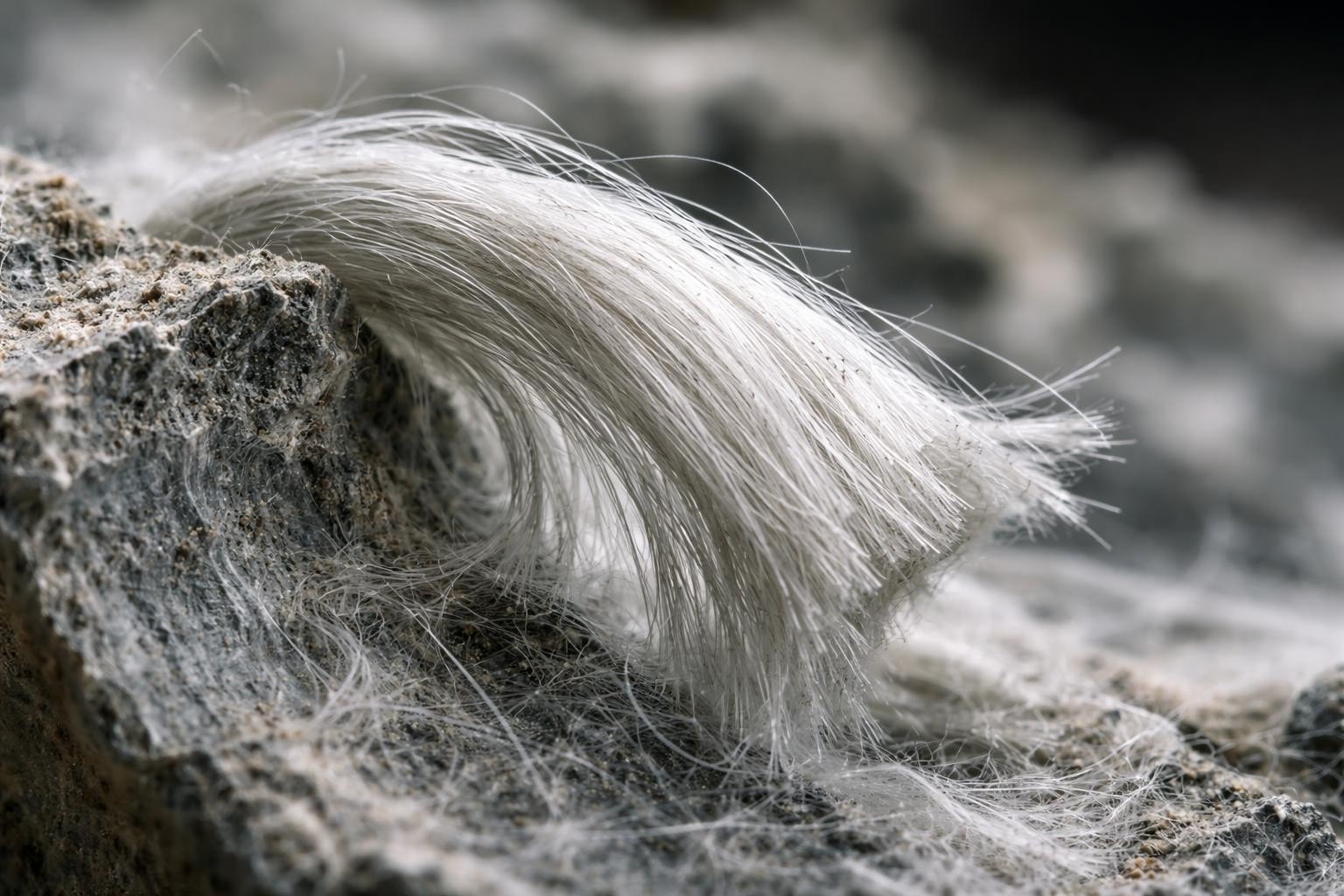
Chrysotile Asbestos: Understanding White Asbestos
Chrysotile, commonly known as white asbestos, represents the most widely used form of asbestos throughout industrial history. This serpentine mineral accounts for approximately 95% of all asbestos found in buildings across the United Kingdom and worldwide. Despite its historical prevalence in construction materials, understanding chrysotile's properties, health implications, and regulatory framework remains essential for property owners, facilities managers, and anyone responsible for building safety and compliance. The ongoing presence of chrysotile in existing structures continues to pose significant management challenges, requiring expert knowledge and careful handling to protect occupants and workers from potential exposure.
Chemical Composition and Physical Properties
Chrysotile differs fundamentally from other asbestos types through its unique mineralogical structure. Classified as a serpentine mineral, chrysotile consists of magnesium silicate with the chemical formula Mg₃Si₂O₅(OH)₄. This composition creates curled, flexible fibers that distinguish it from the straight, rigid fibers characteristic of amphibole asbestos varieties such as amosite and crocidolite.
The fibrous structure of chrysotile develops through a layered arrangement where magnesium-hydroxide and silica-oxygen sheets combine to form hollow tubes. These microscopic fibers typically measure between 0.02 to 0.5 micrometres in diameter, making them invisible to the naked eye yet capable of becoming airborne during disturbance.
Key Physical Characteristics
Physical properties of chrysotile contributed significantly to its widespread industrial adoption throughout the twentieth century:
- Heat resistance: Withstands temperatures exceeding 450°C before decomposition
- Tensile strength: Provides exceptional reinforcement when mixed with other materials
- Chemical resistance: Demonstrates stability against most acids and alkalis
- Electrical insulation: Offers superior non-conductive properties
- Flexibility: Unlike amphibole varieties, chrysotile fibers bend rather than fracture
| Property | Chrysotile | Amphibole Asbestos |
|---|---|---|
| Mineral classification | Serpentine | Amphibole |
| Fiber shape | Curled, flexible | Straight, needle-like |
| Color | White to grey | Blue, brown, grey |
| Acid solubility | Higher | Lower |
| Biopersistence in lungs | Lower | Higher |
These characteristics made chrysotile the preferred choice for thousands of commercial applications, from building insulation to brake linings. Understanding the properties of different asbestos types remains crucial for proper identification during surveys and risk assessments.

Historical Uses and Applications
Throughout the twentieth century, chrysotile became embedded in virtually every sector of construction and manufacturing. British buildings constructed between 1950 and 1999 contain chrysotile in numerous applications, many of which remain in place today.
Common Building Materials Containing Chrysotile
The versatility of chrysotile led to its incorporation into diverse building products:
- Asbestos cement products: Roofing sheets, wall cladding, rainwater gutters, water tanks
- Thermal insulation: Pipe lagging, boiler insulation, ceiling tiles, sprayed coatings
- Fire protection: Fire doors, fire blankets, firefighting equipment, protective clothing
- Flooring materials: Vinyl floor tiles, thermoplastic tiles, backing materials
- Textured coatings: Artex, decorative plasters, ceiling finishes
Industrial applications extended beyond construction. Chrysotile appeared in automotive brake pads, clutch facings, gaskets, and electrical insulation. The textile industry utilized chrysotile fibers to manufacture heat-resistant fabrics, protective clothing, and industrial gloves.
The Environmental Protection Agency's risk management framework addresses ongoing concerns about chrysotile use in certain products, highlighting the continued need for regulatory oversight even decades after peak consumption.
British importation of chrysotile reached its zenith during the 1960s and 1970s, with hundreds of thousands of tonnes arriving annually from major producing countries including Canada, Russia, and Zimbabwe. This legacy means that properties constructed or refurbished during this period require particular attention during management surveys.
Health Risks and Medical Evidence
Despite historical claims that chrysotile posed fewer health risks than amphibole asbestos varieties, contemporary medical research confirms that all asbestos types, including chrysotile, present serious health hazards. The World Health Organization's fact sheet on asbestos emphasizes that no safe exposure threshold exists for any form of asbestos.
Respiratory Diseases Associated with Chrysotile Exposure
Inhalation of chrysotile fibers can result in several severe medical conditions:
- Asbestosis: Progressive lung scarring causing breathlessness and reduced lung capacity
- Lung cancer: Significantly increased risk, especially among smokers
- Mesothelioma: Aggressive cancer affecting the pleural lining of the lungs
- Pleural plaques: Benign scarring indicating asbestos exposure
- Pleural thickening: Lung lining inflammation affecting respiratory function
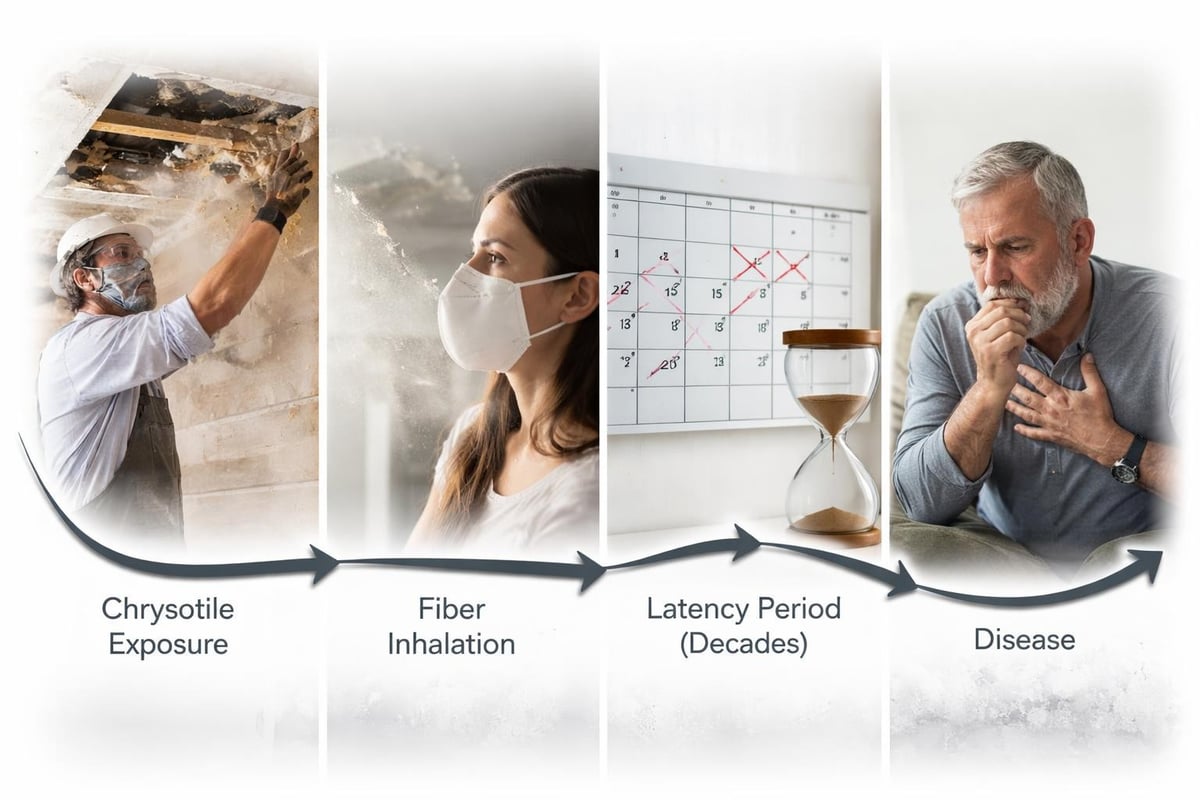
The latency period for asbestos-related diseases typically ranges from fifteen to sixty years following initial exposure. This extended timeframe means individuals exposed during the peak usage decades of the 1960s and 1970s continue developing related illnesses today.
| Disease | Typical Latency Period | Prognosis |
|---|---|---|
| Asbestosis | 15-30 years | Progressive, no cure |
| Lung cancer | 20-40 years | Variable, treatment-dependent |
| Mesothelioma | 30-50 years | Poor, typically 12-21 months |
| Pleural disease | 10-40 years | Generally stable |
Research documented in critical reviews of chrysotile hazards demonstrates that whilst chrysotile fibers may clear from lung tissue more rapidly than amphibole varieties, sufficient exposure still causes malignant disease. The curled nature of chrysotile fibers does not eliminate their capacity to cause cellular damage and carcinogenic transformation.
Current UK Regulations and Compliance Requirements
The Control of Asbestos Regulations 2012 governs chrysotile management throughout the United Kingdom. These regulations impose strict duties on property owners, employers, and those responsible for maintaining non-domestic premises.
Legal Obligations for Duty Holders
Property managers and building owners must fulfill specific requirements regarding chrysotile and other asbestos-containing materials:
- Conduct comprehensive surveys to identify presence, location, and condition
- Maintain detailed asbestos registers documenting all known or suspected materials
- Implement management plans outlining control measures and monitoring procedures
- Provide information to contractors, occupants, and maintenance personnel
- Monitor condition through regular inspections and risk assessments
- Arrange safe removal when materials deteriorate or building works commence
The duty to manage asbestos applies to all non-domestic premises, including commercial properties, schools, hospitals, and communal areas of residential buildings. Understanding these compliance requirements ensures duty holders meet their legal responsibilities whilst protecting building occupants.
Working with chrysotile requires licensed contractors when dealing with materials classified as high-risk, such as sprayed coatings, thermal insulation, or asbestos insulating board. Lower-risk materials like asbestos cement may permit non-licensed work under certain conditions, although strict precautions remain mandatory.
Recent Regulatory Developments
International regulatory frameworks continue evolving to address chrysotile concerns. The Code of Federal Regulations details prohibitions on chrysotile manufacturing and processing in the United States, reflecting global trends toward complete bans.
British regulations prohibit importation, supply, and use of all asbestos types, including chrysotile, since 1999. This prohibition means any chrysotile present in UK buildings predates this ban, emphasizing the importance of refurbishment and demolition surveys before commencing building works.
Identification and Survey Methodologies
Accurate identification of chrysotile-containing materials requires systematic surveying by qualified professionals using appropriate methodologies and equipment. Visual inspection alone cannot definitively confirm chrysotile presence, necessitating material sampling and laboratory analysis.
Survey Types and Applications
Different survey approaches address varying circumstances and risk profiles:
Management Surveys provide comprehensive documentation of asbestos location, type, and condition within buildings during normal occupation. These surveys support ongoing risk management and inform maintenance activities.
Refurbishment and Demolition Surveys adopt a more intrusive approach, accessing all areas affected by planned works. These fully destructive surveys ensure contractors identify all chrysotile materials before commencing work.
Re-inspection Surveys monitor previously identified chrysotile materials, tracking condition changes and assessing whether management strategies remain effective. Regular re-inspections form essential components of comprehensive asbestos management programmes.
Professional surveyors follow the HSG264 guidance document when conducting surveys, ensuring consistent standards across the industry. Surveyors record material locations, estimate quantities, assess condition, and assign risk ratings to inform management decisions.

Laboratory Analysis Techniques
Confirming chrysotile presence requires specialist laboratory analysis using established techniques:
| Analysis Method | Application | Accuracy |
|---|---|---|
| Polarized Light Microscopy (PLM) | Bulk material identification | High for fiber type |
| Phase Contrast Microscopy (PCM) | Air monitoring, fiber counting | Quantitative, not type-specific |
| Transmission Electron Microscopy (TEM) | Detailed fiber characterization | Highest precision |
| Scanning Electron Microscopy (SEM) | Fiber morphology analysis | Detailed structural information |
The OSHA chemical data sheet provides technical specifications for chrysotile identification and monitoring methods used in occupational settings. Professional laboratories accredited under ISO/IEC 17025 ensure reliable results through validated methodologies and quality assurance procedures.
Distinguishing chrysotile from other white or light-colored minerals requires expert analysis. Materials commonly mistaken for chrysotile include mineral wool, fiberglass, and certain cellulose fibers. Professional sampling and laboratory analysis eliminates uncertainty and enables informed decision-making.
Risk Assessment and Management Strategies
Effective chrysotile management balances safety requirements against practical considerations, recognizing that undisturbed asbestos-containing materials often present minimal risk. The principle of precautionary management guides decision-making, ensuring protection without unnecessary intervention.
Material Risk Assessment Factors
Several variables influence the risk posed by chrysotile-containing materials:
- Product type: Friable materials release fibers more readily than bonded products
- Damage extent: Physical deterioration increases fiber release potential
- Surface treatment: Encapsulation or coating reduces exposure risk
- Location accessibility: Materials in occupied areas require heightened attention
- Maintenance frequency: Regular disturbance elevates exposure probability
- Building activities: Planned works affecting chrysotile materials necessitate intervention
Asbestos-containing materials receive priority assessments combining material assessment scores with risk estimation matrices. This systematic approach ensures resources focus on highest-risk situations whilst maintaining oversight of lower-risk materials.
Management Options
Four principal management strategies address chrysotile materials in buildings:
- Encapsulation: Applying sealant coatings to prevent fiber release
- Enclosure: Constructing barriers separating materials from occupied spaces
- Removal: Complete elimination through licensed contractor engagement
- Monitoring: Regular inspection maintaining vigilance without active intervention
The optimal strategy depends upon material condition, location, building usage patterns, and planned activities. Management plans document chosen approaches and establish protocols ensuring consistent implementation.
Removal represents the most expensive option but permanently eliminates risk. However, poorly executed removal can create greater hazards than managed retention of stable materials. Professional removal contractors follow stringent protocols including containment establishment, controlled working methods, waste disposal, and clearance testing before reoccupation.
Air Monitoring and Exposure Control
Quantifying airborne chrysotile fiber concentrations provides essential data for assessing exposure risks and verifying control measure effectiveness. Air monitoring applies during asbestos removal projects, following suspected fiber releases, and as part of comprehensive management programmes.
Monitoring Scenarios and Methodologies
Different circumstances require specific monitoring approaches:
Background monitoring establishes baseline fiber concentrations in buildings containing chrysotile materials, confirming that normal activities maintain safe conditions.
Personal monitoring measures exposure levels for workers handling chrysotile materials, ensuring compliance with Control Limit regulations (0.1 fibers per milliliter for chrysotile).
Clearance testing verifies successful removal or remediation, confirming that areas meet reoccupation standards before lifting containments.
Reassurance monitoring addresses stakeholder concerns following incidents, providing objective evidence regarding air quality conditions.
Professional air monitoring and clearance testing services employ calibrated equipment, validated sampling protocols, and accredited laboratory analysis. Four-stage clearance procedures following removal works ensure thorough verification before building reoccupation.
The Control Limit for chrysotile in workplace atmospheres remains 0.1 fibers per milliliter averaged over four hours. This occupational exposure standard reflects current understanding of health risks whilst acknowledging practical measurement limitations. Responsible building managers implement controls maintaining exposures as low as reasonably practicable, regardless of regulatory thresholds.
Training and Competency Requirements
Managing chrysotile safely demands appropriate knowledge, skills, and awareness across multiple stakeholder groups. Competency requirements vary according to roles, responsibilities, and interaction levels with asbestos-containing materials.
Essential Training Categories
Regulatory frameworks mandate specific training provision for different personnel:
- Duty holder awareness: Understanding legal obligations and management principles
- Supervisory training: Managing asbestos risks within maintenance operations
- Operative training: Safe working practices for non-licensed activities
- Licensed contractor certification: Comprehensive training for high-risk removal works
- Analytical training: Laboratory personnel fiber identification skills
Category A non-licensed training enables workers to undertake low-risk activities with chrysotile-containing materials, including minor maintenance and small-scale removal of certain products. This training addresses hazard recognition, control measures, emergency procedures, and waste disposal requirements.
Professional training and awareness programmes ensure personnel possess current knowledge reflecting evolving best practices and regulatory developments. Regular refresher training maintains competency and reinforces safe working principles.
Building occupants benefit from basic asbestos awareness, recognizing that chrysotile materials may exist within their environment. Simple precautions, such as reporting damage and avoiding DIY activities affecting building fabric, significantly reduce inadvertent exposure risks.
Future Considerations and Emerging Challenges
The chrysotile legacy extends decades into the future as materials installed during peak usage periods gradually deteriorate or face disturbance through building lifecycle activities. Aging building stock containing chrysotile requires sustained vigilance and proactive management.
Ongoing Management Challenges
Several factors complicate long-term chrysotile management:
Documentation gaps mean many buildings lack comprehensive asbestos registers, particularly older properties or those with complex ownership histories. Establishing accurate records requires investment in professional surveys and material sampling.
Building alterations frequently occur without proper asbestos considerations, creating exposure risks for contractors and occupants. Robust permit-to-work systems and pre-construction surveys mitigate these dangers.
Climate change impacts including increased storm damage and flooding may affect chrysotile material integrity, necessitating responsive management and emergency protocols.
Resource constraints challenge duty holders balancing asbestos management costs against competing priorities. However, regulatory requirements remain non-negotiable, and failure consequences include prosecution, civil liability, and reputational damage.
The disposal requirements for chrysotile materials ensure environmental protection through controlled waste handling, licensed transport, and approved disposal facilities. Proper waste classification and documentation maintain traceability from building to final disposal.
Technology and Innovation
Emerging technologies support improved chrysotile management:
- Digital asbestos registers enabling real-time updates and mobile access
- Building Information Modeling (BIM) integration visualizing asbestos locations
- Advanced analytical techniques improving identification accuracy
- Remote inspection technologies accessing difficult areas safely
- Enhanced control measures reducing exposure during removal activities
Progressive organizations embrace digital compliance solutions streamlining information management and ensuring accessible, current documentation. These systems facilitate compliance whilst reducing administrative burdens.
International efforts toward global chrysotile bans continue, with comprehensive WHO publications providing evidence-based policy recommendations supporting elimination strategies. Whilst the United Kingdom banned chrysotile use decades ago, international trade continues in some jurisdictions, perpetuating global health challenges.
Understanding chrysotile characteristics, risks, and management requirements enables duty holders to protect building occupants whilst maintaining regulatory compliance. Professional expertise remains essential for accurate identification, risk assessment, and implementation of appropriate control strategies. Asbestosurv Ltd delivers comprehensive asbestos survey and management services throughout the UK, providing expert guidance on chrysotile identification, risk assessment, and compliance solutions tailored to your specific requirements.
Need Professional Asbestos Advice?
Contact our expert team for guidance on your specific requirements
Contact Us