
Duty to Manage Asbestos: UK Compliance Guide 2026
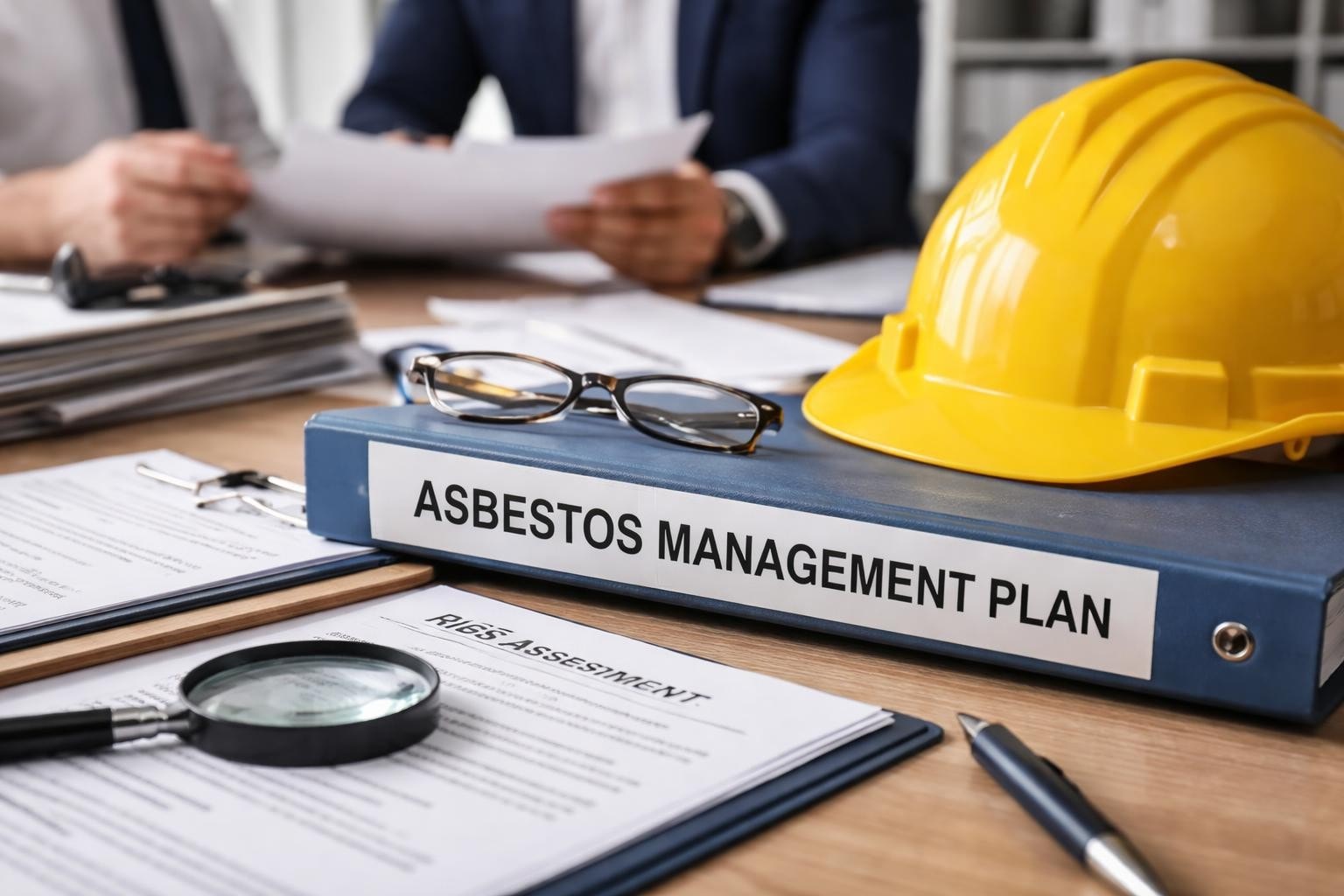
Property owners and managers across the United Kingdom carry a significant legal responsibility when it comes to asbestos-containing materials within their buildings. The duty to manage asbestos represents one of the most crucial regulatory requirements for non-domestic premises, placing specific obligations on those who control buildings to protect occupants, maintenance workers, and contractors from exposure to this hazardous substance. Understanding these obligations isn't merely about regulatory compliance-it's fundamentally about protecting lives and preventing asbestos-related diseases that can develop decades after initial exposure.
Understanding the Legal Framework
The Control of Asbestos Regulations 2012 established the current duty to manage asbestos in non-domestic premises, creating clear responsibilities for building owners, landlords, and those with maintenance responsibilities. This regulation applies to all non-domestic buildings constructed before the year 2000, when asbestos use became completely prohibited in the UK.
The duty holder is defined as anyone who has responsibility for maintaining or repairing the building, or who has control of the premises through contract or tenancy. In many cases, this means building owners, but it can equally apply to managing agents, facilities managers, or even tenants who have assumed responsibility for maintenance under lease agreements.
Key aspects of the legal duty include:
- Identifying the presence and location of asbestos-containing materials
- Assessing the condition and risk of these materials
- Creating and maintaining an asbestos register
- Implementing an effective management plan
- Providing information to anyone who might disturb the asbestos
- Regularly reviewing and monitoring the condition of asbestos materials
The penalties for non-compliance can be severe, with unlimited fines and potential imprisonment for the most serious breaches. Beyond legal consequences, failing to manage asbestos properly exposes individuals to significant health risks, including mesothelioma, asbestosis, and lung cancer.
Identifying Asbestos in Your Building
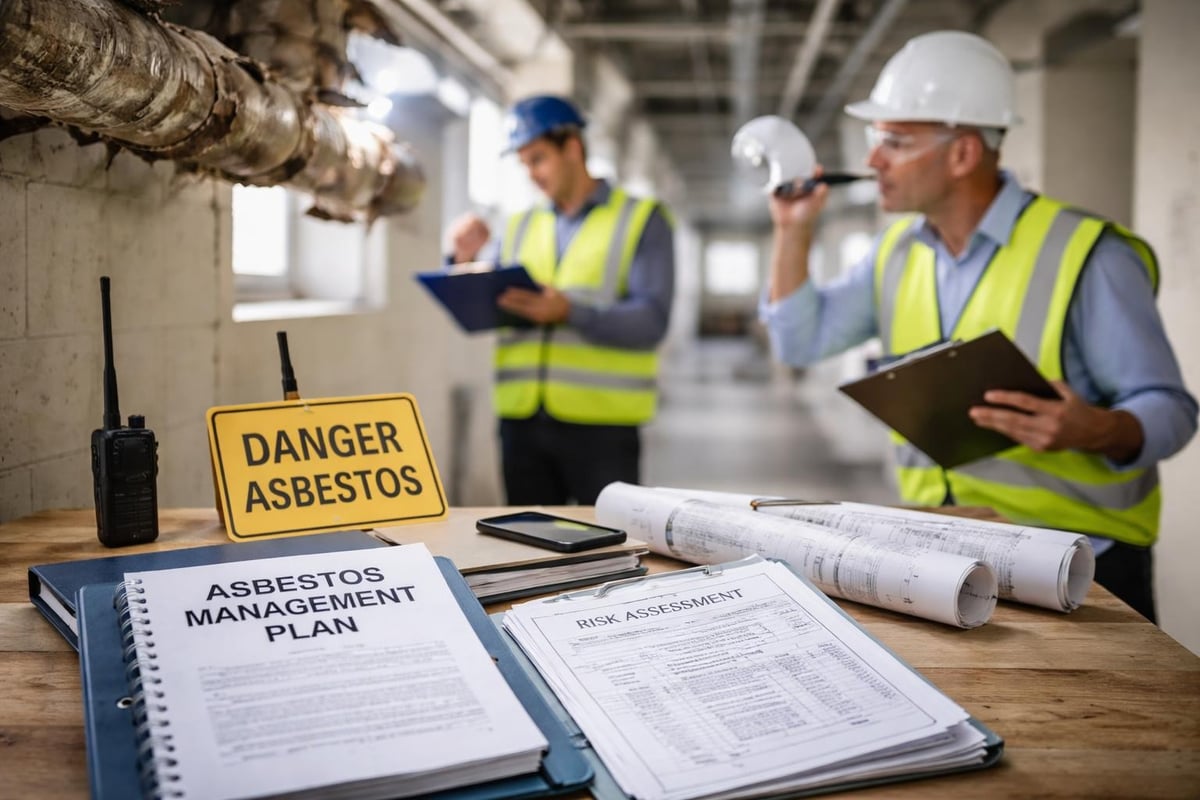
The first step in fulfilling the duty to manage asbestos involves determining whether asbestos-containing materials are present within your premises. Buildings constructed or refurbished before 2000 are highly likely to contain some form of asbestos, as it was extensively used in construction materials ranging from insulation and ceiling tiles to floor coverings and pipe lagging.
The Role of Professional Surveys
A comprehensive asbestos management survey forms the cornerstone of effective asbestos management. This type of survey, conducted by qualified professionals, aims to locate and assess the condition of all asbestos-containing materials that could be damaged or disturbed during normal occupancy, including foreseeable maintenance and installation work.
Professional surveyors from organisations like Asbestosurv Ltd systematically inspect accessible areas of buildings, taking samples where necessary for laboratory analysis. The survey report identifies the location, type, and condition of asbestos materials, providing the essential information needed to create an effective management plan.
| Survey Component | Purpose | Outcome |
|---|---|---|
| Visual inspection | Identify suspected materials | Location database |
| Sample collection | Confirm asbestos presence | Laboratory analysis results |
| Risk assessment | Evaluate material condition | Priority action list |
| Documentation | Create comprehensive records | Asbestos register |
It's important to note that the duty to manage asbestos requires a management survey, which differs from refurbishment and demolition surveys. Management surveys are designed to support ongoing building occupation and maintenance, whereas refurbishment and demolition surveys are intrusive and required before major building works commence.
Creating and Maintaining the Asbestos Register
Once asbestos has been identified through professional surveying, duty holders must compile and maintain an accurate asbestos register. This document serves as the central reference point for all asbestos information within the building, recording the location, type, condition, and assessment of every identified asbestos-containing material.
The register must be kept up to date and readily accessible to anyone who might work on the building. This includes contractors, maintenance staff, and emergency services who may need to access areas containing asbestos.
Essential information in an asbestos register includes:
- Precise location of asbestos materials (with photographs and floor plans)
- Type of asbestos identified (chrysotile, amosite, crocidolite)
- Product type and quantity
- Condition assessment and risk rating
- Management actions required
- Date of survey and surveyor details
- Record of any remedial work undertaken
The HSE provides practical examples of how asbestos risks can be managed effectively, demonstrating how registers support day-to-day operations whilst maintaining safety standards.
Developing an Effective Management Plan
The asbestos management plan translates survey findings into practical action, setting out how identified asbestos will be managed to prevent exposure. This plan must be proportionate to the risk, considering factors such as the condition of materials, their accessibility, and the likelihood of disturbance.
Management options typically fall into three categories: removal, encapsulation, or ongoing monitoring and management. The duty to manage asbestos doesn't automatically require removal-in many cases, asbestos materials in good condition pose minimal risk when left undisturbed and properly managed.
Risk Assessment and Prioritisation
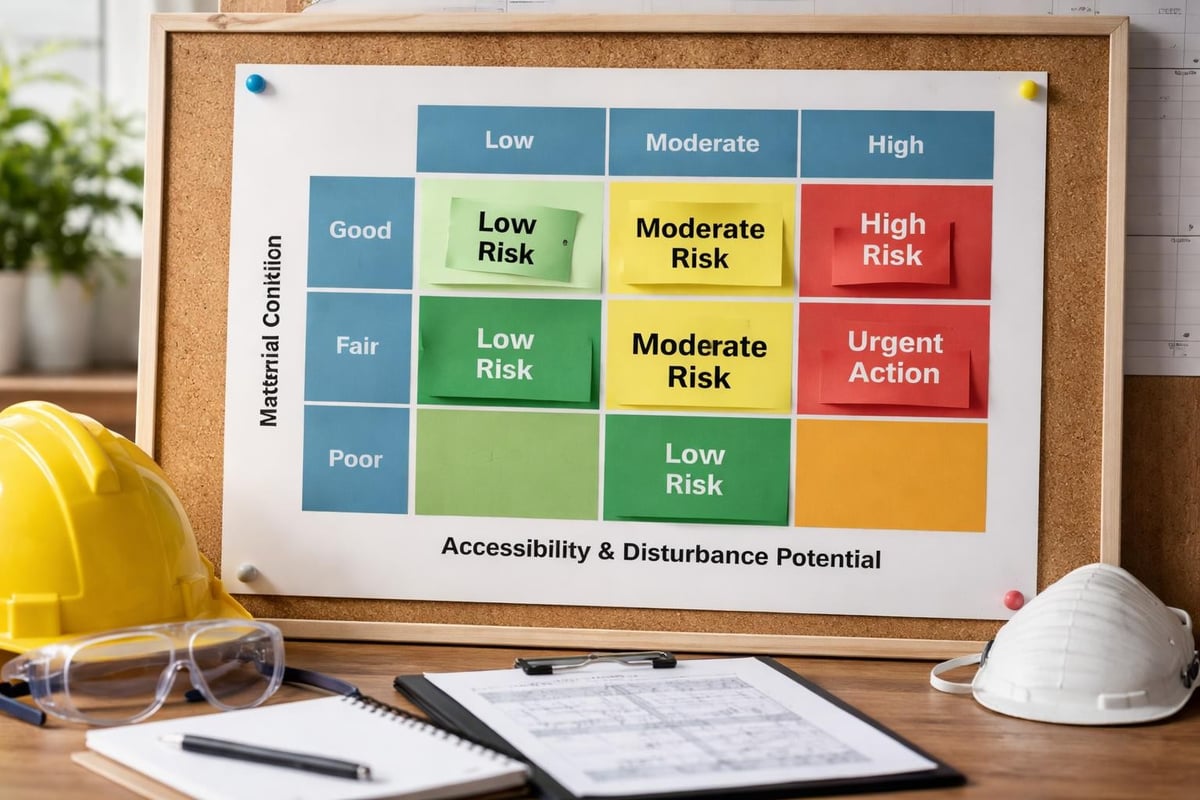
A robust risk assessment evaluates each asbestos-containing material based on its type, condition, and potential for disturbance. Materials are typically assigned a risk score that determines the urgency and nature of management actions required.
High-risk materials-those that are damaged, easily accessible, or likely to be disturbed-require immediate attention, potentially including encapsulation or removal. Lower-risk materials may simply require regular monitoring to ensure their condition doesn't deteriorate.
The management plan should also establish clear procedures for:
- Regular re-inspection schedules to monitor material condition
- Emergency procedures if asbestos is damaged or disturbed
- Control measures during maintenance or refurbishment work
- Training requirements for relevant staff
- Contractor management and permit-to-work systems
Information Sharing and Communication
A critical component of the duty to manage asbestos involves providing information about asbestos to those who might disturb it. This communication requirement ensures that anyone working in or on the building understands the presence and location of asbestos materials.
Before any maintenance, repair, or refurbishment work commences, contractors must be provided with relevant sections of the asbestos register and management plan. This enables them to plan their work safely and implement appropriate control measures.
Effective communication strategies include:
- Pre-work briefings for contractors and maintenance staff
- Clear labelling of areas containing asbestos
- Permit-to-work systems for high-risk activities
- Regular staff training and awareness sessions
- Emergency contact procedures for suspected asbestos disturbance
Building occupants should also be made aware of asbestos presence in appropriate circumstances, particularly in shared spaces or areas where they might undertake minor modifications or fixtures installation.
Monitoring and Review Obligations
The duty to manage asbestos isn't a one-time exercise but an ongoing responsibility requiring regular review and monitoring. Management plans must be reviewed periodically to ensure they remain current and effective, typically at least annually or whenever circumstances change.
Re-inspection programmes should be established based on the condition and risk assessment of asbestos materials. High-risk materials may require inspection every six months, whilst low-risk materials in good condition might be checked annually or less frequently.
Updating Records and Procedures
Changes to the building, whether through refurbishment, damage, or alterations, necessitate updates to the asbestos register and management plan. Similarly, any remedial work-whether removal, encapsulation, or repair-must be documented, with the register amended to reflect the current situation.
| Trigger Event | Required Action | Timeframe |
|---|---|---|
| Annual review | Update management plan | Within 12 months |
| Building alterations | Survey affected areas | Before work starts |
| Material damage | Immediate assessment | Within 24 hours |
| Remedial work completion | Update register | Within 7 days |
| Change of duty holder | Transfer documentation | At handover |
For building owners and managers seeking guidance on their specific responsibilities, the HSE offers tailored advice based on different job roles concerning asbestos safety.
Training and Competency Requirements
Fulfilling the duty to manage asbestos effectively requires appropriate competency at every level. Duty holders must ensure that they either possess sufficient knowledge themselves or appoint competent persons to manage asbestos on their behalf.
Staff involved in asbestos management should receive training appropriate to their role. This ranges from basic awareness training for general employees to more detailed instruction for maintenance personnel who might encounter asbestos during their work.
Professional asbestos consultants conducting surveys and providing advice must demonstrate recognised qualifications and competence, typically through accreditation schemes such as UKAS-accredited certification or BOHS P4 qualifications.
Common Challenges and Practical Solutions
Many duty holders face similar challenges when implementing asbestos management programmes. Limited budgets, complex building ownership structures, and incomplete building records can all complicate compliance efforts.
Managing Shared Responsibilities
In multi-occupied buildings or those with complex lease arrangements, determining who holds the duty to manage asbestos can be challenging. The regulations recognise that more than one person may have duties in relation to the same premises, requiring cooperation and coordination.
Clear contractual arrangements should establish responsibility boundaries, whilst maintaining overall accountability for asbestos management. Communication protocols between different duty holders prevent gaps in management coverage.

Addressing Historic Buildings
Listed buildings and structures with heritage designations present particular challenges, as asbestos removal may not be feasible or desirable. In such cases, management plans must focus on encapsulation and ongoing monitoring, with careful planning for any necessary interventions.
Working with conservation officers and heritage specialists alongside asbestos professionals ensures that both preservation and safety objectives are achieved. The quality management systems employed by professional consultancies like those detailed in Asbestosurv Ltd's QMS scope demonstrate how systematic approaches support effective asbestos management even in challenging contexts.
Integration with Broader Health and Safety Management
The duty to manage asbestos shouldn't exist in isolation but should integrate with wider health and safety management systems. Risk assessments for maintenance activities, contractor management procedures, and emergency response plans all interact with asbestos management requirements.
Integration opportunities include:
- Incorporating asbestos checks into permit-to-work systems
- Including asbestos awareness in general health and safety inductions
- Coordinating asbestos re-inspections with other building condition surveys
- Aligning record-keeping systems for efficiency
- Joint training programmes covering multiple hazards
This integrated approach ensures consistency, reduces duplication, and reinforces the importance of asbestos management within the broader safety culture.
International Perspectives and Best Practices
Whilst this article focuses on UK regulations, examining international approaches can provide valuable insights. The EPA's guidance for building owners and managers in the United States, for instance, emphasises similar principles around identification, assessment, and ongoing management.
Learning from different regulatory frameworks and industry best practices worldwide helps duty holders develop more robust management systems. Common themes across jurisdictions include the importance of professional surveying, comprehensive record-keeping, effective communication, and regular monitoring.
Technology and Modern Asbestos Management
Digital tools are increasingly supporting duty holders in meeting their obligations more efficiently. Cloud-based asbestos registers enable real-time access from multiple locations, ensuring contractors and maintenance teams always have current information before commencing work.
Mobile survey applications streamline data collection during inspections, reducing transcription errors and speeding up report production. Geographic information systems (GIS) and building information modelling (BIM) integration allows asbestos data to be visualised alongside other building information, supporting better decision-making.
Automated reminder systems help ensure re-inspection schedules are maintained, whilst digital archiving preserves historical records that might otherwise be lost during building ownership changes or organisational restructures.
Documentation and Audit Trails
Maintaining comprehensive documentation demonstrates compliance and provides protection should questions arise about asbestos management practices. Complete records should cover the entire asbestos management lifecycle, from initial surveys through to final clearance certificates if materials are removed.
Audit trails documenting decision-making processes, contractor selections, and management action prioritisation support defensibility and enable continuous improvement. Regular internal audits identify gaps or weaknesses before they become compliance issues or safety hazards.
Effective asbestos management protects people whilst ensuring regulatory compliance-a responsibility that requires systematic approach, professional expertise, and ongoing commitment. Understanding the full scope of the duty to manage asbestos enables building owners and managers to implement robust systems that safeguard occupants and workers. Asbestosurv Ltd provides comprehensive asbestos surveys, management planning, and ongoing consultancy services to help organisations across the UK meet their legal obligations with confidence, combining professional expertise with practical support tailored to each client's specific circumstances.
Need Professional Asbestos Advice?
Contact our expert team for guidance on your specific requirements
Contact Us