
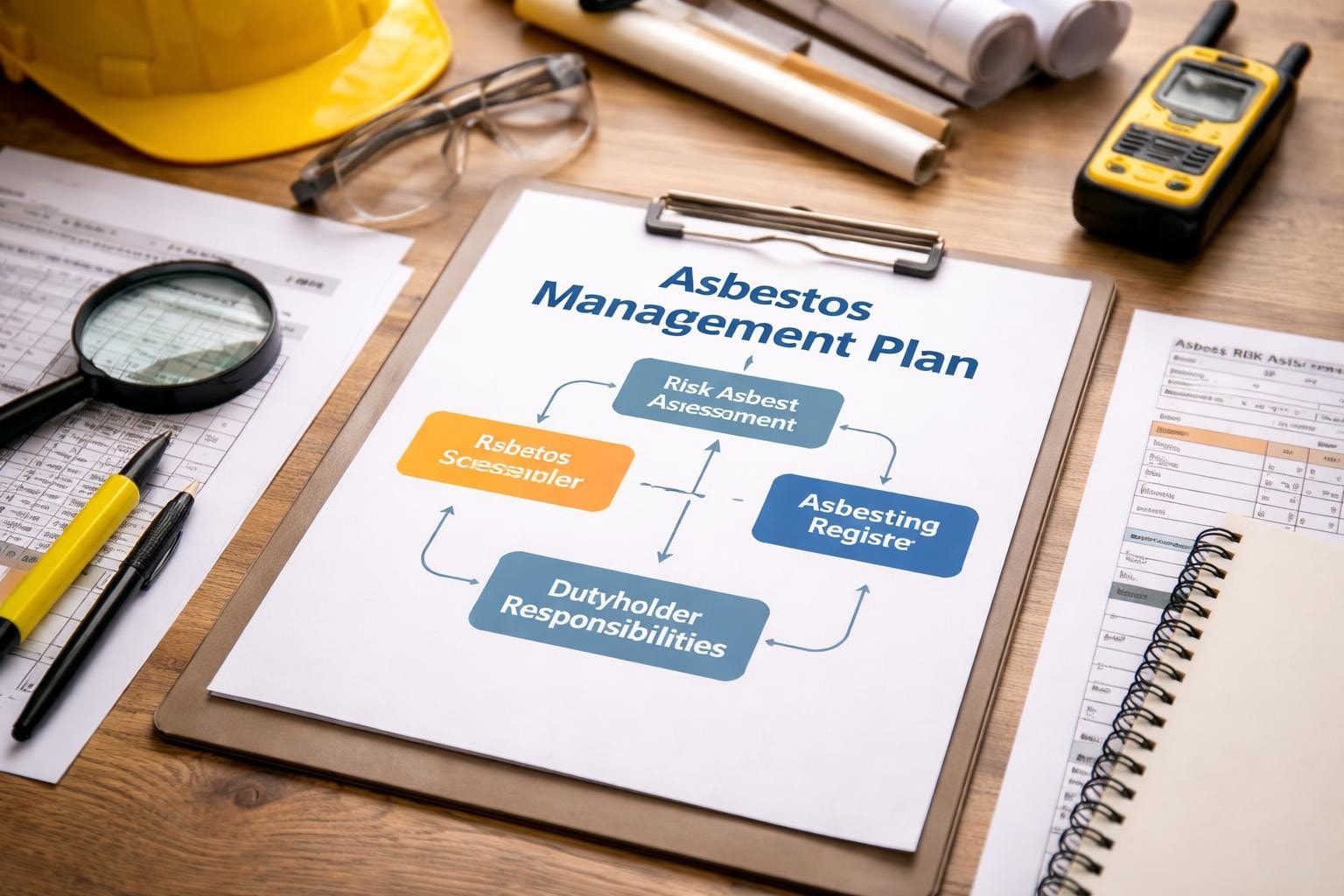
HSE Asbestos Management Plan: A Complete Guide
Creating and maintaining an effective asbestos management plan is not merely a regulatory checkbox exercise. It represents a fundamental commitment to protecting building occupants, workers, and contractors from the serious health risks associated with asbestos-containing materials (ACMs). With the Health and Safety Executive (HSE) providing clear guidance on what constitutes adequate management, businesses and property owners must understand both the legal requirements and the practical implementation of these critical safety documents. An hse asbestos management plan serves as the cornerstone of responsible property management for any non-domestic premises built or refurbished before the year 2000.
Understanding the Legal Framework
The Control of Asbestos Regulations 2012 places a clear duty to manage asbestos on anyone who has responsibility for maintaining or repairing non-domestic premises. This duty applies to building owners, landlords, managing agents, and those with contractual obligations for property maintenance. The HSE's guidance on asbestos management plans establishes the minimum standards that dutyholders must meet.
The regulations require a systematic approach to identifying ACMs, assessing their condition, and managing the associated risks. Failure to comply can result in enforcement action, substantial fines, and in serious cases, imprisonment. Beyond legal penalties, inadequate asbestos management exposes organisations to reputational damage and civil liability claims.
Who Needs an Asbestos Management Plan?
The dutyholder requirement extends across various sectors and property types:
- Commercial property owners and landlords
- Educational institutions including schools and universities
- Healthcare facilities and hospitals
- Industrial premises and warehouses
- Local authorities managing public buildings
- Property management companies overseeing multiple sites
Even shared premises require clarity about who holds responsibility for common areas versus individual units. The dutyholder must take reasonable steps to determine whether ACMs are present and manage them appropriately.

Essential Components of an HSE Asbestos Management Plan
A comprehensive hse asbestos management plan must contain specific elements to satisfy regulatory requirements and provide practical guidance for day-to-day operations. The plan should be a living document that evolves with the building and its use.
The Asbestos Register
The asbestos register forms the foundation of effective management. This document must record:
- Location of confirmed and presumed ACMs
- Type and quantity of asbestos present
- Condition assessment and risk rating
- Photographic evidence where possible
- Access arrangements for hidden materials
- Product type and asbestos content percentage
Regular updates to the register are essential. Following any refurbishment, maintenance work, or damage to building fabric, the register must be reviewed and amended. The provision of information to relevant parties ensures that anyone who might disturb ACMs has access to current, accurate data.
Risk Assessment and Prioritisation
Not all ACMs pose the same level of risk. The management plan must include a systematic risk assessment considering:
| Risk Factor | Low Priority | Medium Priority | High Priority |
|---|---|---|---|
| Material Condition | Good, well-sealed | Minor damage, some debris | Significant damage, friable |
| Surface Treatment | Fully encapsulated | Painted or sealed | Unsealed, exposed |
| Asbestos Type | Chrysotile in matrix | Amosite in product | Crocidolite or sprayed coatings |
| Location Access | Rarely accessed, restricted | Periodic access by staff | Frequent public access |
| Disturbance Likelihood | Minimal risk of contact | Occasional maintenance | High risk of disturbance |
This prioritisation informs the management action required, whether monitoring, encapsulation, or removal. Professional asbestos consultants typically use a standardised material assessment algorithm and priority assessment system to generate numerical risk scores.
Management Procedures and Controls
The plan must detail specific procedures for managing identified ACMs. These include:
- Planned Inspection Schedules: Frequency of visual inspections based on material condition and risk rating (typically every 6-12 months)
- Monitoring Protocols: Procedures for documenting condition changes and updating records
- Access Controls: Physical barriers, signage, and restricted access arrangements
- Permit to Work Systems: Requirements for authorising work that may disturb ACMs
- Emergency Procedures: Response protocols for accidental damage or suspected exposure
The comprehensive consultancy services required to develop these procedures demand expertise in both regulatory compliance and practical building management.

Developing Your Asbestos Management Plan
Creating an effective hse asbestos management plan requires a structured approach that begins with thorough site investigation and continues through documentation, implementation, and ongoing review.
Initial Survey Requirements
Before drafting the management plan, dutyholders must commission an appropriate asbestos survey. Management surveys are designed to locate ACMs that could be damaged or disturbed during normal occupancy, maintenance, or installation work. These surveys involve:
- Visual inspection of all accessible areas
- Sampling of suspected materials for laboratory analysis
- Assessment of material condition and accessibility
- Documentation with floor plans and photographs
- Risk scoring using standardised methodologies
Refurbishment and demolition surveys are more intrusive, required before major building works. The survey type must match the intended use and scope of work. Professional surveyors accredited by bodies such as UKAS or BOHS ensure compliance with HSE guidance.
Documenting Responsibilities
Clear allocation of responsibilities prevents gaps in management. The plan should identify:
Strategic Level Responsibilities
- Appointing a competent person to manage asbestos
- Ensuring adequate resources and training
- Reviewing plan effectiveness annually
- Authorising major decisions on asbestos removal
Operational Responsibilities
- Conducting routine inspections
- Maintaining the asbestos register
- Briefing contractors and visitors
- Reporting damage or deterioration
- Coordinating emergency responses
Educational institutions can reference the HSE's asbestos management checklist for sector-specific guidance on assigning these duties.
Communication and Information Sharing
An hse asbestos management plan only protects people if they know about it and can access the information. Effective communication strategies include:
- Providing the asbestos register to all contractors before work commences
- Displaying clear signage in areas containing ACMs
- Including asbestos awareness in staff induction programmes
- Establishing protocols for emergency services access to asbestos information
- Maintaining accessible copies of survey reports and management plans
Digital management systems increasingly replace paper-based registers, allowing real-time updates and remote access for authorised personnel. However, emergency hard copies should remain available on-site.
Implementation and Ongoing Management
Developing the plan represents only the first step. Successful implementation requires commitment, resources, and systematic oversight to maintain effectiveness over time.
Training and Competence
Personnel involved in asbestos management require appropriate training levels:
| Role | Training Requirement | Typical Duration |
|---|---|---|
| Dutyholders and Senior Management | Asbestos awareness | 1-2 hours |
| Facilities Managers | Duty to manage training | Half day |
| Maintenance Staff | Asbestos awareness plus specific procedures | Half day |
| Asbestos Surveyors | BOHS P402 or equivalent | 5 days + practical |
| Licensed Removal Contractors | BOHS P405 or equivalent | 13 days minimum |
Refresher training should occur at regular intervals, typically every two years, with additional briefings when procedures change or new ACMs are identified.
Monitoring and Review Cycles
The management plan must establish clear timelines for different monitoring activities:
Monthly Tasks
- Review any maintenance work that may have affected ACMs
- Check incident reports for asbestos-related concerns
- Verify contractor compliance with permit procedures
Quarterly Activities
- Inspect high-risk ACMs for condition changes
- Review access control effectiveness
- Update digital records and documentation
Annual Requirements
- Comprehensive review of entire management plan
- Physical inspection of all identified ACMs
- Assessment of whether survey information remains current
- Evaluation of training needs and compliance levels
- Senior management review of plan effectiveness
The broader context of asbestos safety provided by HSE guidance helps organisations benchmark their management practices against regulatory expectations.

Special Considerations for Different Sectors
Whilst the fundamental principles of an hse asbestos management plan remain consistent, different sectors face unique challenges that require tailored approaches to implementation.
Educational Establishments
Schools, colleges, and universities manage particular complexities:
- High occupancy by vulnerable populations including children
- Multiple stakeholders including teachers, support staff, pupils, and parents
- Frequent minor works and adaptations to accommodate changing needs
- School holiday periods providing opportunities for intensive work
- Budget constraints affecting survey frequency and removal programmes
The HSE's education-specific resources highlight common deficiencies found during inspections and provide sector-relevant solutions. Governing bodies must ensure that headteachers and premises managers understand their responsibilities and have appropriate support.
Healthcare Facilities
Hospitals and care homes present additional management challenges:
- 24-hour occupancy limiting opportunities for intrusive work
- Vulnerable patient populations with compromised health
- Infection control requirements affecting work methodologies
- Emergency repair needs sometimes conflicting with planned procedures
- Complex building services requiring frequent access to ceiling voids and risers
Commercial and Industrial Properties
Office buildings, warehouses, and manufacturing facilities require consideration of:
- Tenant turnover necessitating frequent contractor inductions
- Demised premises with shared responsibility areas
- High-activity zones where accidental damage risks increase
- Lease obligations requiring clear documentation of asbestos information
- Business continuity concerns when planning removal works
Professional support from specialists such as Asbestosurv Ltd ensures that sector-specific requirements integrate effectively into comprehensive management plans.
Common Pitfalls and How to Avoid Them
Experience across thousands of properties reveals recurring weaknesses in asbestos management that organisations should proactively address.
Documentation Failures
Poor record-keeping undermines even well-intentioned management efforts:
- Survey reports stored inaccessibly or in obsolete formats
- Asbestos registers not updated following removal or remediation works
- Inspection records lacking detail about specific observations
- Multiple versions of documents creating confusion about current status
- Failure to document verbal briefings provided to contractors
Implementing a robust document control system, whether digital or paper-based, ensures that information remains current, accessible, and legally defensible. Version control and audit trails provide accountability.
Inadequate Contractor Management
Contractors present one of the highest risk factors for asbestos disturbance:
- Failure to consult the asbestos register before work
- Inadequate briefings about specific ACM locations
- Lack of supervision during work in areas containing asbestos
- Permit-to-work procedures bypassed for perceived minor tasks
- No verification that contractor personnel have appropriate training
Establishing mandatory procedures that prevent work commencing without documented asbestos briefings creates essential safeguards. Electronic permit systems can enforce compliance automatically.
Insufficient Review and Updates
Static management plans quickly become obsolete:
- Annual reviews conducted as paper exercises without site verification
- Changes to building use not reflected in risk assessments
- New regulations or HSE guidance not incorporated
- Deterioration of ACM condition not identified through inspection
- Staff turnover resulting in loss of institutional knowledge
Scheduling reviews with defined outputs and management sign-off maintains plan relevance. Linking reviews to budget planning cycles ensures that identified actions receive necessary resources.
Integration with Broader Health and Safety Management
An hse asbestos management plan should not exist in isolation but form part of integrated health and safety arrangements. This integration creates efficiencies and ensures comprehensive risk management.
Links to Other Policies and Procedures
Effective integration touchpoints include:
- Fire Safety: Ensuring fire risk assessors know about asbestos locations that may affect evacuation routes or firefighting operations
- Maintenance Planning: Incorporating asbestos considerations into planned preventative maintenance schedules
- Contractor Management: Embedding asbestos briefings into standard contractor induction processes
- Incident Reporting: Including asbestos-related near-misses in safety reporting systems
- Risk Assessment: Referencing the asbestos register when conducting task-specific risk assessments
This holistic approach prevents asbestos management becoming an afterthought when planning building works or responding to emergencies.
Digital Management Systems
Modern facilities management software increasingly incorporates asbestos management modules that provide:
- Cloud-based access to asbestos registers from mobile devices
- Automated alerts for scheduled inspections and reviews
- Integration with computer-aided facilities management (CAFM) systems
- Photographic evidence linked to specific ACM locations
- Audit trails showing who accessed information and when
- Contractor portal access for pre-work asbestos information
Whilst technology offers significant advantages, organisations must ensure that digital systems include appropriate backup arrangements and that personnel can access critical information during system failures.
Developing and maintaining an effective asbestos management plan requires ongoing commitment, appropriate resources, and specialist expertise to navigate the complex regulatory landscape whilst protecting building occupants and workers. The framework established by HSE guidance provides a clear roadmap, but successful implementation depends on understanding your specific building characteristics, occupancy patterns, and operational requirements. Asbestosurv Ltd delivers the professional asbestos surveys, management consultancy, and ongoing support services that UK organisations need to achieve full regulatory compliance whilst maintaining safe, well-managed properties.
Need Professional Asbestos Advice?
Contact our expert team for guidance on your specific requirements
Contact Us