

HSG264: Complete Guide to Asbestos Survey Standards
Understanding the standards that govern asbestos surveying is essential for property owners, managers, and construction professionals across the United Kingdom. HSG264, officially titled "Asbestos: The Survey Guide," represents the definitive Health and Safety Executive (HSE) publication that establishes the framework for conducting compliant asbestos surveys. Published to support the Control of Asbestos Regulations 2012, this comprehensive guidance document outlines the methodologies, responsibilities, and best practices that ensure asbestos-containing materials are identified, assessed, and managed safely. For duty holders navigating their legal obligations, hsg264 provides the clarity needed to protect building occupants and workers from asbestos exposure risks.
The Purpose and Scope of HSG264
The official HSE publication of HSG264 serves as the authoritative resource for anyone commissioning, conducting, or managing asbestos surveys in Britain. This guidance document emerged from the need to standardise survey practices across the industry, ensuring that all professionals approach asbestos identification and assessment with consistent methodology and rigour.
HSG264 addresses multiple stakeholder groups, from building owners and facilities managers to surveyors and contractors. The document establishes clear expectations for survey quality, reporting standards, and the competencies required of those undertaking asbestos surveys. By providing detailed technical guidance, hsg264 helps organisations fulfil their duty to manage asbestos effectively whilst minimising health risks.
Key Elements Covered in the Guidance
The scope of hsg264 extends across several critical areas of asbestos management:
- Survey planning and preparation requirements before entering premises
- Sample collection techniques and laboratory analysis protocols
- Risk assessment methodologies for prioritising asbestos management actions
- Reporting standards that ensure clarity and usability of survey findings
- Quality assurance processes to maintain survey accuracy and reliability
The guidance distinguishes between different survey types, each designed for specific scenarios and objectives. This differentiation ensures that property stakeholders commission the appropriate level of investigation based on their circumstances and intended building activities.
Survey Types Defined Under HSG264
One of the most significant contributions of hsg264 is its clear categorisation of asbestos surveys into distinct types. Understanding these categories is fundamental for duty holders when conducting management surveys or planning building works.
Management Surveys
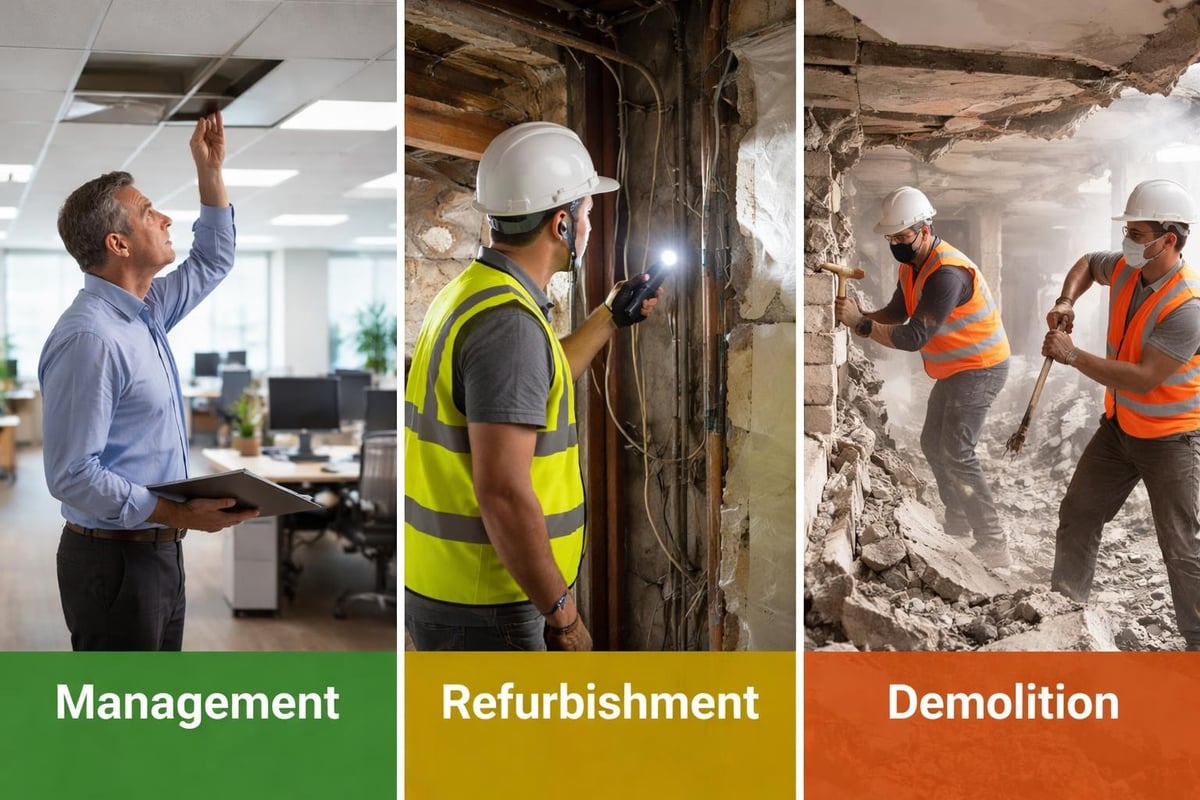
Management surveys represent the standard approach for identifying asbestos-containing materials during normal occupancy and use of premises. These surveys aim to locate asbestos materials that could be damaged or disturbed during routine activities, enabling duty holders to manage them appropriately.
The hsg264 framework for management surveys involves:
- Visual inspection of accessible areas within the building
- Presumption that materials contain asbestos unless proven otherwise
- Sample collection where material types cannot be confirmed visually
- Assessment of material condition and potential for disturbance
- Recording of findings in a comprehensive asbestos register
Management surveys are designed to be minimally intrusive, recognising that buildings remain occupied during and after the survey process. This approach balances thorough investigation with practical constraints of ongoing building operations.
Refurbishment and Demolition Surveys
When building works extend beyond routine maintenance, hsg264 specifies that refurbishment and demolition surveys become necessary. These surveys are fully intrusive, requiring access to all areas where work will occur, including spaces normally hidden behind walls, above ceilings, and beneath floors.
| Survey Aspect | Management Survey | Refurbishment/Demolition Survey |
|---|---|---|
| Intrusiveness | Minimally intrusive | Fully intrusive and destructive |
| Building Status | Occupied premises | Unoccupied or isolated areas |
| Scope | Accessible areas | All areas affected by works |
| Presumption | Presume and manage | Identify all ACMs definitively |
| Sampling | Representative samples | Comprehensive sampling |
The distinction between these survey types reflects the different risk profiles and management objectives. Refurbishment surveys prevent exposure during renovation projects, whilst demolition surveys ensure complete asbestos removal before structural dismantling commences.
Surveyor Competence and Training Requirements
HSG264 emphasises that survey quality depends fundamentally on surveyor competence. The guidance outlines expectations for knowledge, skills, and experience that asbestos surveyors must possess to deliver reliable results.
Professional surveyors working to hsg264 standards should demonstrate:
- Comprehensive understanding of building construction techniques across different eras
- Knowledge of asbestos-containing materials and their typical applications
- Proficiency in sampling techniques that minimise fibre release
- Risk assessment capabilities for prioritising management actions
- Awareness of health and safety protocols during survey work
Many organisations, including Asbestosurv Ltd, ensure their survey teams maintain professional qualifications through bodies such as the British Occupational Hygiene Society (BOHS). These qualifications provide structured training aligned with hsg264 requirements, covering both theoretical knowledge and practical surveying skills.
Continuing Professional Development
The hsg264 framework recognises that asbestos surveying demands ongoing professional development. Regulatory updates, emerging best practices, and advances in analytical techniques require surveyors to maintain current knowledge throughout their careers.
Professional development activities include:
- Attendance at industry conferences and seminars
- Participation in technical workshops on sampling methods
- Review of updated HSE guidance documents and regulatory changes
- Peer review processes to share experiences and improve practices
- Refresher training to maintain practical skills
This commitment to continuous improvement ensures that surveys conducted today reflect the most current understanding of asbestos risks and management strategies.
Survey Planning and Risk Assessment
Before surveyors enter any premises, hsg264 requires comprehensive planning and risk assessment. This preparatory phase ensures surveyor safety whilst maximising the effectiveness of the investigation.

Desktop Studies and Information Gathering
Effective surveys begin with thorough research into building history, construction methods, and any previous asbestos records. The hsg264 guidance recommends obtaining:
- Building plans and construction specifications
- Previous asbestos survey reports or registers
- Maintenance records indicating material replacements
- Information about building use and occupancy patterns
- Details of planned works or areas requiring particular attention
This background research enables surveyors to develop targeted investigation strategies, focusing attention on areas most likely to contain asbestos-containing materials. For properties lacking historical records, surveyors must apply their knowledge of construction practices from relevant periods.
Site-Specific Risk Assessments
HSG264 mandates site-specific risk assessments before survey commencement. These assessments identify hazards beyond asbestos exposure, including structural risks, utilities, confined spaces, and access challenges.
Risk control measures might include:
- Personal protective equipment appropriate to identified hazards
- Respiratory protective equipment when disturbing suspected ACMs
- Controlled access arrangements to prevent unauthorised entry
- Emergency procedures should accidents or unexpected exposures occur
- Communication protocols between surveyors and building occupants
The duty to manage landlord responsibilities extend to ensuring surveyors can work safely, providing necessary access, information, and support throughout the survey process.
Sampling Strategies and Laboratory Analysis
The hsg264 guidance provides detailed protocols for sample collection, handling, and analysis. These standards ensure that samples accurately represent materials within buildings whilst minimising fibre release during collection.
Sample Collection Methodologies
Sampling under hsg264 follows principles designed to balance thoroughness with safety. Surveyors collect samples from homogeneous materials, recognising that consistent appearance suggests consistent composition.
Key sampling principles include:
- Taking sufficient samples to characterise all material types
- Collecting samples from multiple layers in composite materials
- Ensuring samples are representative of the bulk material
- Minimising disturbance and fibre release during collection
- Sealing samples immediately in appropriate containers
- Labelling samples clearly with unique identifiers
The guidance acknowledges scenarios where sampling may not be appropriate. When materials are in poor condition or sampling would compromise structural integrity, hsg264 allows surveyors to presume asbestos presence and manage accordingly.
Analytical Requirements
Samples collected during hsg264-compliant surveys require analysis by accredited laboratories using recognised methodologies. In the United Kingdom, polarised light microscopy (PLM) remains the standard analytical technique for bulk samples.
| Analysis Method | Application | Detection Limit | Turnaround Time |
|---|---|---|---|
| PLM | Bulk sample identification | 1% asbestos content | 24-48 hours |
| TEM | Air monitoring verification | Single fibres | 5-10 days |
| SEM | Detailed fibre analysis | Individual fibres | 3-7 days |
Professional sampling and laboratory analysis services ensure chain of custody procedures maintain sample integrity from collection through analysis to reporting. This rigour provides confidence in analytical results upon which management decisions depend.
Reporting Standards and Documentation
HSG264 establishes comprehensive reporting requirements that ensure survey findings are communicated clearly, accurately, and usefully to duty holders. Reports must enable informed decision-making about asbestos management whilst remaining accessible to non-technical readers.
Essential Report Components
Every hsg264-compliant survey report should contain:
- Executive summary highlighting key findings and urgent recommendations
- Scope and limitations explaining what was and wasn't surveyed
- Methodology description detailing survey approach and techniques used
- Asbestos register listing all identified or presumed ACMs with locations
- Risk assessments prioritising materials based on condition and exposure potential
- Management recommendations advising on appropriate control measures
- Plans and photographs showing ACM locations clearly
The asbestos register forms the cornerstone of ongoing asbestos management. This document, maintained and updated throughout a building's lifecycle, provides the foundation for compliance with duty to manage requirements.
Material Risk Assessments
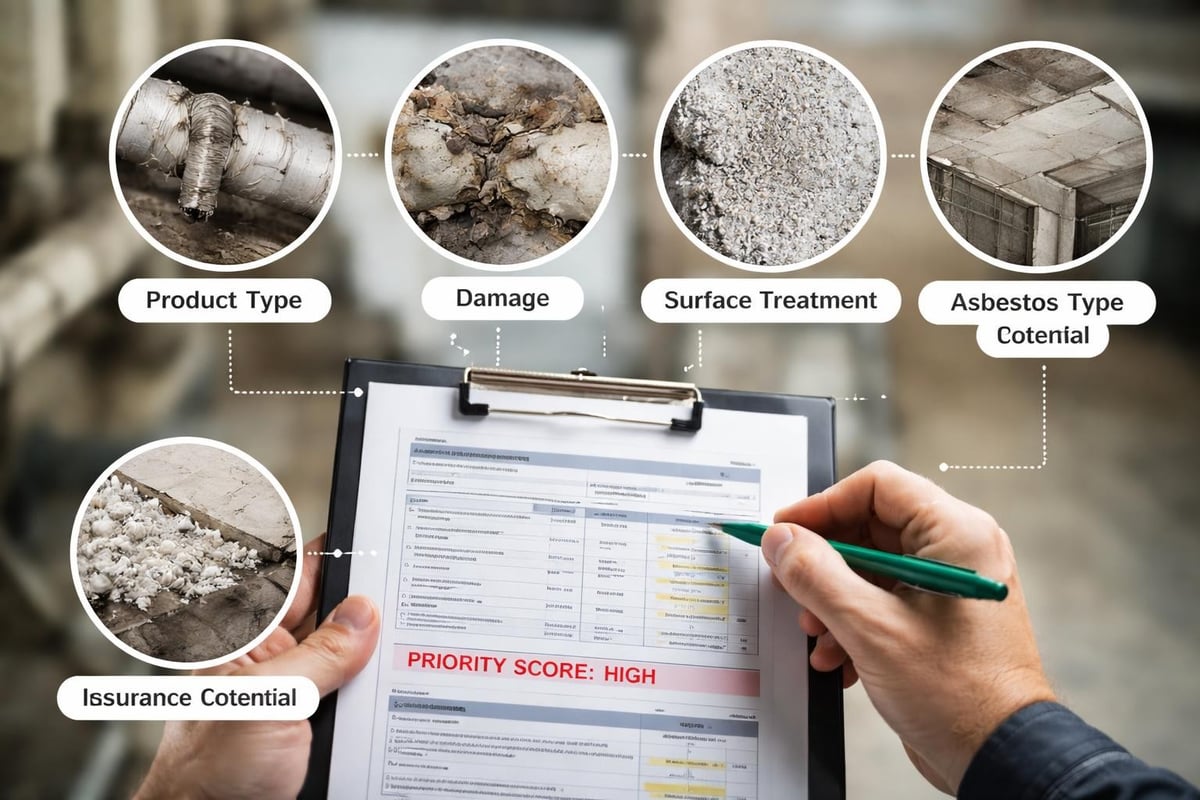
HSG264 introduced a standardised algorithm for assessing asbestos material risks, combining factors related to material condition, surface treatment, asbestos type, and potential for disturbance. This systematic approach generates numerical scores that prioritise management actions.
Assessment factors include:
- Product type and asbestos content
- Extent of damage or deterioration
- Surface treatment and protective coatings
- Asbestos type (crocidolite, amosite, chrysotile)
- Normal occupant activity and likelihood of disturbance
- Maintenance frequency in the area
Materials scoring highest on these assessments require immediate attention, whilst lower-scoring materials may be managed through periodic monitoring and planned maintenance controls.
Integration with Asbestos Management Plans
Survey reports compliant with hsg264 standards provide the foundation for developing comprehensive asbestos management plans. These plans translate survey findings into practical management arrangements that protect building occupants and workers.
From Survey to Management
The hsg264 framework recognises that surveys represent only the first step in asbestos management. Effective duty holder responses require:
- Establishing clear management responsibilities for asbestos oversight
- Implementing control measures appropriate to identified risks
- Developing procedures for safe work near asbestos-containing materials
- Training staff and contractors about asbestos locations and precautions
- Monitoring material condition through regular inspections
- Maintaining accurate, accessible records of asbestos locations
Many organisations find that professional consultancy services streamline this transition from survey findings to operational management systems. Expert guidance ensures that management plans reflect both hsg264 recommendations and the practical realities of building operations.
Review and Update Cycles
The guidance emphasises that asbestos management is not a one-time activity. Buildings undergo changes through maintenance, refurbishment, and occupancy variations that can affect asbestos risks. HSG264 recommends regular reviews of survey data and management arrangements.
Review triggers include:
- Planned building works that might disturb previously undisturbed areas
- Changes in building use affecting exposure potential
- Discovery of previously unknown asbestos-containing materials
- Damage to known ACMs requiring reassessment
- Periodic reviews at intervals appropriate to building circumstances
Re-inspection surveys provide updated assessments of material condition, identifying deterioration that might necessitate remedial action. These inspections maintain the accuracy and relevance of asbestos registers over time.
Common Challenges in HSG264 Implementation
Whilst hsg264 provides comprehensive guidance, duty holders and surveyors frequently encounter practical challenges when implementing its recommendations. Understanding these challenges helps organisations develop effective strategies for compliance.
Access Limitations
Real-world buildings often present access constraints that complicate thorough investigation. Occupied premises, operational equipment, and physical obstructions can prevent surveyors from inspecting all areas comprehensively.
The hsg264 approach to access limitations involves:
- Documenting inaccessible areas clearly in survey reports
- Presuming asbestos presence in uninspected spaces
- Planning follow-up investigations when access becomes available
- Implementing management controls that account for unknown materials
- Communicating limitations to duty holders for informed decision-making
Transparent documentation of survey limitations ensures that duty holders understand the completeness of their asbestos information and can plan accordingly.
Balancing Presumption and Sampling
HSG264 permits surveyors to presume materials contain asbestos rather than sampling every suspect material. This approach prevents unnecessary disturbance whilst ensuring materials are managed safely. However, determining when sampling adds value requires professional judgement.
Factors influencing sampling decisions include:
- Material accessibility and condition
- Likelihood of future disturbance during normal building use
- Cost implications of presuming asbestos versus analytical confirmation
- Material type and typical asbestos content in similar products
- Duty holder preferences for definitive identification
Experienced surveyors working to HSG264 standards for asbestos surveying balance these considerations, recommending sampling strategies that optimise safety, cost-effectiveness, and management utility.
Quality Assurance and Compliance Verification
The hsg264 framework emphasises quality assurance throughout the survey process. Robust quality systems ensure consistent, reliable results regardless of individual surveyor variations or project complexities.
Internal Quality Controls
Professional asbestos consultancies implement quality management systems aligned with hsg264 expectations. These systems typically include:
- Standardised survey methodologies and documentation templates
- Peer review processes for reports before client delivery
- Regular calibration and maintenance of survey equipment
- Competency assessments for survey personnel
- Client feedback mechanisms for continuous improvement
Organisations committed to quality policies often pursue formal accreditation through schemes such as ISO 9001, demonstrating systematic approaches to quality management.
Independent Verification
Some duty holders commission independent audits of survey quality, particularly for large property portfolios or high-risk premises. These compliance audits verify that surveys meet hsg264 standards and regulatory requirements.
Verification activities might include:
- Desktop review of survey reports and methodologies
- Physical re-inspection of surveyed areas
- Verification sampling to confirm analytical results
- Assessment of management plan adequacy
- Evaluation of surveyor competence documentation
Independent verification provides assurance that survey investments deliver the information quality necessary for effective asbestos management and regulatory compliance.
Sector-Specific Applications of HSG264
Whilst hsg264 provides universal guidance for asbestos surveying, different sectors face unique challenges in implementing its recommendations. Understanding sector-specific considerations helps stakeholders apply the guidance effectively.
Educational Establishments
Schools and universities present particular complexities due to their combination of extensive building stocks, diverse occupancy patterns, and heightened duty of care towards vulnerable populations. The asbestos in schools checklist draws heavily on hsg264 principles whilst addressing educational sector specifics.
Educational institutions must consider:
- Coordinating surveys with academic calendars to minimise disruption
- Managing asbestos risks during routine maintenance and minor works
- Training staff appropriately about asbestos locations and precautions
- Communicating with parents and governors about asbestos management
- Balancing building preservation with safety requirements
Social Housing and Residential Property
Social housing providers manage large portfolios of properties, many constructed during peak asbestos use periods. Implementing hsg264 recommendations across hundreds or thousands of units requires systematic approaches and prioritisation strategies.
Housing associations reference hsg264 when developing comprehensive asbestos management strategies, as evidenced by documents like the Almond Housing Association's management plan. These organisations must balance thorough surveying with tenant privacy, operational budgets, and regulatory compliance.
Commercial and Industrial Premises
Commercial property owners and industrial facility operators apply hsg264 principles within complex operational environments. Facilities may contain specialised equipment, process infrastructure, and areas where operational shutdown for surveying proves extremely costly.
Industrial applications often require:
- Phased survey approaches that align with shutdown schedules
- Enhanced safety protocols for hazardous environments
- Specialist knowledge of industrial asbestos applications
- Integration with broader facility management systems
- Coordination with operational teams and safety personnel
Training and Awareness Beyond Surveyors
HSG264 acknowledges that effective asbestos management extends beyond professional surveyors to encompass all individuals who might encounter asbestos-containing materials. Comprehensive training and awareness programmes ensure that everyone understands their roles and responsibilities.
Duty Holder Training
Property owners and managers benefit from training that helps them understand hsg264 requirements and their implications for operational decision-making. Effective duty holder training covers:
- Legal obligations under the Control of Asbestos Regulations 2012
- How to commission appropriate survey types for different scenarios
- Interpreting survey reports and asbestos registers
- Developing and implementing management plans
- Communicating asbestos information to contractors and occupants
This knowledge enables duty holders to make informed decisions about survey commissioning, management plan development, and ongoing compliance activities.
Contractor and Maintenance Staff Awareness
Personnel who undertake maintenance, refurbishment, or other building works require asbestos awareness training appropriate to their roles. HSG264 emphasises that workers must receive information about asbestos locations before commencing activities that might disturb materials.
Awareness training typically addresses:
- Health effects of asbestos exposure
- Common locations and appearances of ACMs in buildings
- Procedures for checking asbestos registers before work
- Actions required if suspected ACMs are encountered
- Emergency procedures following unexpected disturbance
Regular refresher training maintains awareness levels and accommodates workforce changes, ensuring consistent safety standards across all building activities.
Future Developments and Ongoing Relevance
Since its publication, hsg264 has become the definitive standard for asbestos surveying in the United Kingdom. The guidance continues to evolve through periodic updates that reflect emerging best practices, technological advances, and lessons learned from practical implementation.
The HSE maintains HSG264 as current guidance, with updates addressing areas such as digital survey technologies, improved analytical techniques, and refined risk assessment methodologies. Staying current with these developments ensures that survey practices remain aligned with best available knowledge.
Digital Innovation in Survey Delivery
Modern survey practices increasingly incorporate digital technologies that enhance data collection, reporting, and ongoing management. Mobile applications enable real-time data capture, photographic documentation, and GPS location recording during surveys.
Digital innovations complementing hsg264 principles include:
- Cloud-based asbestos registers accessible to authorised personnel
- Building information modelling (BIM) integration for 3D ACM visualisation
- Automated report generation reducing administrative burden
- Mobile inspection applications for re-inspection programmes
- Digital compliance tracking and audit trail maintenance
These technologies enhance survey efficiency whilst maintaining compliance with fundamental hsg264 requirements. Professional consultancies offering digital compliance solutions help organisations leverage these innovations effectively.
Harmonisation with International Standards
Whilst hsg264 specifically addresses UK requirements, international organisations increasingly recognise the value of standardised asbestos survey methodologies. The principles established in this guidance influence asbestos management approaches beyond British borders, contributing to global efforts to eliminate asbestos-related diseases.
International harmonisation efforts focus on:
- Consistent surveyor competency frameworks across jurisdictions
- Standardised material assessment and prioritisation methodologies
- Comparable reporting formats facilitating multinational property management
- Shared research into emerging asbestos risks and management strategies
- Collaborative development of best practices based on collective experience
This international perspective ensures that UK asbestos management remains at the forefront of global best practice whilst contributing to worldwide health protection efforts.
Understanding and implementing HSG264 remains essential for anyone responsible for asbestos management in UK buildings. This comprehensive guidance provides the framework for identifying, assessing, and controlling asbestos risks effectively whilst maintaining full regulatory compliance. Whether you're managing a single property or a large portfolio, professional survey services that adhere to HSG264 standards deliver the reliable information necessary for informed decision-making and occupant protection. Asbestosurv Ltd provides expert asbestos surveys and consultancy services across the UK, helping duty holders navigate their regulatory obligations with confidence whilst ensuring the safety of building occupants and workers through rigorous, HSG264-compliant survey methodologies.
Need Professional Asbestos Advice?
Contact our expert team for guidance on your specific requirements
Contact Us