

UK Asbestos Ban: History, Impact & Compliance in 2026
The UK asbestos ban represents one of the most significant public health measures in British history, yet its implications continue to shape property management and construction practices nearly two decades after its complete implementation. While the final prohibition came into force in 1999, asbestos remains present in millions of buildings across Britain, requiring ongoing vigilance, professional management, and strict compliance with regulations. Understanding the historical context, current requirements, and practical implications of the ban is essential for property owners, facility managers, and construction professionals navigating the complexities of asbestos management in 2026.
Historical Context of Asbestos Use in Britain
Asbestos was extensively used in British construction and manufacturing throughout the 20th century, earning the nickname "the magic mineral" for its remarkable properties. Between the 1950s and 1980s, approximately three million tonnes of asbestos were imported into the United Kingdom.
The material's heat resistance, durability, and insulating properties made it invaluable across numerous applications. Asbestos cement was used for roofing sheets and rainwater goods, whilst sprayed asbestos coatings provided fire protection for structural steel. Asbestos insulating board became ubiquitous in partition walls, ceiling tiles, and fire doors throughout commercial and residential properties.
Peak Usage and Early Warnings
British asbestos consumption reached its zenith during the 1960s and 1970s, with widespread application in:
- Building materials: cement sheets, insulation boards, textured coatings, floor tiles
- Industrial settings: pipe insulation, boiler lagging, gaskets, brake linings
- Domestic products: ironing boards, oven gloves, electric heaters
- Transportation: railway carriages, ship construction, automotive components
Scientific evidence linking asbestos exposure to serious respiratory diseases emerged as early as the 1920s, yet large-scale industrial use continued for decades. The UK government's general information on asbestos documents the gradual recognition of these health risks.
Timeline of the UK Asbestos Ban
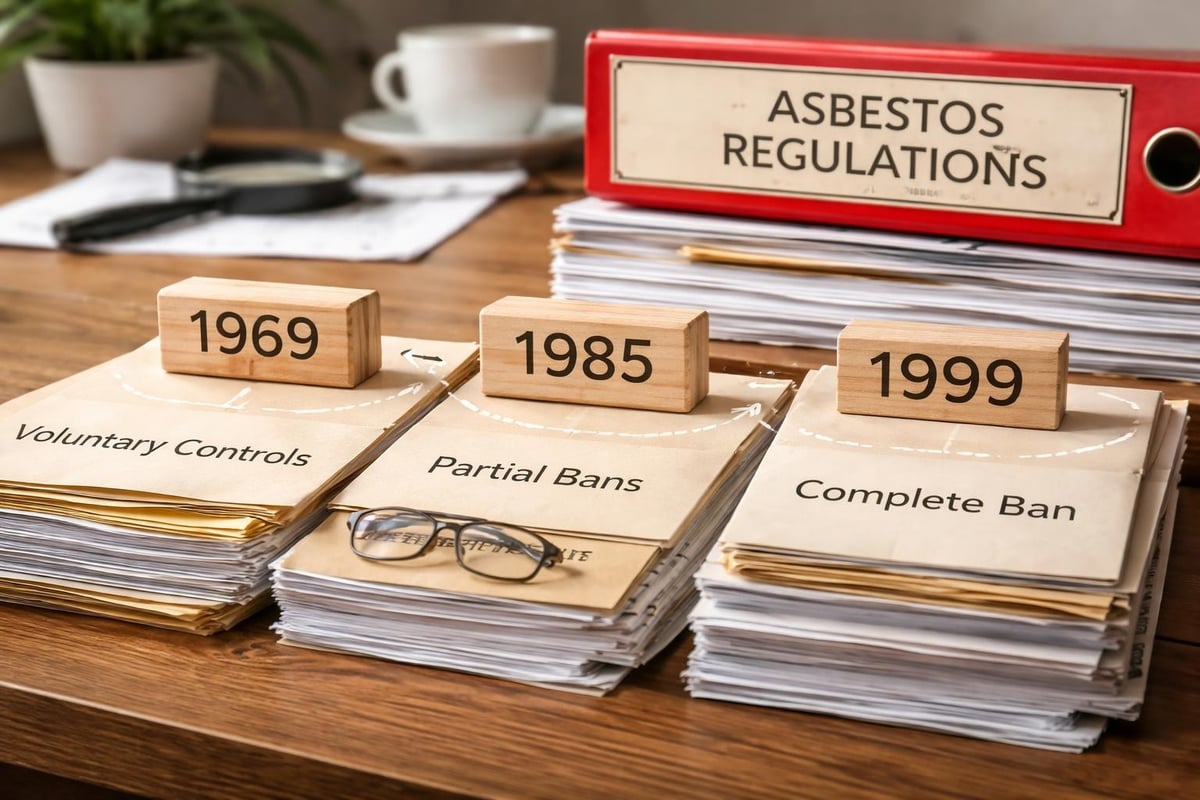
The uk asbestos ban was implemented progressively rather than through a single piece of legislation, reflecting evolving scientific understanding and political will to address the health crisis.
| Year | Regulatory Action | Scope |
|---|---|---|
| 1969 | Asbestos Regulations | First specific controls on asbestos use |
| 1985 | Ban on crocidolite (blue asbestos) | Prohibition of most dangerous type |
| 1986 | Asbestos (Prohibitions) Regulations | Extended restrictions |
| 1992 | Ban on amosite (brown asbestos) | Second most dangerous type prohibited |
| 1999 | Complete ban on chrysotile (white asbestos) | All asbestos types prohibited |
The 1999 Complete Prohibition
The final uk asbestos ban came into effect on 24 November 1999 through amendments to the Asbestos (Prohibitions) Regulations 1992. This legislation prohibited the importation, supply, and use of all remaining asbestos types, primarily chrysotile (white asbestos), which had continued to be used despite earlier restrictions on blue and brown varieties.
The ban specifically prohibited:
- Importation of raw asbestos fibres and asbestos-containing materials
- Supply of products containing asbestos
- Use of asbestos in any new applications or installations
- Second-hand sale of asbestos products
Certain limited exemptions existed initially for specific industrial applications, but these were progressively eliminated. By 2005, virtually all uses of asbestos were prohibited across the United Kingdom.
Current Legislative Framework
The uk asbestos ban established prohibition on new use, but comprehensive regulations govern the management of existing asbestos. The Control of Asbestos Regulations 2012 consolidated previous legislation and remains the primary regulatory framework in 2026.
Key Regulatory Requirements
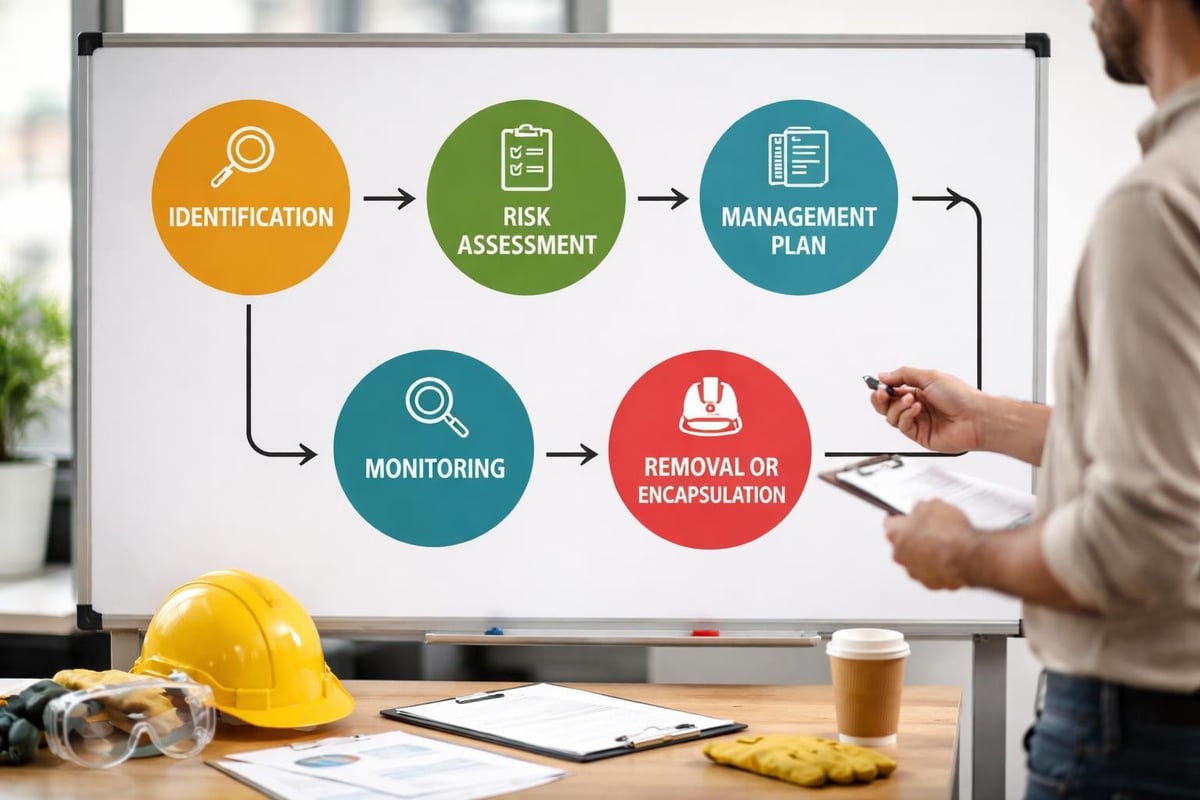
Duty to Manage forms the cornerstone of current asbestos legislation. Under Regulation 4, duty holders (typically building owners or those with maintenance responsibilities) must:
- Identify the presence and location of asbestos-containing materials
- Assess the condition and risk posed by identified materials
- Prepare and maintain an asbestos management plan
- Monitor asbestos condition through regular inspections
- Provide information to anyone who might disturb asbestos
Understanding your duty to manage as a landlord is essential for compliance with current regulations.
Work with Asbestos Materials
The regulations establish two categories of asbestos work based on risk level and material type. Licensed work requires HSE-approved contractors and applies to high-risk activities involving asbestos insulation, coating, or insulating board. Non-licensed work covers lower-risk activities but still demands strict adherence to safety protocols outlined by the HSE.
All asbestos work, regardless of licensing requirements, necessitates:
- Comprehensive risk assessment
- Development of written work plans
- Use of appropriate respiratory protective equipment
- Implementation of controlled working practices
- Air monitoring where applicable
- Safe disposal at licensed facilities
Buildings Still Containing Asbestos
Despite the uk asbestos ban being in place for over two decades, asbestos remains widespread in British buildings. The Health and Safety Executive estimates that asbestos is present in approximately 500,000 non-domestic premises and countless residential properties constructed before 2000.
High-Risk Property Types
Certain building categories present elevated asbestos risks due to their age and construction methods:
Commercial and Industrial Properties
Buildings constructed during Britain's industrial peak (1950-1985) frequently contain extensive asbestos materials. Factories, warehouses, and office blocks from this era commonly feature asbestos cement roofing, insulation boards in suspended ceilings, and sprayed coatings on structural steelwork.
Educational Establishments
Schools require particular attention as many were built or refurbished during peak asbestos use periods. Ceiling tiles, wall panels, boiler rooms, and science laboratories in older schools frequently contain asbestos materials.
Healthcare Facilities
Hospitals and healthcare buildings present complex asbestos management challenges due to continuous occupation, aging infrastructure, and frequent maintenance requirements. Patient safety considerations add additional complexity to any asbestos-related work.
Residential Properties
Homes built before 2000 may contain asbestos in textured coatings (Artex), floor tiles, cement roofing, soffit boards, and heating system insulation. The UKATA's reflection on 25 years since the ban highlights ongoing challenges in the domestic sector.
Professional Survey Requirements
Professional asbestos surveys form the foundation of effective asbestos management following the uk asbestos ban. Two primary survey types serve different purposes within the regulatory framework.
Management Surveys
Management surveys aim to locate asbestos-containing materials that could be disturbed during normal occupancy and maintenance activities. These surveys:
- Focus on accessible areas and building fabric
- Involve presumptive identification and sampling where necessary
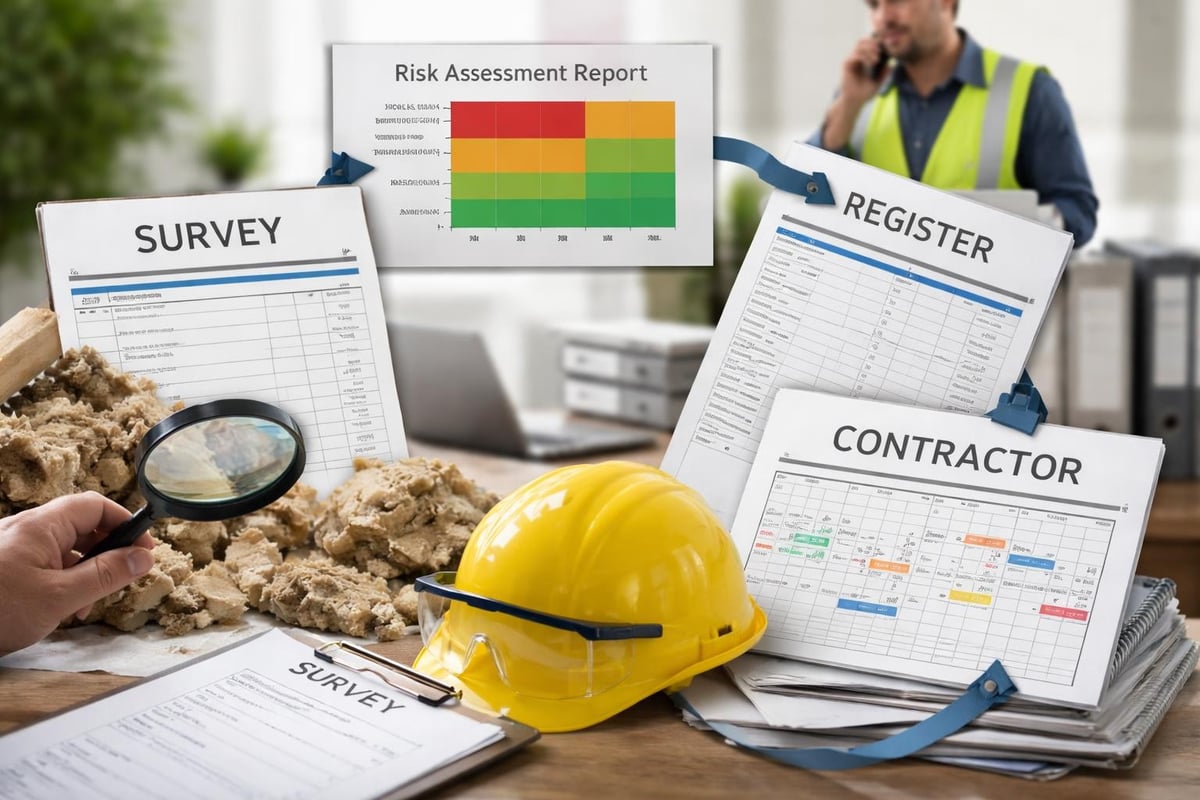
- Produce an asbestos register documenting location and condition
- Inform ongoing management strategies
- Require updating when building use changes
Refurbishment and Demolition Surveys
More intrusive investigations are mandatory before any refurbishment or demolition work. Refurbishment and demolition surveys must locate all asbestos materials in areas where work will occur, requiring:
- Complete access to all areas affected by planned works
- Destructive inspection methods including lifting floorboards and accessing voids
- Comprehensive sampling to confirm material identification
- Detailed reporting specifying exact locations and quantities
- Clear communication with contractors undertaking the work
The pre-refurbishment checklist provides detailed guidance for project planning.
Health Implications and Ongoing Risks
The uk asbestos ban was primarily implemented to prevent future asbestos-related diseases, yet existing materials continue to pose health risks when disturbed. Understanding these risks remains crucial for compliance and worker protection.
Asbestos-Related Diseases
Asbestos exposure can cause several serious conditions, typically manifesting decades after initial exposure:
| Disease | Latency Period | Description |
|---|---|---|
| Asbestosis | 15-30 years | Progressive lung scarring causing breathlessness |
| Mesothelioma | 20-50 years | Aggressive cancer of lung/abdomen lining |
| Lung Cancer | 15-35 years | Similar to smoking-related lung cancer |
| Pleural Thickening | 10-20 years | Scarring of lung lining reducing capacity |
Approximately 5,000 people die annually in the UK from asbestos-related diseases, most resulting from occupational exposure before the ban. The HSE's FAQ section addresses common concerns about health risks.
Exposure Routes
Asbestos poses health risks only when fibres become airborne and are inhaled. Intact, undisturbed asbestos materials generally present minimal risk. Danger arises when materials are:
- Cut, drilled, or sanded during renovation work
- Damaged through impact or deterioration
- Disturbed during maintenance activities
- Improperly removed without adequate controls
Compliance Strategies for Property Managers
Effective asbestos management requires systematic approaches that extend beyond basic regulatory compliance. Property managers must implement comprehensive strategies to protect occupants and workers whilst maintaining operational efficiency.
Developing Robust Management Systems
A comprehensive asbestos management plan should incorporate:
- Current asbestos register documenting all identified materials
- Risk assessment evaluating condition and disturbance potential
- Action plans specifying management, encapsulation, or removal
- Monitoring schedules for re-inspection of materials
- Emergency procedures for unexpected disturbance
- Training records demonstrating staff awareness
Regular re-inspection surveys ensure management systems remain current as building conditions change.
Digital Compliance Solutions
Modern technology enhances asbestos management efficiency through digital compliance platforms that provide:
- Cloud-based asbestos registers accessible to authorized personnel
- Automated re-inspection scheduling and reminders
- Photographic documentation showing material condition over time
- Integration with building management systems
- Mobile access for contractors requiring asbestos information
Laboratory Analysis and Air Monitoring
Accurate identification and exposure verification require specialized analytical services that confirm asbestos presence and quantify airborne fibre levels.
Sample Analysis Methods
Sampling and laboratory analysis employs two primary methodologies:
Polarized Light Microscopy (PLM) provides rapid identification of asbestos types in bulk samples. This technique distinguishes between chrysotile, amosite, and crocidolite whilst estimating percentage content. PLM serves as the standard method for identifying asbestos in building materials.
Transmission Electron Microscopy (TEM) offers higher sensitivity for low concentrations and definitive identification of fibre types. TEM is typically reserved for specialized applications requiring absolute certainty.
Air Quality Monitoring
Air monitoring and clearance testing verifies that asbestos removal has been completed safely and environments are suitable for reoccupation. Testing protocols include:
- Background monitoring establishing baseline conditions before work commences
- Leak testing during removal to detect enclosure failures
- Clearance testing confirming fibre levels below regulatory thresholds
- Reassurance monitoring following reoccupation if concerns arise
The Control of Asbestos Regulations specifies clearance levels of 0.01 fibres per millilitre measured as a four-hour time-weighted average.
Training and Awareness Requirements
The uk asbestos ban eliminated new asbestos use but created significant training requirements for those managing existing materials. Appropriate awareness levels vary based on roles and responsibilities.
Categorized Training Levels
| Category | Audience | Content Focus |
|---|---|---|
| Awareness | General employees, building occupants | Recognition, risks, reporting procedures |
| Non-Licensed | Maintenance staff, trades | Safe work practices, control measures |
| Supervisory | Site managers, project supervisors | Planning, monitoring, emergency response |
| Licensed | Specialist contractors | High-risk removal techniques, legislation |
Comprehensive training and awareness programmes ensure personnel understand their responsibilities and work safely around asbestos materials.
Contractor Management
Duty holders must verify that contractors possess appropriate competence before permitting asbestos-related work. Verification should include:
- Current training certification appropriate to work scope
- Insurance coverage for asbestos-related liabilities
- HSE licensing for high-risk activities
- Previous project references and experience
- Understanding of site-specific asbestos information
Removal and Remediation Considerations
While management in situ is often the preferred approach, certain circumstances necessitate asbestos removal. The decision between management and removal requires careful consideration of multiple factors.
When Removal Becomes Necessary
Removal may be appropriate or mandatory when:
- Refurbishment plans affect areas containing asbestos
- Material deterioration creates ongoing fibre release risk
- Operational requirements prevent effective management
- Demolition is planned (complete removal mandatory)
- Cost-benefit analysis favours removal over extended management
Removal and remediation consultancy helps organizations evaluate options and develop appropriate strategies.
Removal Project Phases
Successfully executed asbestos removal projects follow structured phases:
- Pre-removal survey confirming exact locations and quantities
- Method statement detailing removal techniques and controls
- Notification to HSE for licensed work (14 days minimum)
- Enclosure construction creating controlled working environment
- Material removal following approved procedures
- Cleaning and decontamination of work areas
- Air testing confirming safe clearance levels
- Waste disposal at licensed facilities with documentation
Regional Compliance Across the UK
While the uk asbestos ban applies uniformly across England, Scotland, Wales, and Northern Ireland, regional variations in building stock and enforcement approaches exist.
Geographic Considerations
Industrial heritage influences regional asbestos prevalence. Areas with significant manufacturing history, such as locations across Essex, London, and Kent, often feature higher concentrations of asbestos-containing buildings from peak industrial periods.
Post-war reconstruction patterns also affect regional asbestos distribution. Cities experiencing extensive rebuilding during the 1950s-1970s typically contain more asbestos materials in both commercial and residential properties across Hertfordshire, Suffolk, and Norfolk.
Local Authority Enforcement
Environmental health departments within local authorities enforce asbestos regulations for domestic properties, whilst the HSE maintains jurisdiction over commercial and industrial premises. Enforcement priorities and approaches may vary regionally, though fundamental legal requirements remain consistent.
Future Developments and Considerations
The legacy of asbestos use continues evolving as buildings age and understanding advances. Several trends are shaping asbestos management in 2026 and beyond.
Emerging Challenges
Building Stock Aging: Properties constructed during peak asbestos use now exceed 50 years old, increasing deterioration risks. Materials that remained stable for decades may require intervention as degradation accelerates.
Renovation Wave: Government initiatives promoting building retrofitting for energy efficiency create asbestos disturbance risks. Integration of asbestos management into retrofit planning remains essential.
Awareness Gaps: As time passes since the uk asbestos ban, younger professionals may lack awareness of asbestos risks. Maintaining institutional knowledge through ongoing training becomes increasingly important.
Technological Advances
Developing technologies offer improved asbestos management capabilities:
- Rapid identification techniques reducing analysis timeframes
- Non-invasive survey methods minimizing building disruption
- Advanced containment systems improving removal safety
- Digital documentation platforms enhancing information accessibility
Industry Best Practices
Professional asbestos management extends beyond regulatory compliance to encompass broader risk mitigation and operational excellence. Leading organizations implement practices that exceed minimum legal requirements.
Proactive Management Approaches
Best-practice organizations prioritize prevention and systematic management:
- Regular condition monitoring detecting deterioration before risks escalate
- Comprehensive labelling ensuring asbestos locations are clearly marked
- Permit-to-work systems controlling activities that might disturb materials
- Contractor induction verifying asbestos awareness before site access
- Incident reporting capturing near-misses and learning opportunities
Compliance audits identify improvement opportunities and verify management system effectiveness.
Quality Assurance Standards
Professional asbestos consultants maintain accreditation to recognized quality standards. UKAS ISO 17020 accreditation for inspection bodies and ISO 17025 for testing laboratories demonstrate commitment to quality and competence. Organizations should verify consultant credentials before engagement.
The uk asbestos ban transformed British construction practices and public health protection, yet its legacy continues shaping property management requirements decades later. Understanding historical context, current regulations, and practical compliance strategies remains essential for anyone responsible for buildings potentially containing asbestos. Whether you require comprehensive management surveys, specialist air monitoring, or expert guidance on compliance obligations, Asbestosurv Ltd provides professional asbestos consultancy services tailored to your specific requirements, ensuring full regulatory compliance whilst protecting occupants and workers from asbestos-related risks.
Need Professional Asbestos Advice?
Contact our expert team for guidance on your specific requirements
Contact Us