
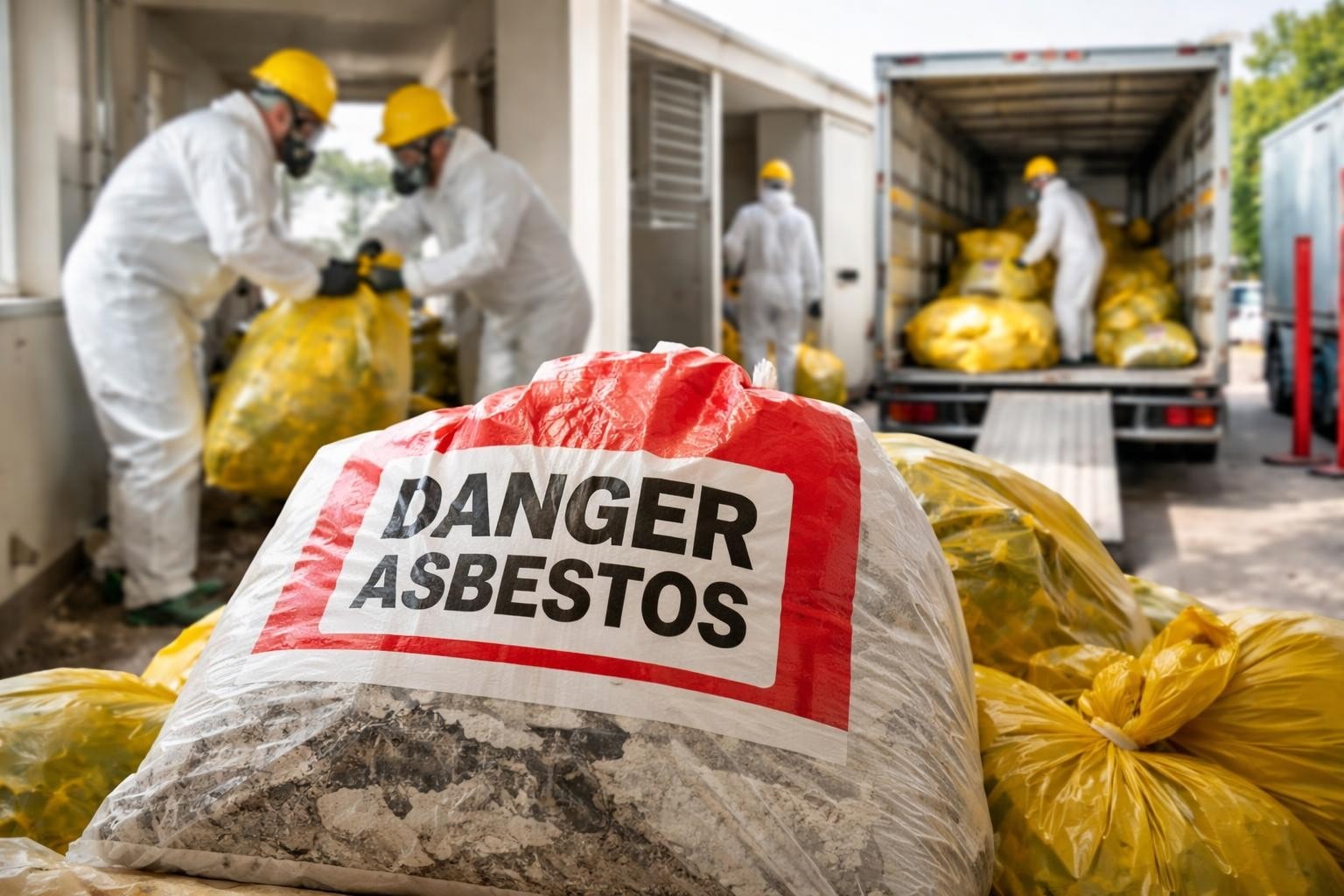
Waste Management Asbestos: UK Compliance Guide 2026
Proper waste management asbestos procedures represent one of the most critical aspects of construction, demolition, and renovation projects across the United Kingdom. With asbestos-containing materials (ACMs) still present in millions of buildings constructed before 2000, understanding the legal requirements and best practices for handling, transporting, and disposing of asbestos waste has never been more important. The complexities surrounding asbestos waste management demand rigorous attention to detail, comprehensive planning, and strict adherence to regulatory frameworks that protect workers, the public, and the environment from the severe health risks associated with asbestos fibre exposure.
Understanding Asbestos Waste Classification
Asbestos waste falls into distinct categories under UK legislation, each requiring specific handling protocols. The classification system directly influences how waste must be packaged, transported, and ultimately disposed of at licensed facilities.
Hazardous vs Non-Hazardous Asbestos Waste
Most asbestos waste is classified as hazardous under the Hazardous Waste Regulations 2005, requiring stringent controls throughout the disposal chain. This classification applies to all friable asbestos materials and most bonded asbestos products once they have been removed from their original location.
- Friable asbestos: Materials that can be crumbled by hand pressure, releasing fibres easily
- Non-friable bonded asbestos: Materials where fibres are firmly bound in a matrix, such as cement products
- Asbestos-contaminated items: PPE, sheeting, and equipment used during removal operations
The distinction between these categories determines the required control measures. Friable asbestos demands the highest level of containment and protection, whilst some bonded asbestos materials may be handled with slightly reduced precautions, though never without appropriate safeguards.
Legal Framework for Waste Management Asbestos
The UK operates under a comprehensive regulatory framework that governs every stage of the asbestos waste disposal process. Understanding these legal requirements is non-negotiable for anyone involved in asbestos removal or building maintenance.
Key UK Regulations
| Regulation | Application | Key Requirements |
|---|---|---|
| Control of Asbestos Regulations 2012 | All asbestos work | Licensing, notification, training, exposure limits |
| Hazardous Waste Regulations 2005 | Asbestos waste handling | Consignment notes, carrier registration, site permits |
| Environmental Permitting Regulations 2016 | Disposal facilities | Licensed sites, emission controls, monitoring |
| Carriage of Dangerous Goods Regulations 2009 | Transport | Packaging standards, vehicle requirements, documentation |
The Control of Asbestos Regulations establish the foundation for safe asbestos management, including specific provisions for waste handling. Every organisation dealing with asbestos waste must maintain detailed records, use licensed contractors where required, and ensure full traceability from removal to final disposal.
Notification Requirements
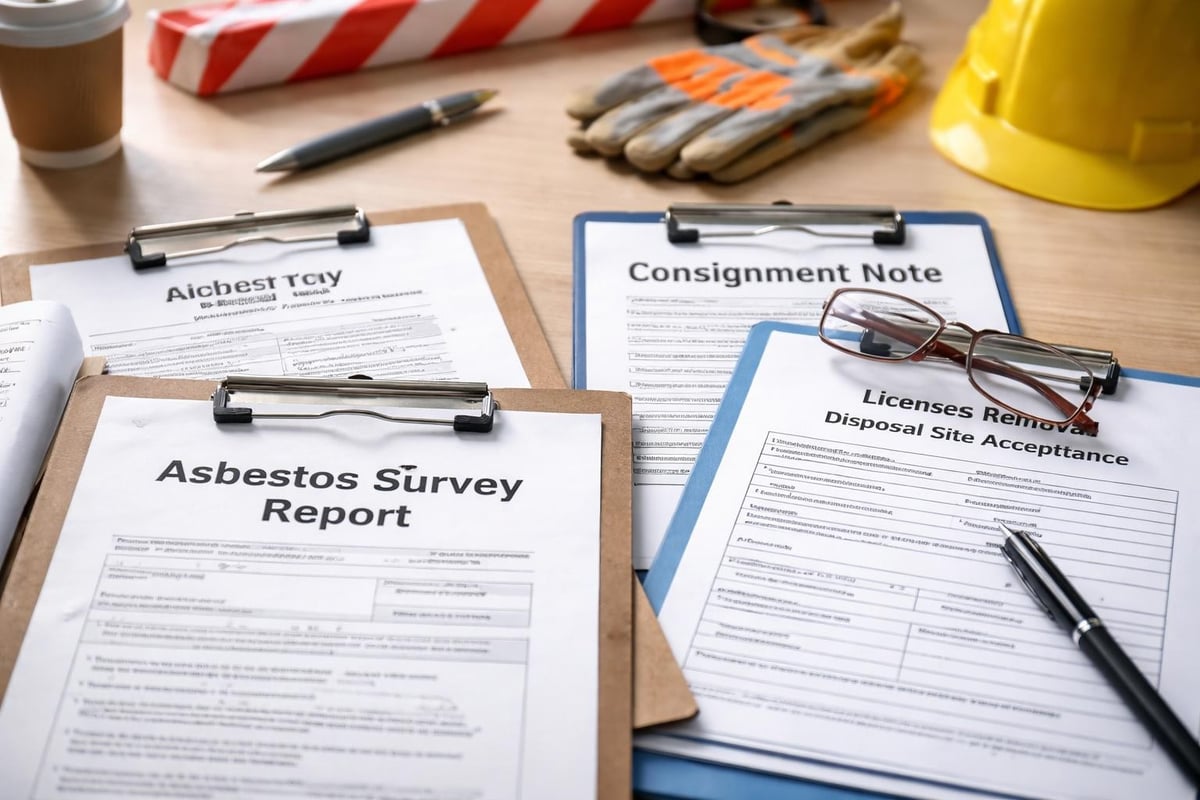
Before commencing asbestos removal work that will generate waste, licensed contractors must notify the Health and Safety Executive (HSE) at least 14 days in advance for licensable work. This notification includes details about the waste management plan, estimated quantities, and intended disposal routes.
Non-licensed work involving asbestos waste still requires careful planning and documentation, even without formal HSE notification. The EPA provides comprehensive guidance on federal regulations that parallel many UK requirements, offering additional context for international best practices.
Safe Packaging and Containment Procedures
Proper packaging represents the first critical barrier preventing asbestos fibre release during waste management operations. The packaging methodology must account for the waste type, quantity, and friability level.
Double-Bagging Protocol
Standard practice for waste management asbestos involves double-bagging all materials in heavy-duty polythene sacks of at least 500 gauge thickness. This protocol creates redundancy if one layer becomes compromised during handling or transport.
- Place asbestos waste directly into the first labeled bag within the controlled area
- Seal the first bag securely using appropriate closure methods
- Decontaminate the exterior of the first bag before removal
- Place the sealed bag into a second labeled bag in the clean area
- Seal and label the outer bag with hazard warnings and waste classification
Larger items such as asbestos cement sheets require rigid packaging in purpose-designed containers or wrapping in heavy-duty polythene sheeting secured with appropriate tape. The packaging must prevent any fibre release whilst remaining intact throughout the disposal chain.
Labelling Requirements
Every package of asbestos waste must display clear, permanent labels identifying:
- The words "ASBESTOS" and "DANGER"
- Appropriate hazard symbols and warnings
- The waste producer's details
- The date of packaging
- A unique consignment reference number
These labels ensure that everyone handling the waste understands the hazards and can trace the material throughout its journey to final disposal.
Transportation Compliance for Asbestos Waste
Moving waste management asbestos from the generation site to a licensed disposal facility demands specialized vehicles, trained personnel, and comprehensive documentation. UK regulations specify exacting standards for every aspect of asbestos waste transport.
Carrier Registration and Vehicle Requirements
Only registered waste carriers may transport asbestos waste on public roads. Vehicles must be suitable for the waste type, preventing any possibility of fibre release during transit. Asbestos-containing materials should be transported in enclosed, dedicated vehicles or secure containers.
The regulations governing waste disposal standards in the US provide comparable frameworks that emphasize containment integrity during transport. UK requirements similarly mandate that vehicles remain clean, properly maintained, and equipped with emergency response materials.
Consignment Note System
The consignment note represents the legal document tracking asbestos waste from producer to final disposal. This multi-part form includes:
- Detailed waste description and classification codes
- Quantity and packaging information
- Producer, carrier, and destination facility details
- Hazard information and emergency contacts
- Signatures confirming transfer of responsibility
Producers must retain copies of all consignment notes for three years, creating an audit trail demonstrating regulatory compliance. This documentation proves essential during inspections and provides evidence of proper disposal should questions arise.

Licensed Disposal Facilities and Acceptance Criteria
Waste management asbestos can only be disposed of at facilities holding the appropriate environmental permits. These specialized sites operate under strict conditions designed to prevent environmental contamination and protect public health.
Site Licensing Requirements
Licensed asbestos disposal sites must demonstrate compliance with Environmental Permitting Regulations, maintaining detailed operational procedures, monitoring systems, and emergency response plans. The licensing process evaluates geological suitability, containment engineering, and long-term stability.
Key facility requirements include:
- Dedicated asbestos disposal cells with appropriate liner systems
- Dust suppression equipment and air quality monitoring
- Trained staff and documented operating procedures
- Security measures preventing unauthorized access
- Regular inspection and maintenance programs
Not all landfill sites accept asbestos waste. Producers must verify acceptance before transport, ensuring the destination facility holds the correct permit classification and can accommodate the specific waste type being delivered.
Pre-Acceptance Procedures
Before accepting asbestos waste, disposal facilities conduct verification checks ensuring compliance with acceptance criteria. Sites may reject loads that lack proper documentation, display packaging defects, or contain prohibited materials mixed with asbestos.
| Verification Point | Requirement | Rejection Criteria |
|---|---|---|
| Documentation | Complete consignment notes | Missing signatures or incorrect codes |
| Packaging | Intact, properly labeled bags/containers | Tears, leaks, inadequate labeling |
| Load inspection | Visual verification of contents | Contamination with other waste streams |
| Quantity | Matches consignment note declaration | Significant discrepancies in volume/weight |
This quality control process protects both the facility and the environment, ensuring only properly prepared asbestos waste enters the disposal stream. Rejected loads must return to the producer for repackaging or alternative disposal arrangements, creating delays and additional costs.
Best Practices for Waste Minimization
Effective waste management asbestos strategies begin during project planning, not after removal commences. Minimizing waste generation reduces costs, simplifies logistics, and decreases environmental impact.
Survey-Driven Planning
Comprehensive asbestos surveys identifying all ACMs within a structure enable accurate waste volume predictions and optimal removal sequencing. Professional asbestos management services provide the detailed information necessary for precise waste planning, preventing costly surprises during demolition or refurbishment.
Detailed survey data allows contractors to:
- Select appropriate packaging and container quantities
- Schedule vehicle movements efficiently
- Negotiate competitive disposal rates based on accurate volumes
- Sequence removal operations to minimize cross-contamination
The investment in thorough surveying pays dividends through reduced waste handling costs and improved project efficiency.
Segregation Strategies
Separating asbestos waste from non-asbestos materials prevents contamination that would otherwise require treating larger volumes as hazardous waste. Careful deconstruction techniques allow removal of ACMs before general demolition, keeping waste streams distinct.
Similarly, segregating different asbestos types can prove beneficial. Some disposal facilities charge differential rates for friable versus bonded asbestos, or offer reduced fees for certain product categories. Understanding these distinctions enables cost-effective waste management planning.
Air Monitoring and Environmental Protection
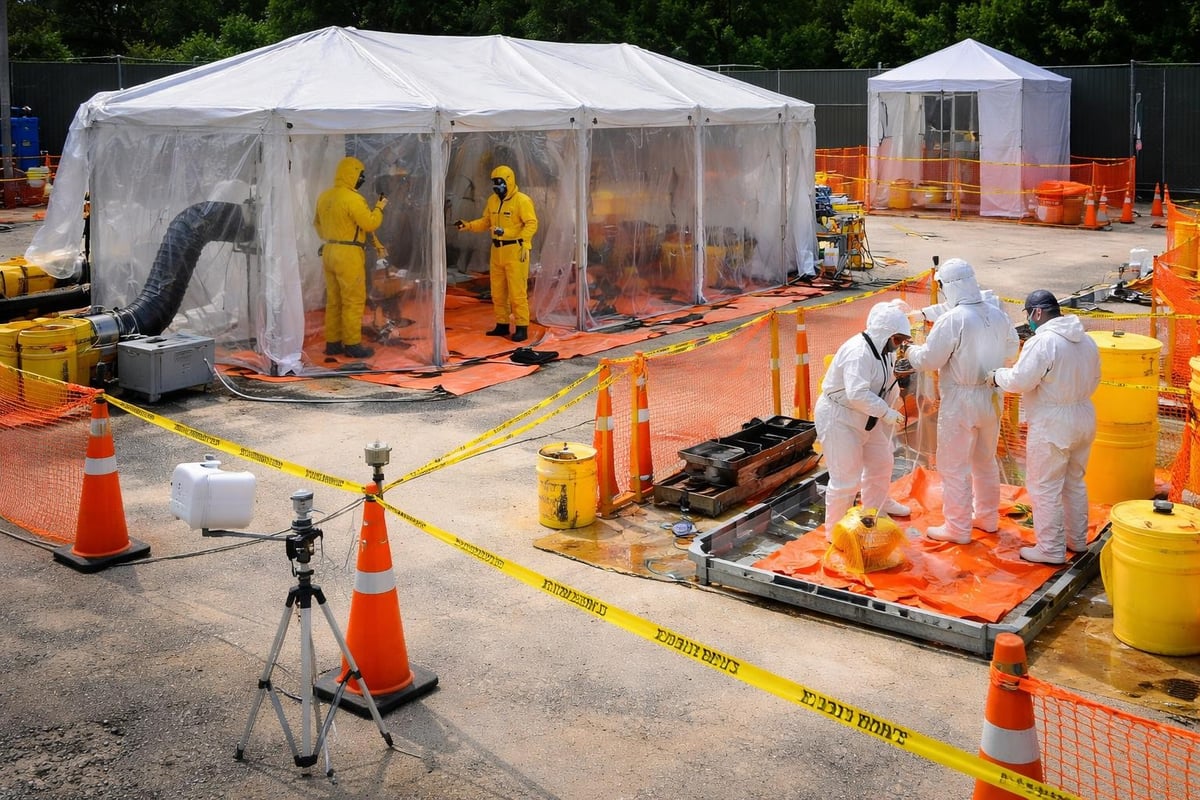
Waste management asbestos operations must include environmental monitoring ensuring that fibre releases remain within acceptable limits. This protection extends to workers, nearby occupants, and the general public.
Background and Clearance Testing
Air monitoring typically occurs at three critical phases during waste management operations:
- Background monitoring: Establishes baseline fibre levels before work commences
- During operations: Verifies containment effectiveness and identifies control failures
- Clearance testing: Confirms the area is safe for reoccupation after waste removal
These measurements use sensitive analytical methods detecting extremely low fibre concentrations. The risk management approaches for chrysotile asbestos highlight the importance of monitoring given asbestos's health impacts even at minimal exposure levels.
Monitoring Locations and Frequency
Strategic placement of air sampling equipment ensures representative data collection. Monitors typically deploy at enclosure boundaries, adjacent occupied spaces, and potential escape routes for airborne fibres.
Sampling frequency depends on work complexity, with high-risk operations requiring continuous monitoring or frequent grab samples. Laboratory analysis provides definitive results, though real-time monitoring equipment offers immediate indication of control failures requiring corrective action.
Record Keeping and Audit Trails
Comprehensive documentation forms the backbone of compliant waste management asbestos programs. These records demonstrate regulatory compliance, support insurance claims, and provide evidence during property transactions or legal proceedings.
Essential Documentation Components
- Asbestos survey reports: Identifying ACMs requiring removal
- Risk assessments and method statements: Detailing planned procedures
- Notification forms: Submitted to HSE for licensable work
- Training certificates: Proving worker competency
- Air monitoring results: Demonstrating exposure control
- Consignment notes: Tracking waste from generation to disposal
- Disposal facility receipts: Confirming final destination
- Photographic evidence: Documenting conditions and procedures
Organizations should maintain these records for at least five years, with some documents requiring indefinite retention. Digital systems facilitate storage and retrieval whilst protecting against physical deterioration or loss.
Audit Preparedness
Regulatory inspections can occur without prior notice. Maintaining organized, readily accessible records ensures smooth audits and demonstrates professional standards. Systems should enable quick location of specific documents, with clear filing structures and searchable databases.
Regular internal audits identify documentation gaps before external inspectors arrive. These self-assessments also verify that field practices align with written procedures, ensuring genuine compliance rather than mere paperwork compliance.
Emergency Response and Incident Management
Despite careful planning, incidents during waste management asbestos operations occasionally occur. Rapid, appropriate responses minimize harm and prevent regulatory violations from escalating into serious enforcement actions.
Common Incident Scenarios
Potential emergencies include:
- Package tears or breaches releasing fibres
- Vehicle accidents during transport
- Unauthorized entry into controlled areas
- Equipment failures compromising containment
- Discovery of unexpected asbestos quantities
Each scenario demands specific response protocols. Written emergency procedures should cover likely contingencies, with staff trained in implementation. Emergency contact information for regulators, disposal facilities, and specialist contractors must remain readily available.
Notification Obligations
Serious incidents require immediate notification to the HSE under RIDDOR (Reporting of Injuries, Diseases and Dangerous Occurrences Regulations). The EPA's guidance on asbestos-containing materials during demolition emphasizes similar reporting requirements in US contexts, reflecting universal recognition of asbestos hazards.
Timely reporting demonstrates transparency and allows regulators to provide guidance, potentially mitigating consequences. Attempting to conceal incidents typically leads to more severe penalties when discovered.
Future Developments in Asbestos Waste Management
The waste management asbestos landscape continues evolving as technology advances and regulations tighten. Staying informed about emerging developments helps organizations maintain compliance and adopt efficiency improvements.
Treatment Technologies
Research into asbestos treatment methods continues, with thermal and chemical processes showing promise for converting asbestos into non-hazardous materials. Whilst these technologies haven't achieved widespread commercial viability in the UK, pilot programs suggest future alternatives to landfill disposal may emerge.
These innovations could transform waste management economics, potentially reducing long-term environmental liability associated with landfilled asbestos. However, current UK regulations require proven track records before approving novel disposal methods, meaning traditional licensed landfill remains the standard approach.
Regulatory Trends
The UK's independent regulatory framework post-Brexit allows for domestic policy development specifically addressing British conditions. The UK's comprehensive asbestos regulations may diverge from international standards, requiring vigilant monitoring of regulatory updates.
Anticipated developments include:
- Enhanced digital reporting systems replacing paper consignment notes
- Stricter qualification requirements for asbestos professionals
- Expanded liability provisions for waste producers
- Increased enforcement activity and penalty levels
- Greater emphasis on waste minimization and circular economy principles
Organizations investing in robust compliance systems position themselves advantageously for whatever regulatory changes emerge.
Effective waste management asbestos requires comprehensive understanding of regulations, meticulous attention to documentation, and unwavering commitment to safety throughout every stage from identification to final disposal. By implementing robust procedures, maintaining detailed records, and partnering with qualified professionals, organizations can navigate the complex regulatory landscape whilst protecting health and environment. Asbestosurv Ltd delivers the expert surveys, comprehensive consultancy, and regulatory guidance necessary for compliant asbestos management, supporting clients across the UK with professional services tailored to meet the exacting standards of modern waste management asbestos operations.
Need Professional Asbestos Advice?
Contact our expert team for guidance on your specific requirements
Contact Us