
L143 Asbestos: Essential Guide to UK Regulations
The management and control of asbestos in the UK operates under a comprehensive regulatory framework designed to protect workers and building occupants from the serious health risks associated with asbestos exposure. At the heart of this framework sits L143, the Approved Code of Practice (ACOP) that provides essential guidance on managing and working with asbestos under the Control of Asbestos Regulations 2012. For property owners, facility managers, and organisations across the United Kingdom, understanding l143 asbestos requirements is not merely advisable but a legal necessity that underpins every aspect of asbestos management from initial surveys through to safe removal and disposal.
What L143 Asbestos Regulations Mean for Dutyholders
The l143 asbestos ACOP serves as the definitive reference document that translates legal obligations into practical, actionable guidance. Published by the Health and Safety Executive, L143 Managing and Working with Asbestos establishes clear expectations for anyone with responsibility for non-domestic premises where asbestos may be present. This includes commercial property owners, landlords, facilities managers, and anyone else who controls access to or use of such premises.
The dutyholder concept forms the cornerstone of l143 asbestos regulations. Dutyholders are individuals or organisations with maintenance and repair obligations for non-domestic premises. Their responsibilities extend beyond simple awareness and require active management of asbestos-containing materials (ACMs) within their properties.
Key Dutyholder Responsibilities Under L143
- Conduct suitable and sufficient assessments to determine whether asbestos is present
- Presume materials contain asbestos unless there is strong evidence to the contrary
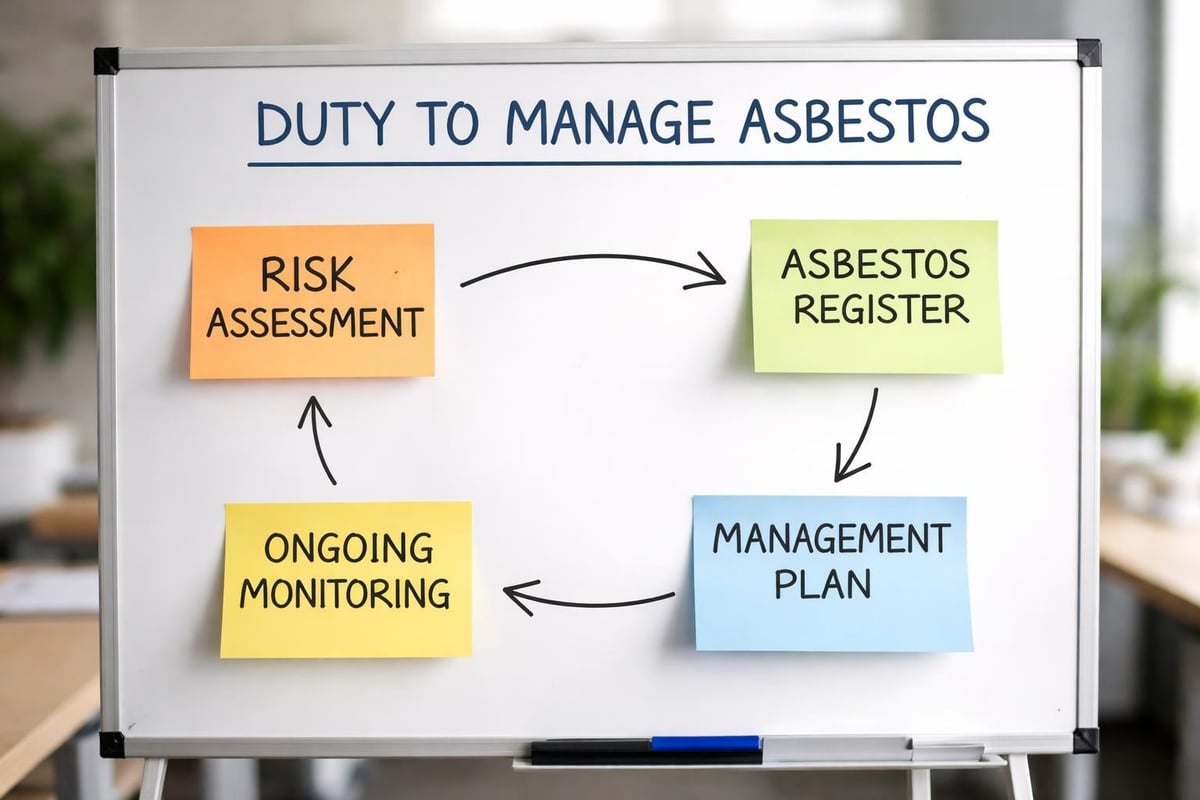
- Maintain an asbestos register documenting the location, type, and condition of ACMs
- Implement an effective management plan outlining how asbestos risks will be controlled
- Monitor the condition of ACMs and update records accordingly
- Provide information about asbestos location and condition to anyone who might disturb it
- Review and update assessments and management plans at regular intervals
The 2012 revision of l143 asbestos guidance introduced several significant changes that enhanced protection standards and clarified dutyholder obligations. These updates reflected evolving understanding of asbestos risks and incorporated lessons learned from enforcement activities and industry practice.
The L143 Asbestos Risk Assessment Framework
Risk assessment represents the foundation upon which all effective asbestos management is built. The l143 asbestos ACOP requires a systematic approach that evaluates both the presence of asbestos and the likelihood of exposure. This two-stage process begins with identifying whether asbestos is present and then assessing the material condition and potential for disturbance.
Assessment quality depends heavily on competence. L143 emphasises that those conducting asbestos surveys must possess appropriate training, experience, and qualifications. Professional survey organisations like Asbestosurv Ltd employ qualified surveyors who understand the nuances of different building types, construction periods, and asbestos applications.
Survey Types Under L143 Asbestos Regulations
| Survey Type | Purpose | When Required | Extent of Inspection |
|---|---|---|---|
| Management Survey | Locate ACMs during normal occupancy | Ongoing duty to manage | Accessible areas only |
| Refurbishment Survey | Identify ACMs before refurbishment | Before renovation work begins | All areas affected by works |
| Demolition Survey | Locate all ACMs before demolition | Before demolition commences | Fully intrusive, all areas |
The management survey approach focuses on material that could be damaged or disturbed during normal occupancy, maintenance, or installation activities. These surveys are non-intrusive or minimally intrusive, designed to locate accessible ACMs without causing significant disruption to building operations.
Refurbishment and demolition surveys take a more comprehensive approach. The l143 asbestos guidance requires these surveys to be fully intrusive, as they must identify all ACMs in areas where structural work will occur. This often involves destructive inspection techniques including removing ceiling tiles, accessing voids, and sampling behind fixed panels.
Material Assessment and Risk Prioritisation
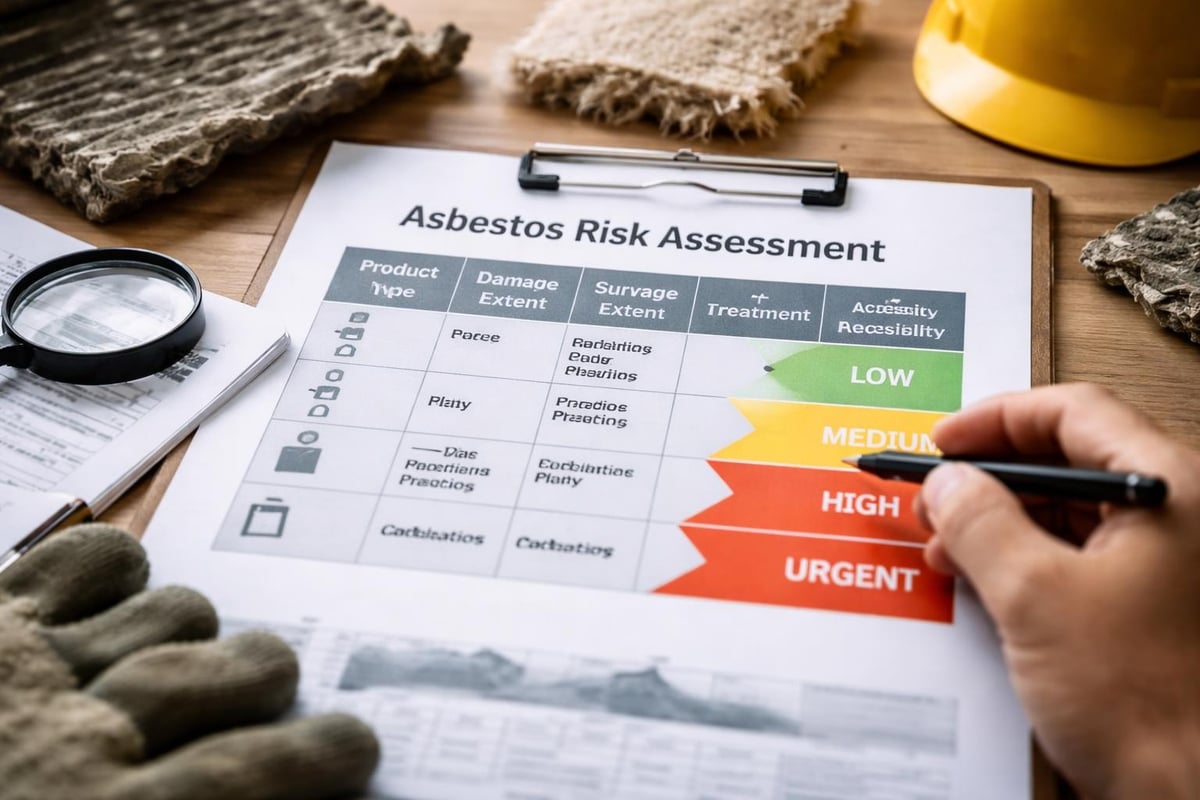
Once asbestos has been identified, l143 asbestos regulations require a systematic assessment of material condition and risk. This process evaluates factors including material type, condition, surface treatment, accessibility, and extent of damage to generate a priority score that guides management decisions.
The material assessment algorithm considers several key variables that influence the likelihood of fibre release. Friable materials, which can be crumbled by hand pressure, present significantly higher risks than non-friable products like asbestos cement. Surface treatment, such as encapsulation or sealing, reduces the potential for fibre release, whilst damage or deterioration increases risk substantially.
Material Assessment Parameters
Product type evaluation:
- Asbestos insulating board scores highest risk
- Thermal insulation presents significant concerns
- Asbestos cement products generally score lower
- Textured coatings require careful assessment
Condition assessment factors:
- Extent of visible damage or deterioration
- Presence of debris indicating fibre release
- Water damage or weather exposure
- Previous disturbance or attempted removal
The priority assessment also evaluates the likelihood that materials will be disturbed. High-traffic areas, locations subject to frequent maintenance, or materials in zones where building works are planned receive higher scores. This risk-based approach enables dutyholders to allocate resources effectively, addressing the most significant risks first whilst maintaining appropriate controls over lower-priority materials.
Management Plans and Asbestos Registers
The l143 asbestos ACOP mandates creation and maintenance of both an asbestos register and a written management plan. These documents work together to ensure that asbestos information is recorded, accessible, and actively used to control risks. The register provides the factual record of what asbestos exists and where it is located, whilst the management plan details how that asbestos will be managed.
An effective asbestos register must include specific information for each identified ACM. Location details should be sufficiently precise that maintenance personnel can identify the material without ambiguity. This typically requires room numbers, floor levels, and descriptions of the specific building element affected. Photographic records significantly enhance register usability, providing visual confirmation of material location and appearance.
Essential Register Information
- Unique identifier for each ACM or homogeneous area
- Precise location including building, floor, room, and specific element
- Material description including product type and asbestos type
- Extent and quantity of the ACM present
- Condition assessment and priority score
- Photographic evidence showing material location and appearance
- Date of assessment and surveyor identification
- Recommendations for management, monitoring, or removal
The management plan translates this information into action. L143 requires plans to specify how each ACM will be managed, including monitoring frequencies, control measures to prevent disturbance, arrangements for information sharing, and procedures for responding to accidental damage or deterioration. Professional management plan development ensures these documents meet regulatory expectations whilst remaining practical and implementable.
Regular review forms a critical component of effective management. The l143 asbestos guidance recommends reviewing assessments and management plans at least annually, and whenever significant changes occur to the building or its use. This ensures that asbestos information remains current and that management arrangements adapt to changing circumstances.
Working with Asbestos Under L143
When asbestos work becomes necessary, whether for removal, encapsulation, or repair, l143 asbestos regulations establish strict requirements governing how such work must be conducted. The regulatory approach recognises that different types of asbestos work present varying levels of risk, establishing a tiered framework with requirements proportionate to the hazards involved.
Licensed asbestos removal work represents the highest-risk category, requiring contractors to hold a licence from the HSE. This category includes work with asbestos insulation, insulating board, and asbestos coatings, or any work involving these materials that will disturb more than minimal quantities. The licensing regime ensures that only competent, properly equipped contractors undertake high-risk activities.
Work Categories and Requirements
| Work Category | Notification Required | Licensing Required | Training Standard |
|---|---|---|---|
| Licensed Work | 14 days advance notice to HSE | Yes, HSE licence mandatory | Category A training |
| Notifiable Non-Licensed Work (NNLW) | Online notification to HSE | No licence required | Category B training |
| Non-Licensed Work | No notification | No licence required | Competence appropriate to task |
Notifiable non-licensed work occupies the middle ground, covering activities such as removal of asbestos cement products, textured coatings, and certain floor tiles that exceed thresholds specified in regulations. Understanding NNLW guidance requirements helps organisations comply with notification obligations whilst avoiding unnecessary costs associated with licensed work where it is not required.
The l143 asbestos ACOP emphasises that all asbestos work, regardless of category, must be planned and executed to prevent or minimise fibre release and exposure. This requires appropriate respiratory protective equipment, use of controlled working methods, provision of adequate welfare facilities, and proper waste disposal arrangements.
Analytical Requirements and Laboratory Standards
Laboratory analysis plays a vital role in l143 asbestos compliance, from identifying suspect materials during surveys through to verifying successful removal and clearance. The ACOP establishes clear expectations for analytical quality, requiring that laboratories operate to appropriate standards and that analysts possess necessary competence.
ISO/IEC 17025 accreditation for asbestos testing provides independent verification that laboratories maintain technical competence and quality management systems appropriate for asbestos analysis. This accreditation covers both bulk material analysis, which identifies asbestos type and quantity in samples, and air monitoring, which measures airborne fibre concentrations.
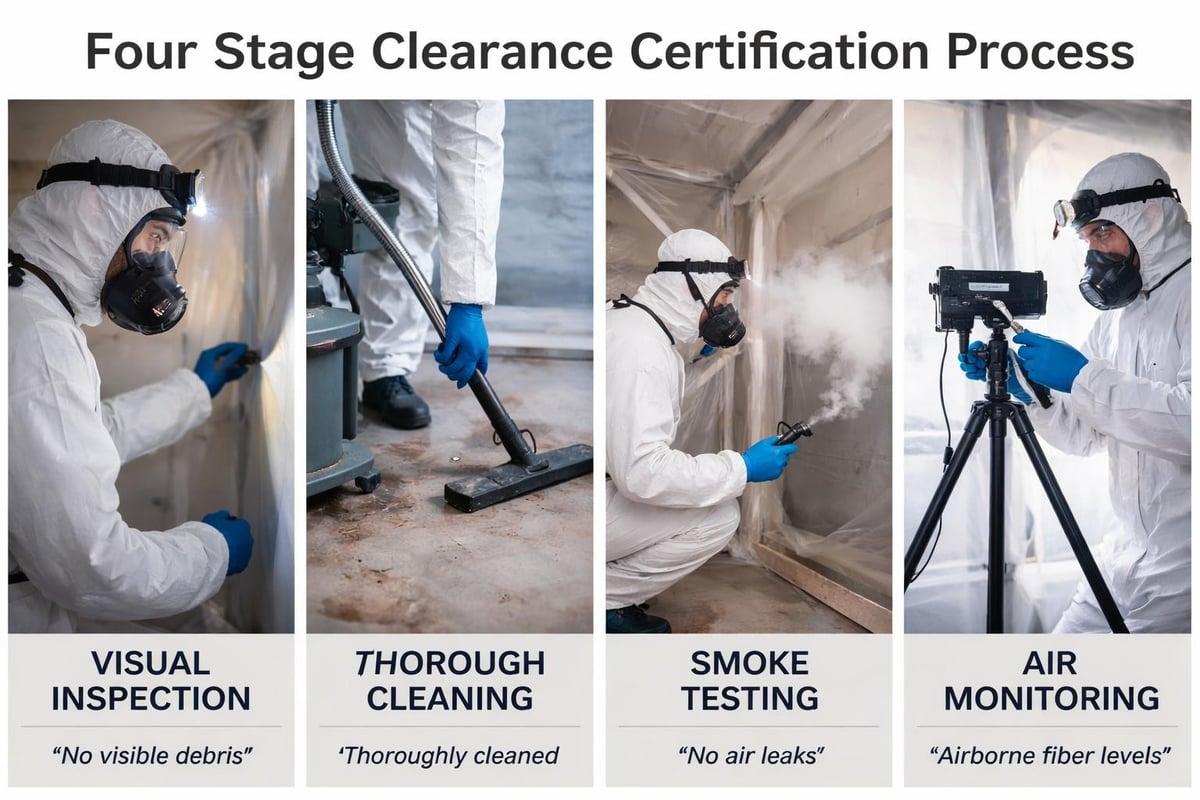
The four-stage clearance process for asbestos removal projects relies heavily on analytical verification. Visual inspection forms the first stage, confirming that all visible asbestos and debris has been removed. This is followed by thorough cleaning, smoke testing to verify enclosure integrity, and finally air monitoring to confirm that airborne fibre levels meet clearance criteria specified in l143 asbestos guidance.
Air Monitoring Applications
- Background monitoring to establish baseline conditions before work begins
- Personal exposure monitoring to verify worker protection during asbestos activities
- Leak testing to confirm enclosure integrity during removal work
- Clearance certification following removal or encapsulation
- Reassurance monitoring after accidental disturbance or in occupied buildings
Professional air monitoring and clearance testing services employ calibrated equipment, validated methodologies, and qualified analysts to deliver results that meet l143 standards. The clearance indicator for most removal work is 0.01 fibres per millilitre measured over a four-hour sampling period, though specific circumstances may require different approaches.
Training and Competence Requirements
Competence underpins every aspect of effective asbestos management. The l143 asbestos ACOP repeatedly emphasises that individuals undertaking asbestos-related activities must possess appropriate knowledge, skills, and experience for their roles. This applies equally to dutyholders assessing whether materials contain asbestos, surveyors conducting inspections, and operatives performing removal work.
Training requirements vary according to role and responsibility. Awareness training provides basic understanding of asbestos risks, locations, and the importance of not disturbing materials. This level suits building occupants, general maintenance personnel, and others who might encounter asbestos but are not expected to work with it directly.
Non-licensed workers require more comprehensive training covering risk assessment, working methods, use of respiratory protective equipment, and emergency procedures. The training must be task-specific, addressing the particular types of work the individual will undertake. Annual refresher training ensures that knowledge and skills remain current.
Licensed contractors must demonstrate:
- Completion of appropriate initial training courses
- Regular refresher training at specified intervals
- Medical surveillance confirming fitness for work
- Competence in specific working methods and equipment
- Understanding of regulatory requirements and ACOP guidance
Survey professionals represent another critical competence area. HSG248 guidance for analysts complements l143 asbestos requirements by establishing standards for those conducting surveys and sampling. Professional surveyors combine formal training with practical experience, developing expertise in building construction, asbestos applications, and survey methodologies.
Regional Applications and Variations
Whilst l143 asbestos regulations apply throughout Great Britain, some regional considerations affect implementation. Northern Ireland has approved L143 for use within its jurisdiction, ensuring consistent standards across the UK. This harmonisation benefits organisations operating in multiple regions, as they can apply consistent management approaches regardless of location.
Local authority involvement in asbestos management varies, with some councils providing detailed guidance to support dutyholders. These resources often translate l143 asbestos requirements into sector-specific advice, addressing the particular challenges faced by schools, social housing providers, or commercial property managers.
Understanding local compliance landscapes helps organisations meet their obligations effectively. Professional asbestos consultancies maintain knowledge of regional variations and local authority expectations, ensuring that management arrangements satisfy both national regulations and local requirements. This expertise proves particularly valuable for organisations with property portfolios spanning multiple regions.
Recent Updates and Ongoing Developments
The regulatory landscape continues to evolve as understanding of asbestos risks develops and enforcement experience accumulates. The five key changes in revised L143 guidance reflect this evolution, incorporating lessons learned and addressing areas where previous guidance proved ambiguous or incomplete.
Enhanced emphasis on competence represents one significant development. The revised l143 asbestos ACOP provides more detailed guidance on what constitutes appropriate competence for different roles, helping dutyholders make informed decisions when appointing surveyors, analysts, or removal contractors. This clarification reduces the risk of engaging inadequately qualified individuals.
Technological advances also influence asbestos management practice. Digital platforms for asbestos register management enable more effective information sharing, automated review scheduling, and integration with maintenance management systems. Whilst l143 does not mandate specific technologies, it requires that information is accessible to those who need it, and digital solutions increasingly provide the most effective means of achieving this.
The HSE continues to publish supporting guidance and frequently asked questions that clarify l143 asbestos requirements. Staying informed about these developments ensures that management practices remain aligned with current expectations. Professional consultancies monitor regulatory updates and guidance publications, translating changes into practical implications for their clients.
Enforcement and Compliance Verification
The Health and Safety Executive enforces l143 asbestos regulations through inspections, investigations, and formal enforcement action where necessary. Understanding enforcement priorities helps organisations focus their compliance efforts effectively. The HSE typically concentrates on situations involving high-risk materials, evidence of poor management, or failure to discharge fundamental duties.
Improvement notices require dutyholders to address specific deficiencies within specified timeframes. These formal notices identify breaches of legal requirements and set out actions necessary to achieve compliance. Failure to comply with improvement notices can result in prosecution, making timely and effective response essential.
Prohibition notices halt activities that involve or will involve a risk of serious personal injury. In asbestos contexts, prohibition notices typically address situations where work is being conducted without appropriate controls, licensing, or notification. The consequences of prohibition can be severe, stopping projects and requiring comprehensive remediation before work can resume.
Common Compliance Issues
- Absence of suitable and sufficient risk assessments
- Outdated or incomplete asbestos registers
- Failure to provide information to maintenance contractors
- Inadequate management plan implementation
- Work conducted by unlicensed contractors
- Insufficient competence among those undertaking asbestos activities
- Poor analytical quality or use of non-accredited laboratories
Proactive compliance management reduces enforcement risk whilst protecting workers and building occupants. Regular compliance audits identify gaps before they attract regulatory attention, enabling corrective action in a planned, controlled manner rather than under enforcement pressure.
Sector-Specific Considerations
Different sectors face particular challenges in implementing l143 asbestos requirements. Educational establishments must balance comprehensive asbestos management with maintaining normal operations and protecting children who may be more vulnerable to asbestos exposure. Asbestos management in schools requires particular attention to areas where activities might disturb materials, such as during classroom reconfigurations or technology installations.
Healthcare facilities present unique complexity due to continuous occupation, critical functions, and vulnerable populations. Asbestos management must accommodate ongoing operations whilst ensuring that maintenance activities, upgrades, and expansions do not create unacceptable risks. Detailed planning and coordination between estates teams, clinical staff, and asbestos professionals ensures safe outcomes.
Social housing providers face challenges arising from large building portfolios, varied construction types, and frequent tenant turnover. The landlord duty to manage extends to common areas and requires systems for tracking asbestos across numerous properties. Effective information management becomes critical when dealing with hundreds or thousands of individual dwellings.
Commercial property managers must navigate complex occupancy arrangements where multiple tenants share buildings. L143 asbestos requirements apply to those controlling premises, but practical implementation requires cooperation between landlords, managing agents, and occupiers to ensure that asbestos information reaches those who need it.
Integration with Broader Health and Safety Management
Effective asbestos management does not operate in isolation but integrates with wider health and safety arrangements. The HSE's guidance on asbestos positions asbestos control within the context of general health and safety management, emphasising that the same principles of risk assessment, control implementation, and performance monitoring apply.
Management system integration offers several advantages. Asbestos reviews can coincide with broader premises risk assessments, ensuring efficient use of resources and comprehensive hazard identification. Contractor management processes can incorporate asbestos information provision, making it routine rather than exceptional. Training programmes can address asbestos awareness alongside other workplace hazards.
Quality management systems provide frameworks for maintaining l143 asbestos compliance over time. Documented procedures, defined responsibilities, scheduled reviews, and performance monitoring create structures that sustain compliance even as personnel change and organisational priorities evolve. Professional consultancies often maintain their own quality systems certified to recognised standards, providing assurance that services delivered meet consistent quality criteria.
Navigating l143 asbestos regulations requires comprehensive understanding of legal requirements, technical competence in risk assessment and management, and systematic approaches to documentation and compliance verification. Whether you are managing a single property or a diverse portfolio, meeting your dutyholder obligations protects workers, occupants, and your organisation from the serious consequences of asbestos exposure. Asbestosurv Ltd delivers professional asbestos surveys, management plans, and compliance support across the UK, combining technical expertise with practical understanding of how organisations operate to ensure your asbestos management arrangements meet L143 standards effectively.
Need Professional Asbestos Advice?
Contact our expert team for guidance on your specific requirements
Contact Us